
Beyond The Shore 2026
From the point of ignition.
To the final drive.
The point of the journey is not to arrive.
Anything can happen.
From the point of entry.
Until the candle is burned.
The point of departure.
Is not to return.
Anything can happen.
(Neil Peart, Prime Mover)
Latest post: Journey To The Peaks
Twenty Twenty Six - 2026
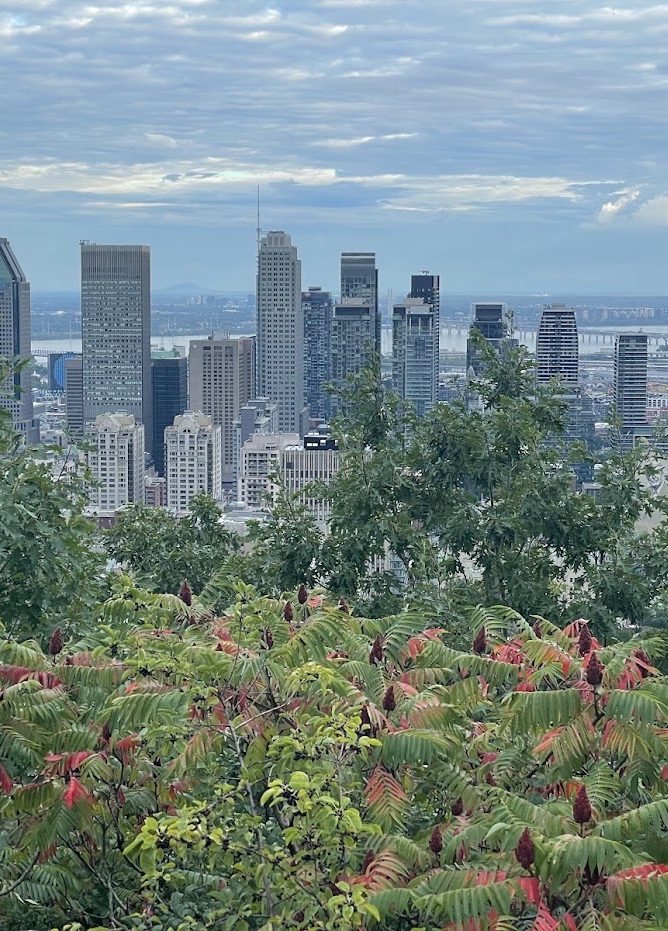
September 2026 - Canada - Montreal
Montreal served up a perfect blend of accumulated old with the new. Visits to the Island of Jean Drapeau hosting the poignant geodesic dome and environmental museum, numerous walks up Mount Royal, after which Montreal takes its name, three hours of Rush live at the Bell Centre, Old Montreal and waterfront, the Notre Dame cathedral, St Joseph's Oratory, and UQAM, all swilled down with some fantastic dining opportunities. Plus a great opportunity to dust off my rusty French - the locals really appreciated it. Again the public transport was good and affordable - underground this time compared to Toronto's street cars - efficiency and speed were the name of the game. Impressive!
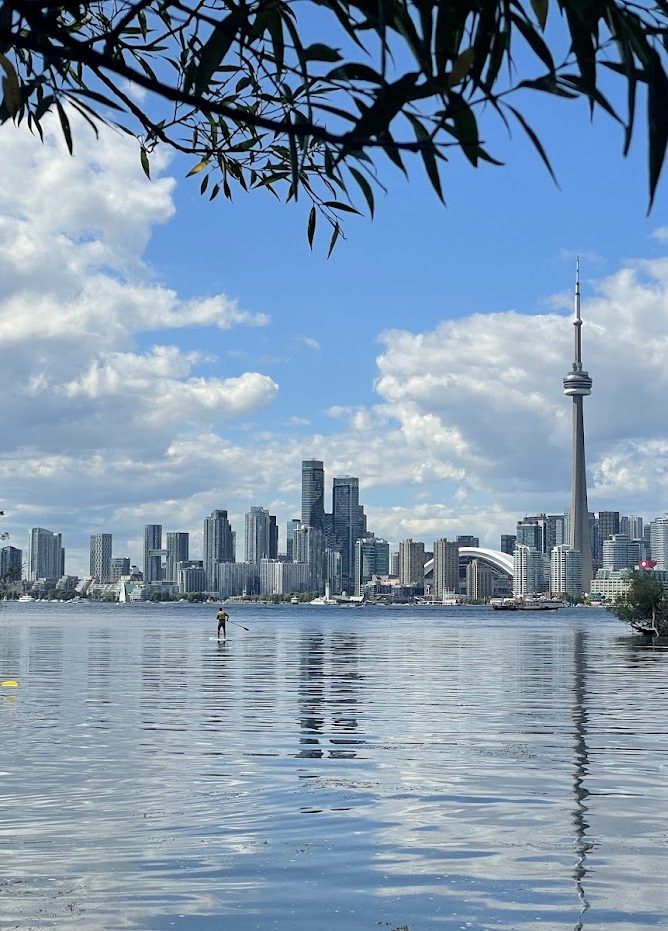
August 2026 - Canada - Toronto
Toronto; larger than life. Whether seen up close from the energy in the streets, on high in rotating panorama from the CN tower, or at a distance from the serene Toronto Island, this city seemed brimming with energy and potential. The seductive face of capitalism - large scale infrastructure and shiny buildings. So much new building and investment here. Time spent at the tourist spots left a positive impression - the CN tower, the legislative building, waterfront, music garden, distillery district, university areas - all backed by decent public transport infrastructure. It was difficult not to be impressed by what collective ambition, investment and organisation can produce.
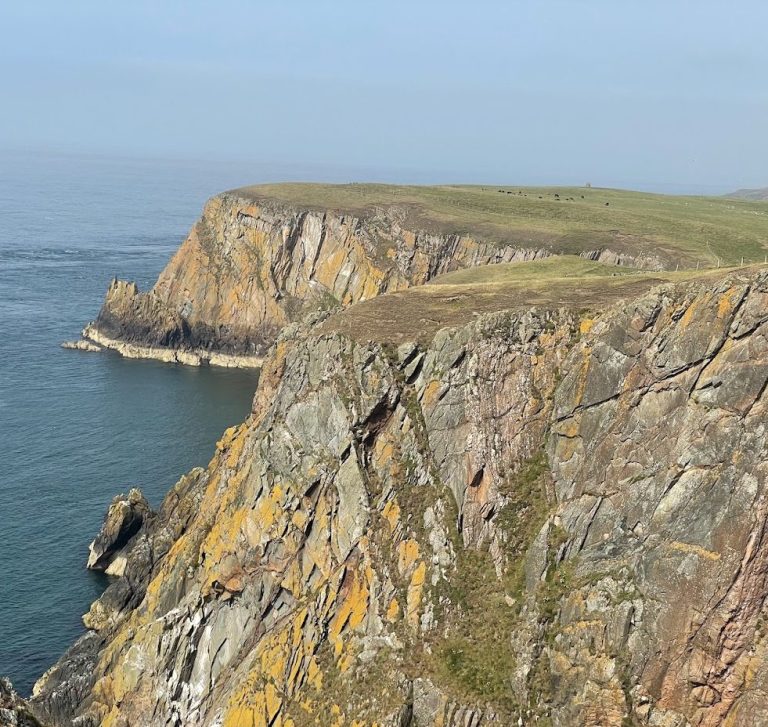
July 2026 - South West Scotland
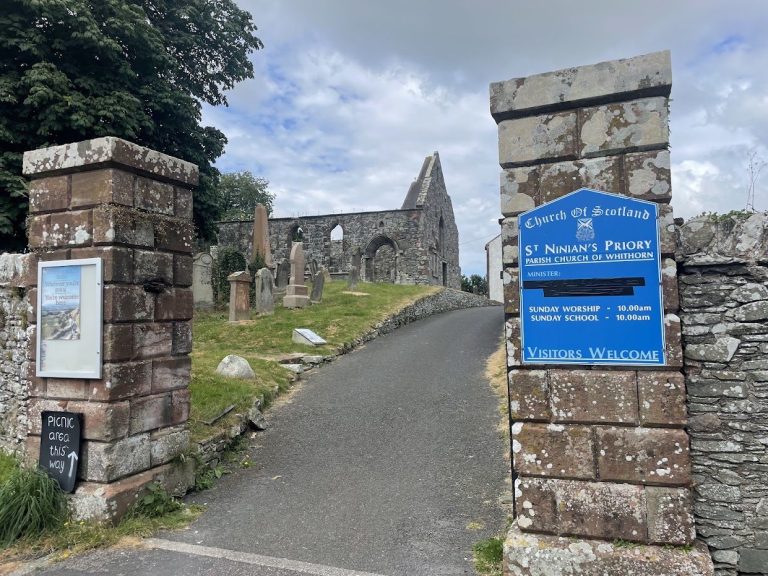
Touring South West Scotland including the Solway Coast, Galloway Tourist Trail, Galloway Forest, the Rhins of Galloway, and the Ayrshire Coast. Beautiful coastal landscapes including the largest of seven designated UNESCO biosphere sites in the UK - a region burgeoning with wildlife and natural habitats of international importance and encompassing communities with distinct cultural identities, as well as historic landmarks and heritage sites. Some fantastic roads to ride and key historic sites involving the earliest Christianity in Scotland (St Ninian), Robert the Bruce, and Robert Burns (The Bard of Ayrshire).
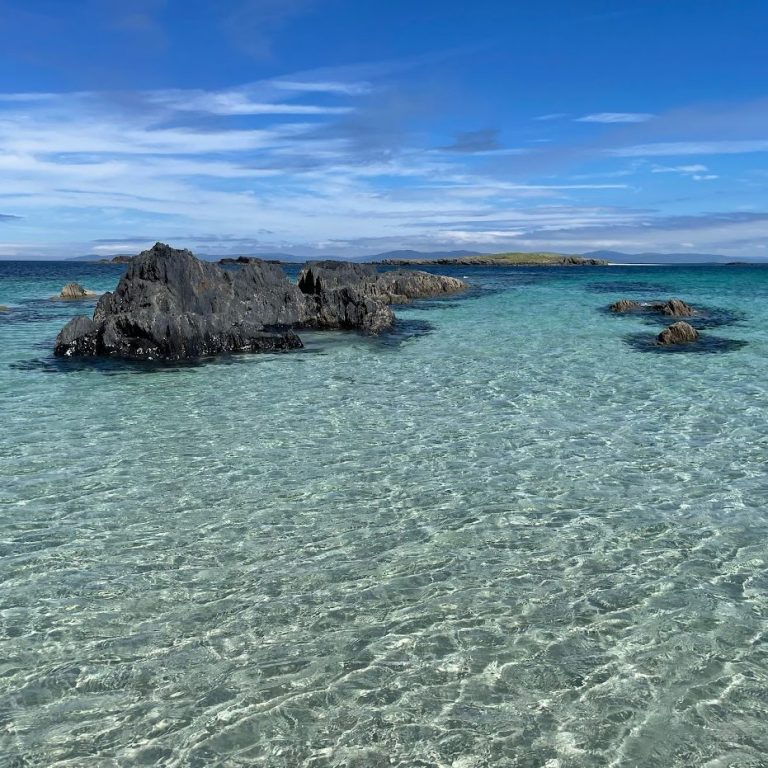
June 2026 - Scotland - Borders, Mull, Iona, Highlands and Perthshire
I had wanted to visit Mull for quite some time, having previously been impressed with Arran and Skye, and used the opportunity to take in some areas of the Borders, Highlands and Perthshire. A rollercoaster of a journey and one of the best tours I've undertaken to date. The Western Isles are truly beautiful - unique coastal landscapes, interesting history, and a sense of community which seems increasingly rare and precious. All supplemented with a lot of sunshine, ice cream and insect bite cream.
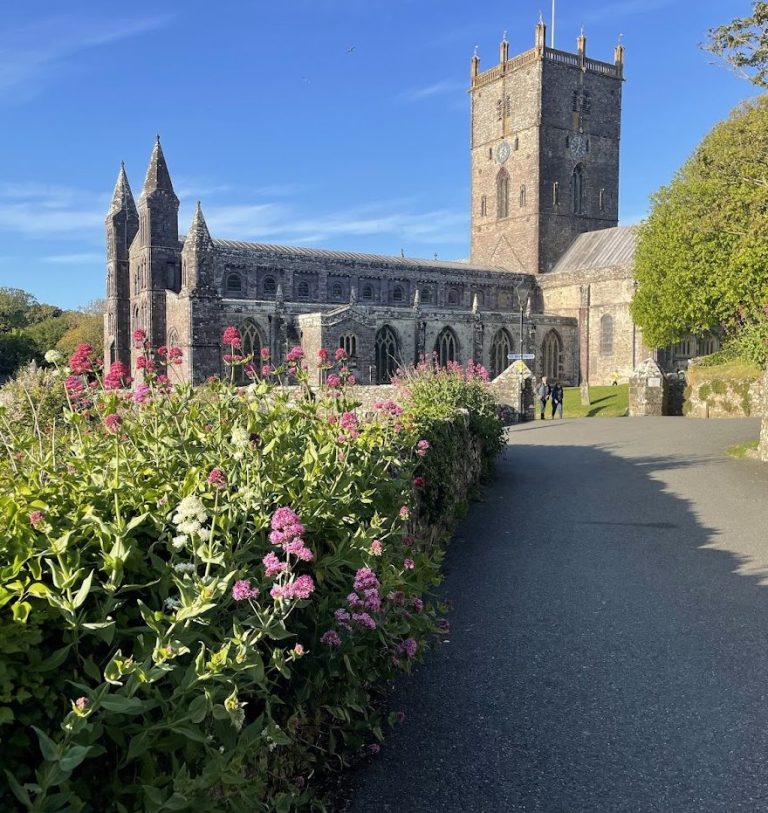
May 2026 - Peak District, Welsh Coast, Pembrokeshire, Somerset
The Welsh coast and Pembrokeshire were the goal of this tour, which were gaps in the West coastline of the UK I'd not seen before. They did not disappoint with amazing landscapes, interesting history, and friendly people. Bolted into the route were places I've enjoyed before but wanted to explore further - the beautiful Peak District and Somerset/Cotswolds. An enjoyable and rewarding 1500 mile journey with 40 hours riding over 12 days. It was not without challenges - a few days of rain and cold tested my mettle in regards to bike and tent. Fortunately counter-balanced with plenty of sunshine to lift the spirits as well.
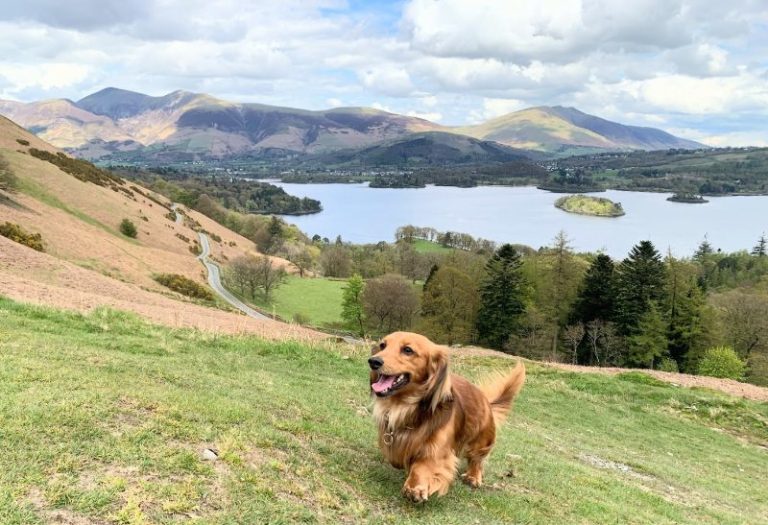
April 2026 - The Work of Being
Some time in the countryside amongst lakes and hills, a lot of hiking, and ice cream!
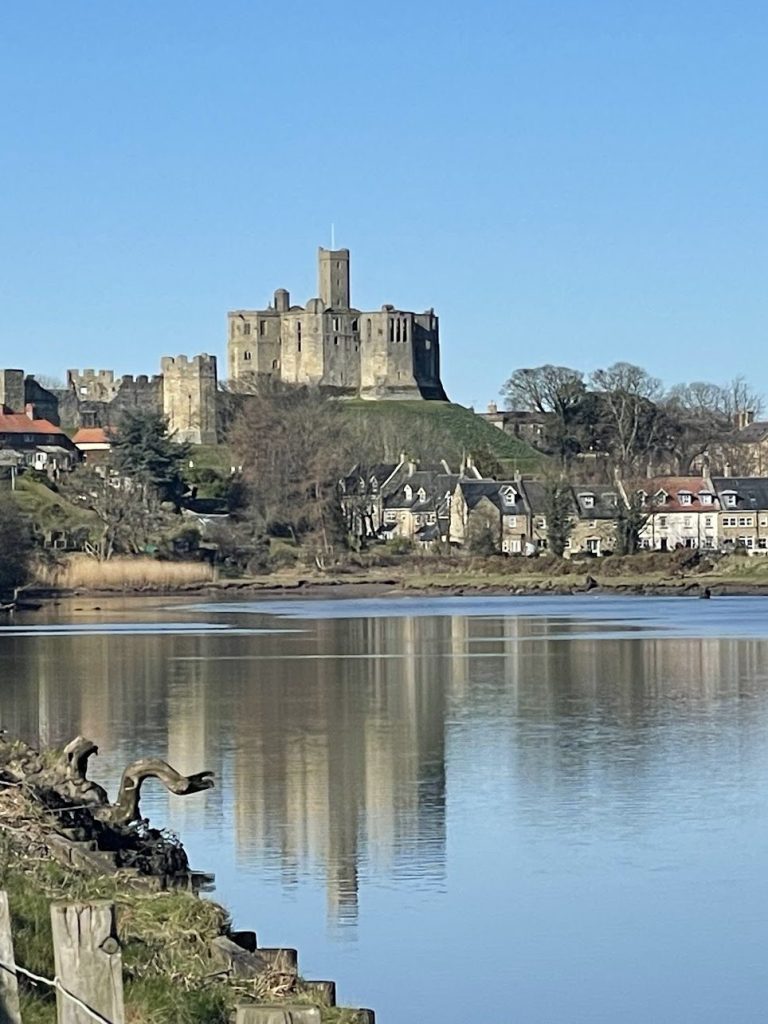
March 2026 - Reignition! - Northumberland and Scottish Borders
March has ushered in some welcome sunny days, longer daylight hours and with it the annual on-roading of the Triumph Tiger. The extra sunshine and daylight is particularly welcome after a fairly grim February weather wise here in North Eastern UK.
Touring popular West and North Northumberland routes, including the renowned Northumberland coastline, and also into the Scottish Borders, this is my warm up for the Spring and Summer touring.
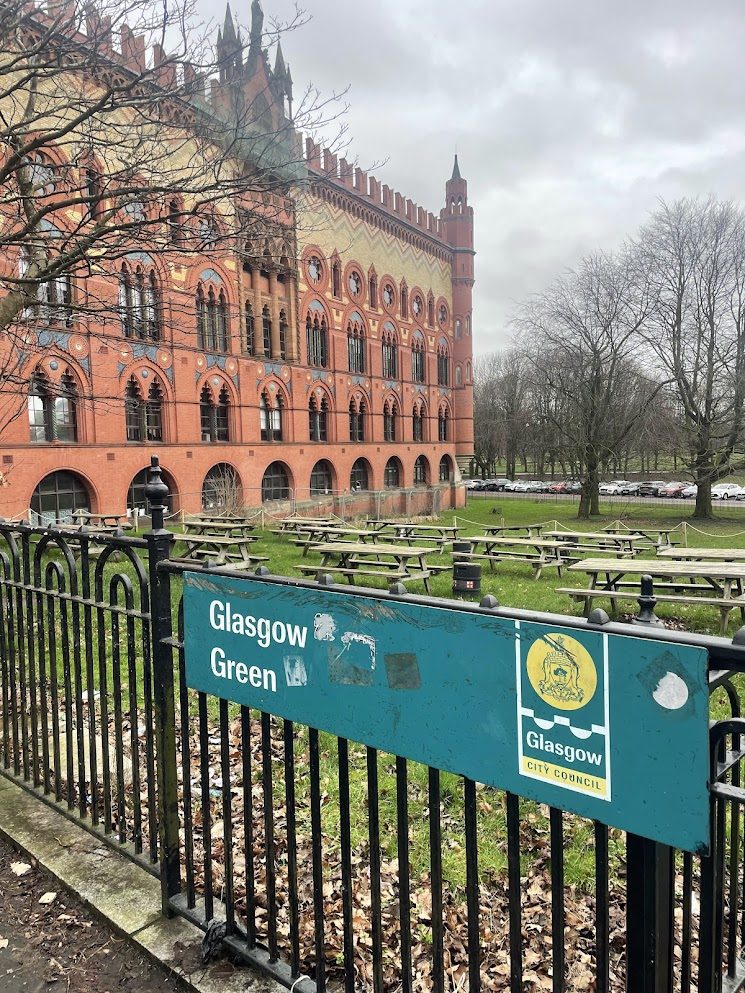
February 2026 - Glasgow - Impermanence
A visit to Glasgow, taking in an unplanned wander across Glasgow Green and lunch at the West Brewery, housed within the remarkable Templeton Building. Inspired by Venice’s Palazzo Ducale and once home to the weaving of carpets, the building now hosts an independent brewery committed to brewing in accordance with the German Reinheitsgebot purity law. A setting where history, craft, and reinvention quietly converge - not to mention a good lunch!
July 2026 - South West Scotland - Solway, Galloway, Ayrshire
July 2026 - Hadrians Wall to Gretna
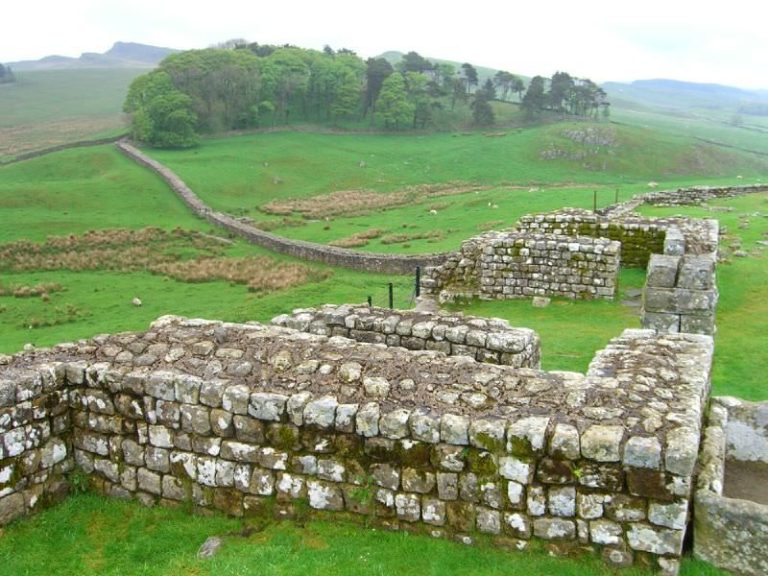
Leaving home, I headed west along the A69 before taking the A6071 through Longtown then onwards to Gretna. I followed a route that shadows Hadrian's Wall for much of the journey. Many people think of the wall as little more than a defensive barrier keeping northern tribes out of the Roman Empire. In reality, it was a sophisticated system of frontier management. The pictured gatehouse at Housesteads Fort was part of a network of checkpoints where travellers could be monitored, goods inspected, taxes collected and movement controlled. The Romans understood that borders are rarely just about keeping people out. They are about managing what, and who, passes through. They knew that frontiers are systems, not just lines on a map.
July 2026 - Caerlaverock Castle
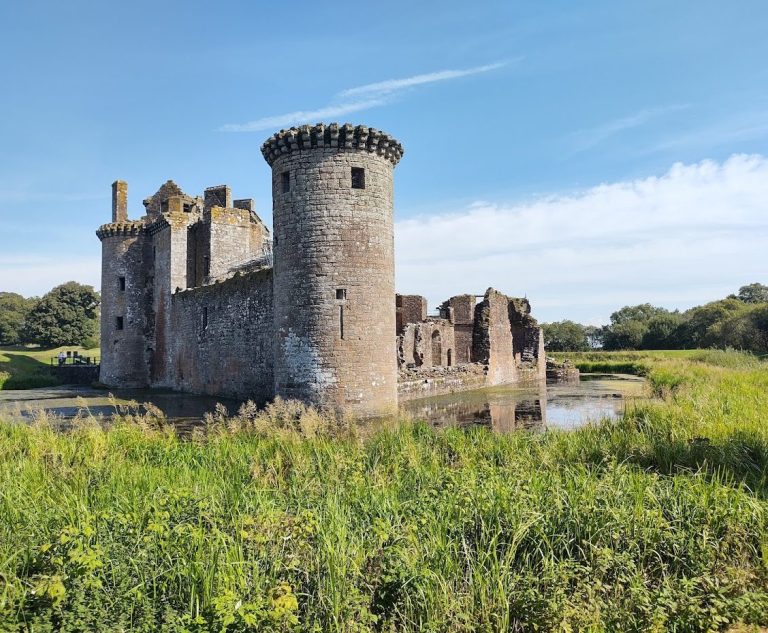
With body and bike refueled at Gretna I took the Solway Coastal Trail through Annan to arrive at Caerlaverock Castle. A stronghold with a unique triangular design and a turbulent history, given its location close to the English/Scottish border - which includes a significant attack by King Edward I and a 13 week siege by the Covenanters more than three centuries later which led to its damage and abandonment. The Covenanters were active throughout the region during this period as they fought off the demands of Charles I to yield to the authority of the crown in all matters of the Church of Scotland including the adoption of an English style prayer book and appointment of bishops by the crown. Hills many Covenanters were prepared to die on.
July 2026 - Sweetheart Abbey - Labour of Love
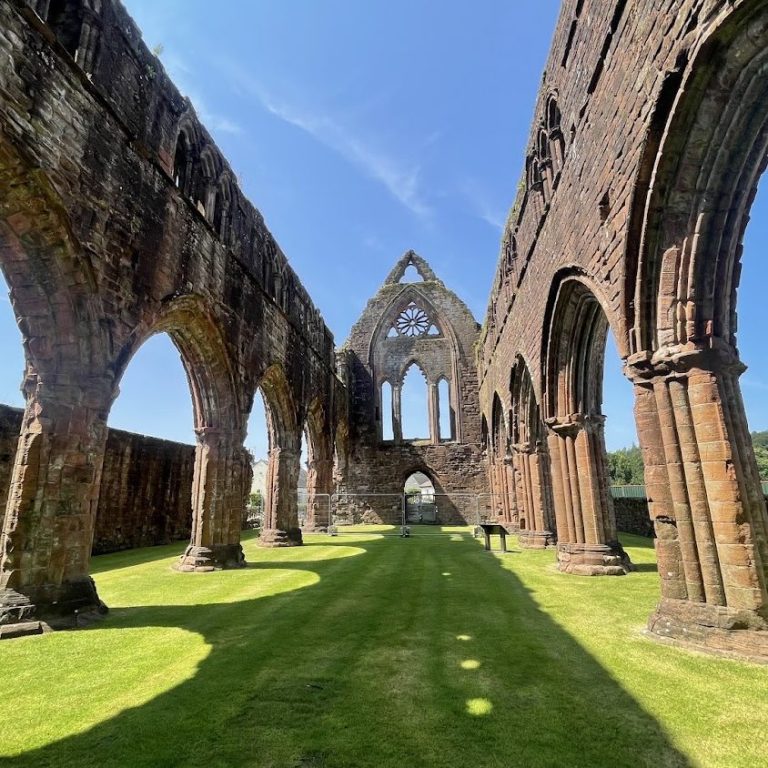
A strange brew - Motorbikes. Drones. A Scottish Princess. Embalmed Hearts. Cistercian Monks.
A deeply human story of love, grief, remembrance and legacy.
July 2026 - Rockcliffe, Kirkcudbright, Newton Stewart, Girvan, Ayrshire
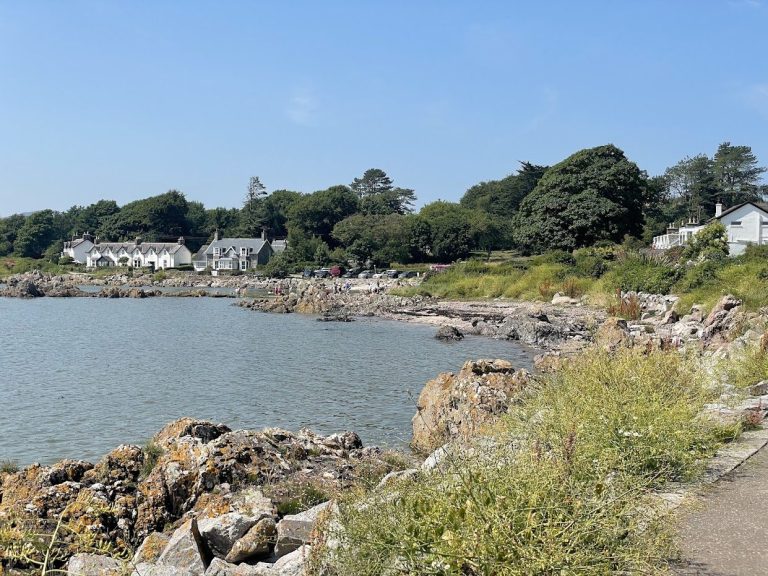
With some pressure to get to Culzean Castle with enough time and energy to set up camp, eat and decompress from a long day's riding, I made choices not to stop too often and kept things more practical - more exploring in this area would take place on the return leg. Rockcliffe (pictured) delivered postcard views of the scenic coastline as well as open views over the Solway Firth to the Cumbrian hills in the distance. I enjoyed some conversation with a few locals in Kirkcudbright over lunch. Joining the main arterial flow of the A75 racked up faster miles to Newton Stewart with one section offering open views over the Solway mud flats, and then a wonderful long cross country romp across the edge of the Galloway Forest to Girvan. Then a short hop to Culzean to complete the 250 miles with 6.5 hours riding - I took the long way around - a rewarding day in the saddle.
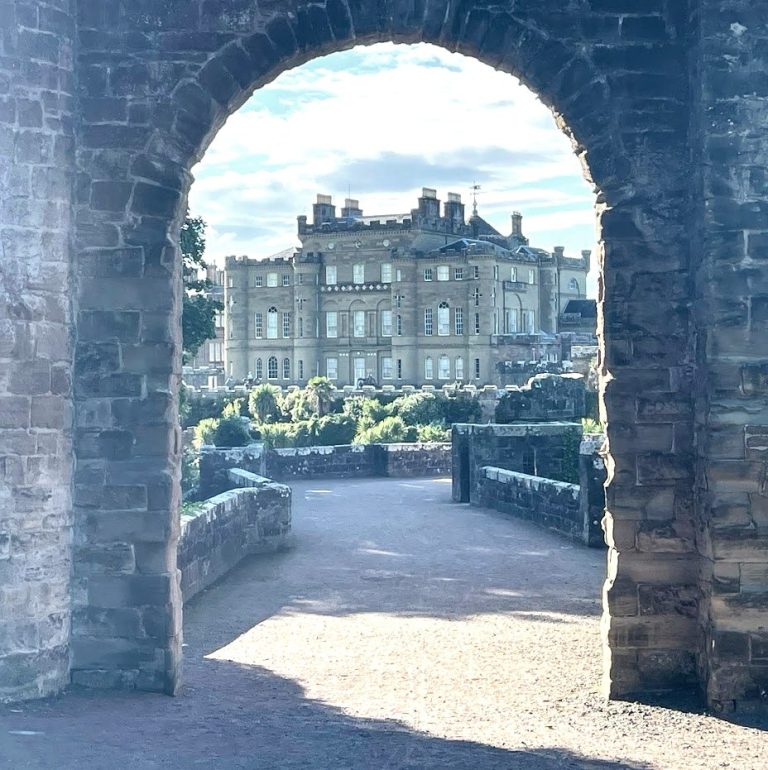
July 2026 - Ayrshire Coast - Culzean Castle
Culzean Castle is a place I've visited and written about previously. Perched high on the cliffs above the Ayrshire coastline, with expansive grounds and situated close to the campsite, it's ideal for a few miles walking after an evening repast. Counter-intuitively, I tend to eat relatively well when travelling like this - ready to eat chicken breast, tuna, berries, apples, bananas and ice cream, not forgetting the coffee. Generally I lose weight when touring, and on this occasion I lost four pounds over a week. Each evening, after the ticket office had closed, I would walk and soak up the grand surrounds of the castle with hardly another soul around. I take a lot of photographs and enjoy composition; with the sun descending in the west, wonderful shadows added valuable depth. I discovered there is more to Culzean than meets the camera eye.
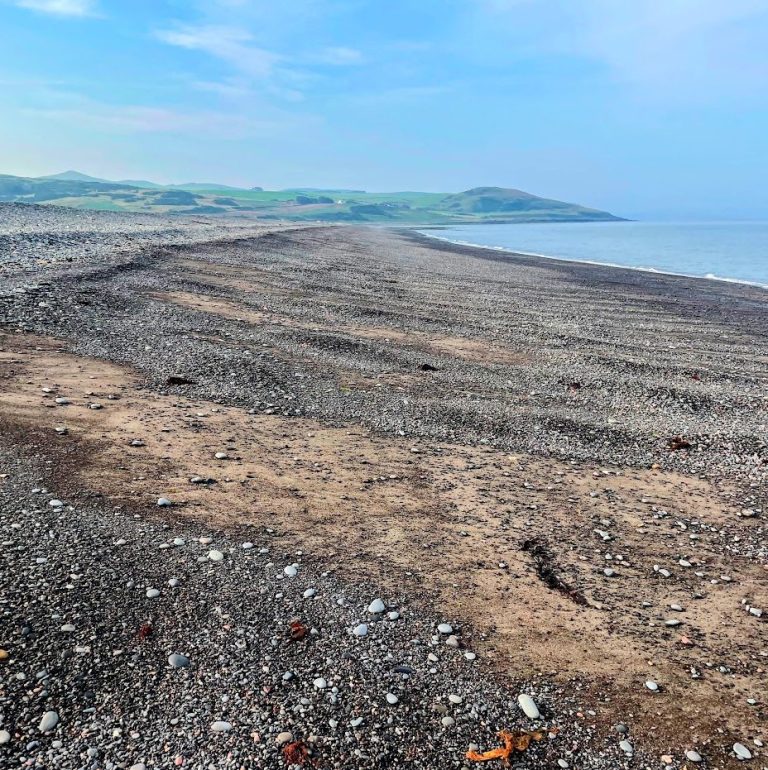
July 2026 - Ayrshire Coast - Ballantrae Beach
Pulling up into a rough and ready foreshore car park, a call of nature was required. Generally in Scotland I've found public conveniences to be well kept and well..... convenient. On the wall inside I see some advertising in black felt tip "For a good time call.....". I'm intrigued, but I realise I'm going to need more before committing. Because if it's a thermal spa, coffee/cakes and an early night, we're talking. But if it's tequila shots and karaoke until 3am, we've misunderstood each other. If we don't tell them, how will they know?
It's a short walk to the beach which is not soft fine white sand, but a vast vista of shingle beds on darker sand, and some inland ponds. It's a site of special scientific interest with increasingly rare coastal plant life and colonies of birds. The small fragments of rocks making up the vast shingle beds are between 450 and 500 million years old.
Looking out to the horizon at sea yields a surprise....
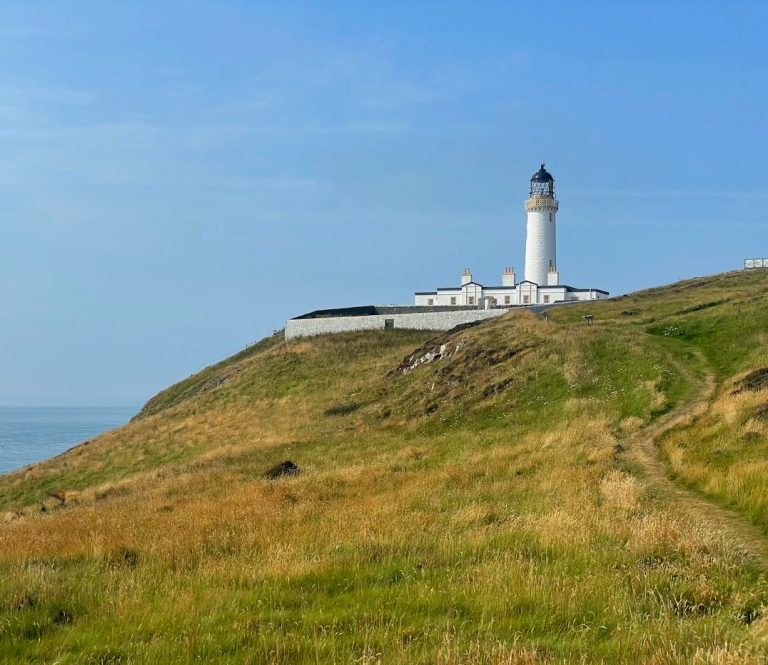
July 2026 - The Rhins - Mull of Galloway
One of the key destinations on this trip was the Rhins of Galloway, with the first stop being the most Southerly point in Scotland - the Mull. Setting off after breakfast I headed South along the Ayrshire coast, stopping at Stranraer briefly, and then onwards down the peninsula. The last five miles are on single track tarmac with passing places, which is easy on a bike. A bull and calf encounter in the last half mile added an interesting twist before the final ascent to the well surfaced car park near the lighthouse. The sun shone, I sweated, I drank water - it's a nice problem to have. The peninsula offers stunning views and an appreciation of the abundant plant, insect and bird life; it's easy to see how the area was included as an extension to the UNESCO Biosphere during the 2023 review.
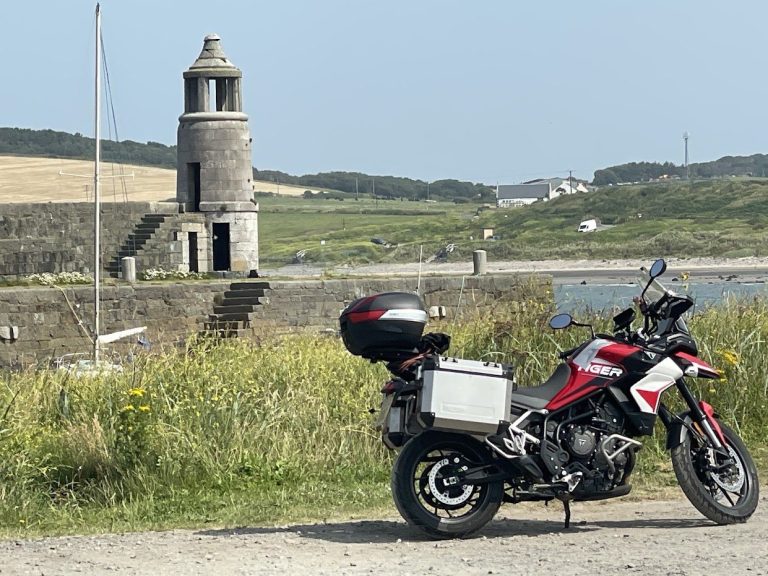
July 2026 - The Rhins - Port Logan and Botanical Gardens
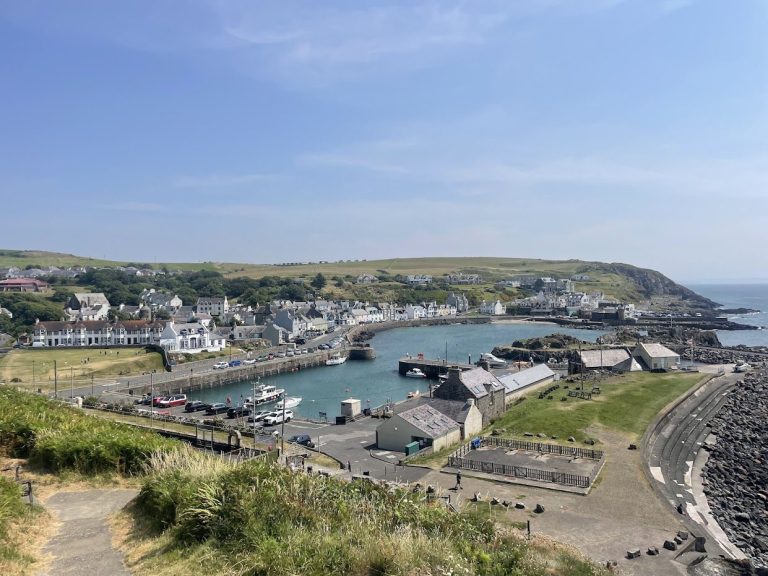
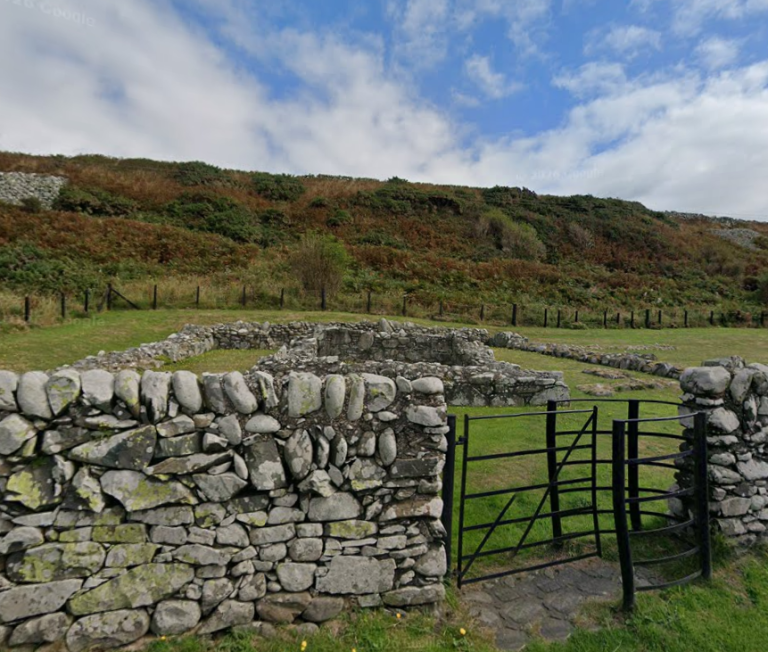
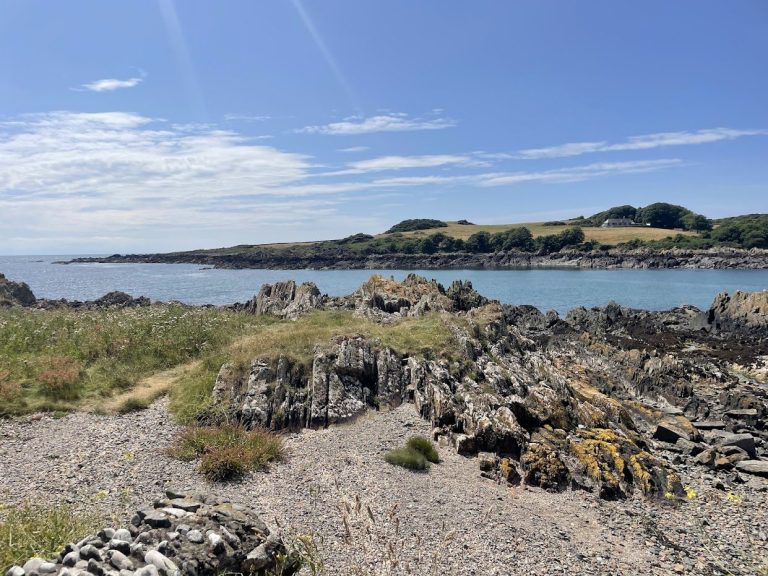
After the rigours of an hour marching around the Mull in the heat I took the return journey on the single track road, forking left over the hills towards Port Logan - a picturesque coastal village and harbour featuring a bell tower designed by the civil engineer Thomas Telford, and an ideal location to sit still for a moment and enjoy some lunch and a coffee. I'm reminded of the Pontcysyllte Aqueduct Telford also designed and which I visited during my tour of Wales in May. Telford was
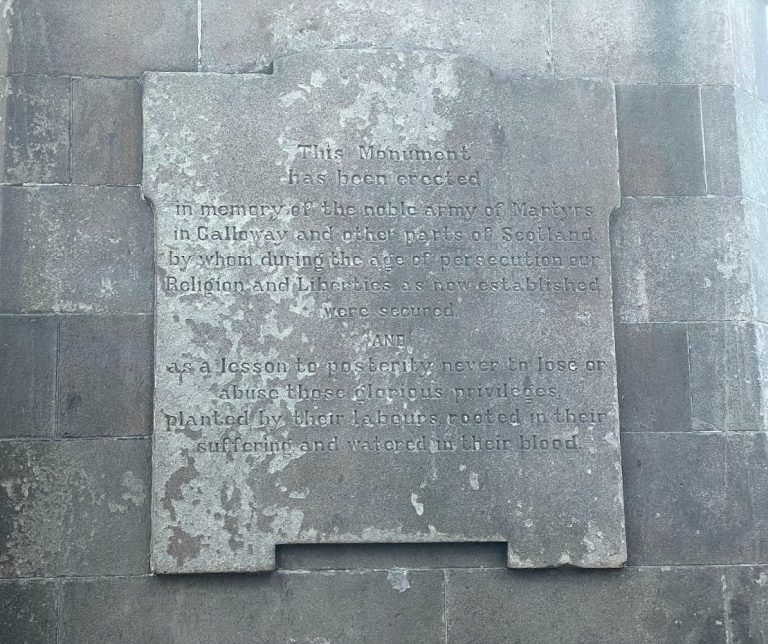
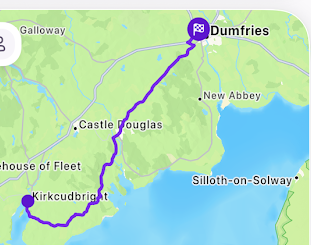
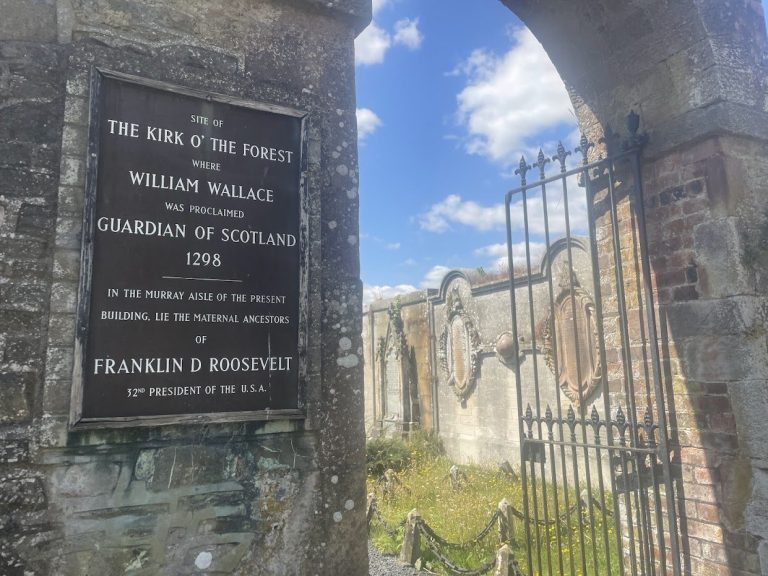
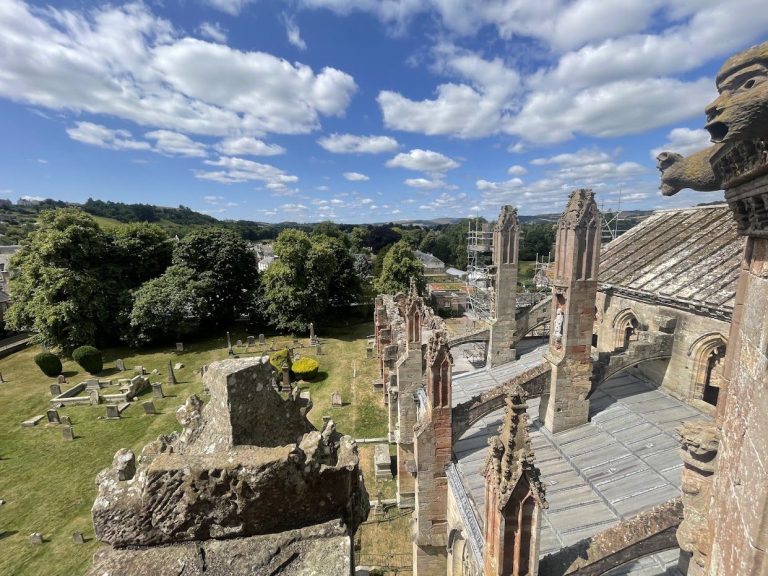
June 2026 - Scotland - Borders, Mull, Iona, Highlands and Perthshire
June 2026 - Jedburgh
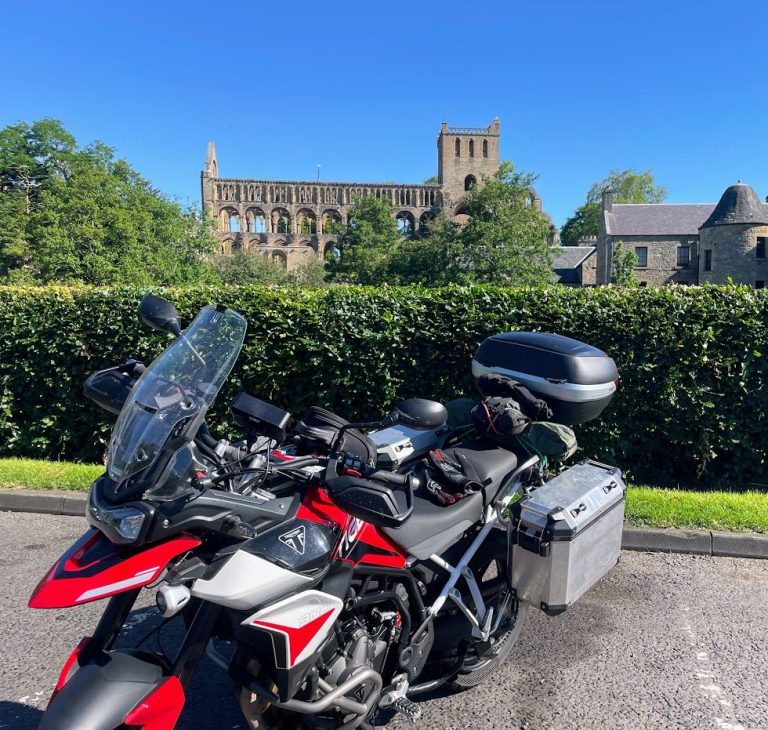
With a relatively early start I made easy progress from home to Jedburgh along the well trodden path of the A68 over Carter Bar and the England-Scotland border. Founded on Jed Water as a 10th century priory which in time was elevated to an Abbey, the town has a long and interesting history, demonstrating resilience and rebuilding through multiple conflicts due to its strategic border location. It's a regular coffee stop during one day borders rides and served as a suitable rest point on this outbound leg as I headed towards Loch Lomond. Blue sky and sun - an auspicious start to the days riding and the ongoing journey.
June 2026 - The River Tweed
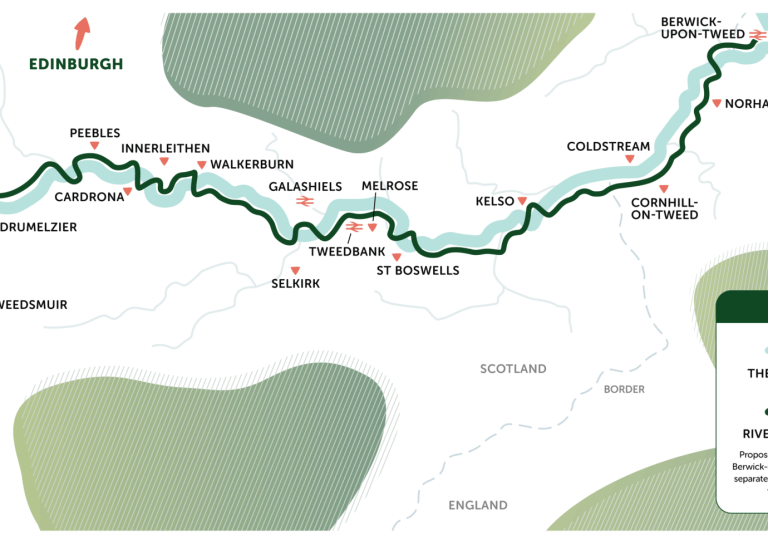
The Easterly section of the River Tweed, through Kelso, Coldsteam and on to Berwick is a pleasant borders ride I've done a number of times. As a conscious choice to avoid the faster motorway route around Edinburgh, I decided to take in the Westerly section from St Boswells, through Galashiels and onto Peebles. The river flows approximately 90 miles, West to East through the scenic Borders, and one of the best Salmon rivers in Britain; it is a historic border between England and Scotland. A beautiful and scenic ride.
June 2026 - The Kelpies
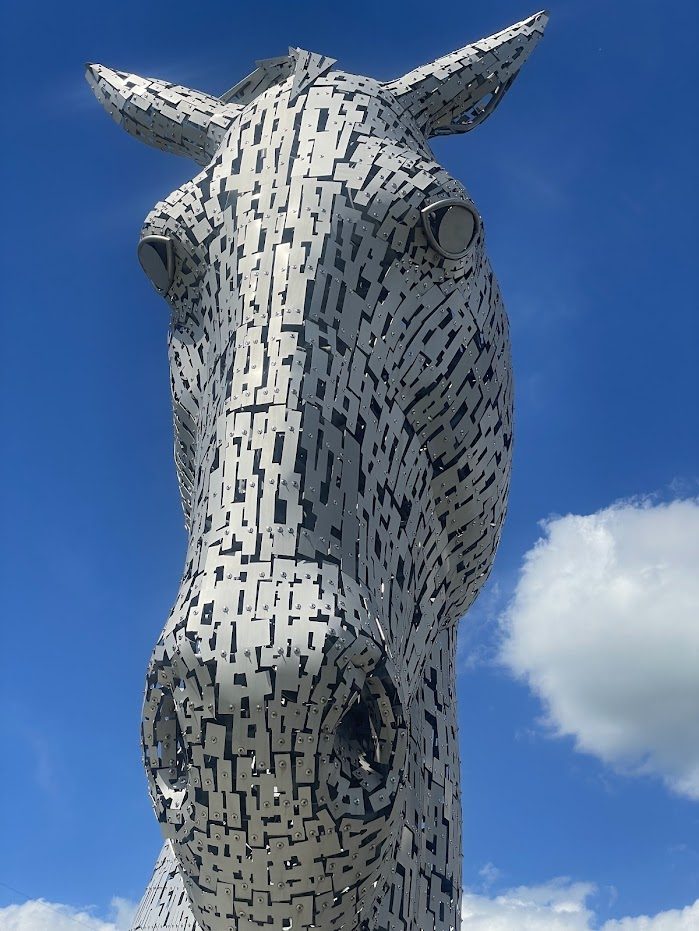
I've seen so many photos of The Kelpies, situated in Helix Park near Falkirk, that when they came up near my route to the first stop over at Loch Lomond, I decided to visit as a rest point. It was a hot Sunday and the park is a popular destination. both for tourists and those more local. The sculptures, designed by Andy Scott, were put in place during 2013. In Celtic mythology, a kelpie is a supernatural water horse that haunts lochs, rivers, and streams. Some stories tell of them grazing near the waters edge and lure unsuspecting passers by to mount them; once on their backs, their sticky skin preventing the person from leaving, they would descend into the murky depths to drown the unsuspecting guest. A cautionary tale perhaps, to keep away from deep or unpredictable waters. Andy Scott's interpretation layered this with a socio-historic celebration of horses' important role on canal tow paths, and in industry and agriculture. Through whichever lens you look, they are impressive.
June 2026 - The Falkirk Wheel
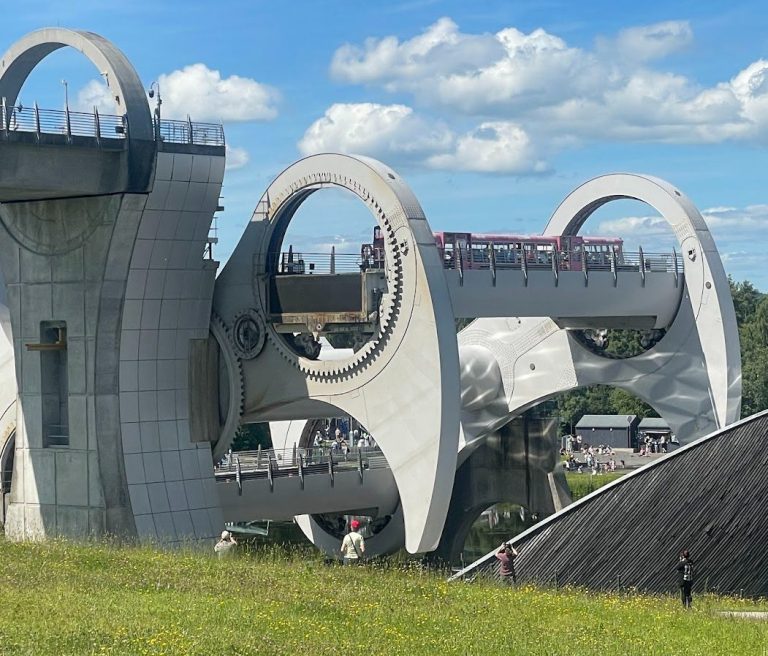
While in the Falkirk area I also visited the Falkirk Wheel, the world's only rotating boat lift, and a piece of engineering that replaced a series of 11 locks that took almost a whole day to provided descent of 35 metres from the Forth and Clyde Canal to the Union Canal. The route is a 35 mile sea to sea waterway crossing the Scottish lowlands, connecting the Firth of Clyde in the West to the Firth of Forth in the East, and has been historically important for sea going vessels travelling from Glasgow to Edinburgh. I'm left with an impression of a great piece of design and engineering, overcoming geography and solving a long standing issue.
June 2026 - Loch Lomond
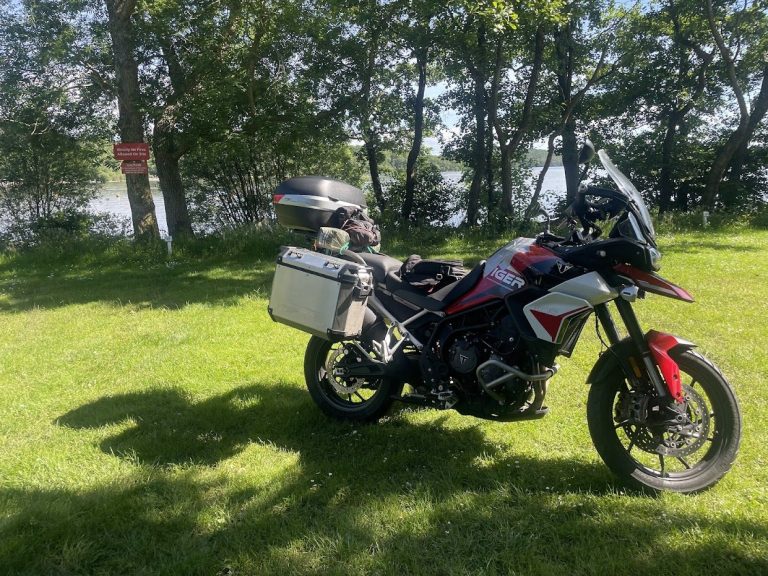
A first overnight stop at Loch Lomond, on the quieter Eastern side, provided just enough time to unpack, set up, eat, pack up and be on the road again the next day. The camp site sits right on one of the most scenic and physically demanding sections of the West Highland way, a 96 mile trail from near Glasgow to Fort William. A shocking discovery, my airbed was missing - as in not packed! and a first run in with the famous Scottish Midgees - they attacked without mercy, with a literal pepper shot of bites on both legs and arms.
June 2026 - To Oban and Mull
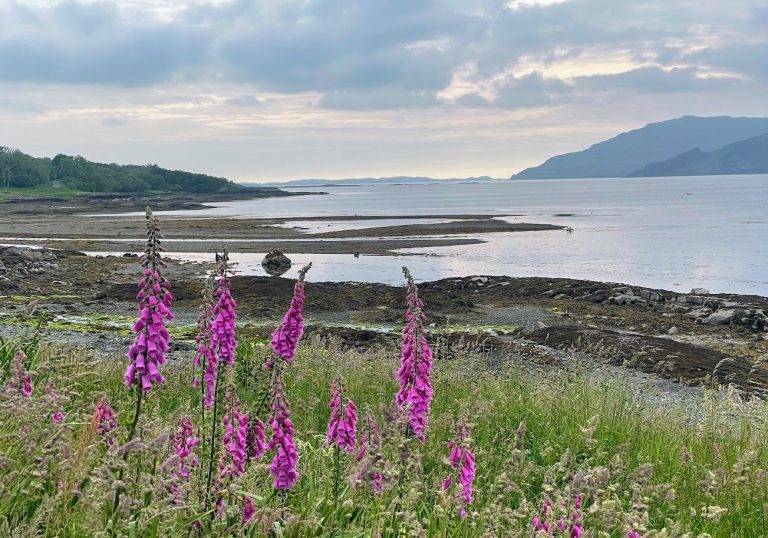
Practical matters - weather, fuel, water and food. The congested and speed controlled A82 heading North by the West side of Loch Lomond, compensated by the flowing and beautiful A85 from Tyndrum to Oban - a real pleasure ride. Food, drink and fuel in Oban before boarding the ferry to get me to Mull - a one hour crossing. I had a long chat to a couple who lived on Mull which provided some interesting insights into life on the island.
June 2026 - First Impressions on Mull
From disembarking from the ferry to the camp site, my first impressions were of the raw beauty of the place, the small roads and how it all somehow just works. The single carriageway roads with plenty of passing places on both sides introduced a new dimension to riding and navigating traffic coming towards you and behind you. You can't be in a hurry and fittingly you don't want to be!
June 2026 - Fionnphort
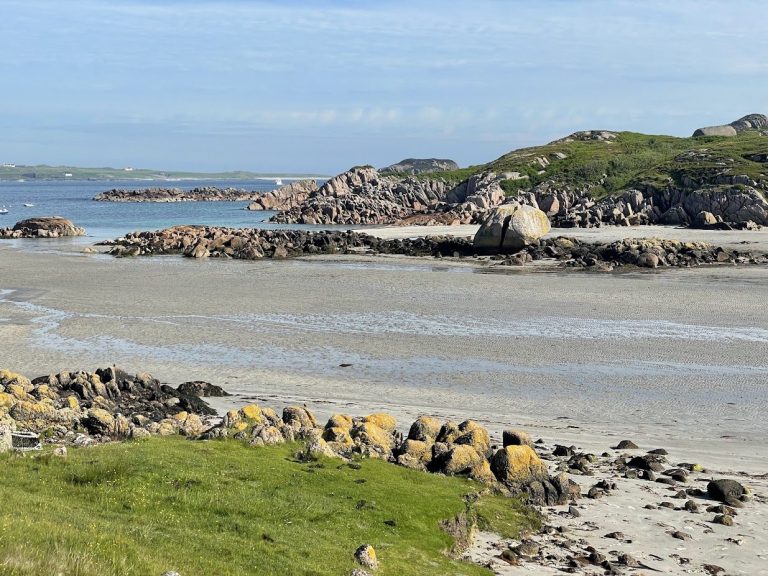
A relaxing and scenic ride from Port Nan Gael to Fionnphort gave me more exposure to the coastal landscapes on Mull. Stopping a couple of times for photographs I passed through the village of Bunessan, complete with a small Spar store before progressing to FionnPhort port where a regular ferry service runs to Iona.
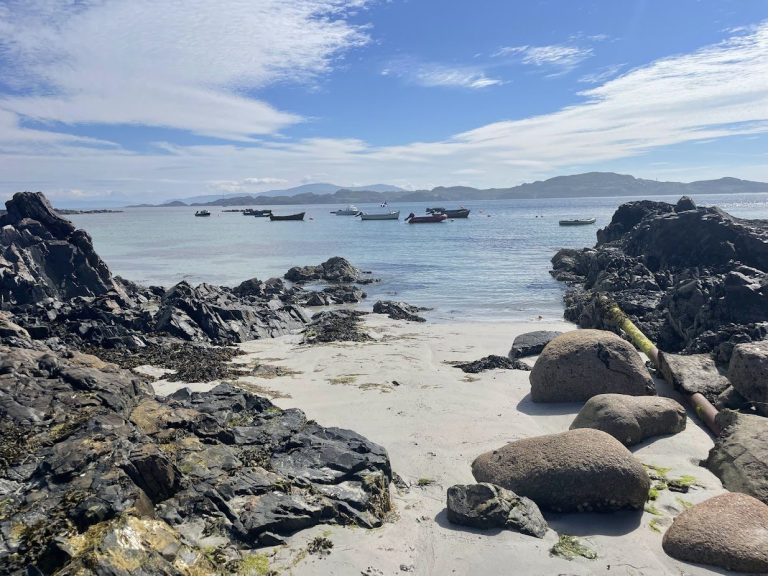
June 2026 - Impressions of Iona
There is a very small population here - perhaps 150 to 200 people. They have a postal service which is not based on carrier pigeon, and rubbish collections using a bin lorry, and yet it feels even more disconnected from the mainland than Mull, despite its close proximity to both. A chat to a bin man is revealing. It's peaceful here, with very little to break your thoughts aside from the sea lapping against rocks and shoreline, and the whistle of the light breeze, which is welcome on such a warm day. A microcosm which is likely as harsh in Winter as it is beautiful during Summer.
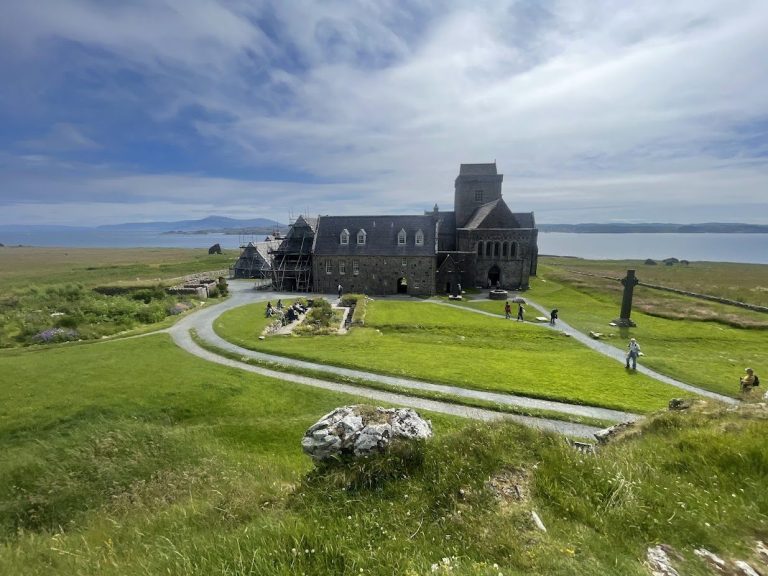
June 2026 - Iona Abbey and Nunnery
Key attractions on the island beyond scenery, beaches and wildlife, are the Abbey and the Nunnery. Well worth a visit with long and interesting histories and plenty to see. The island and abbey are widely celebrated as the birthplace of Christianity in Scotland with the arrival of St. Columba in AD 563, although my tour guide disputed this. The abbey is still functioning and is used by the ecumenical Iona Community who run regular services here. A very spiritual place where you sense layers of time meeting the hardships of history.
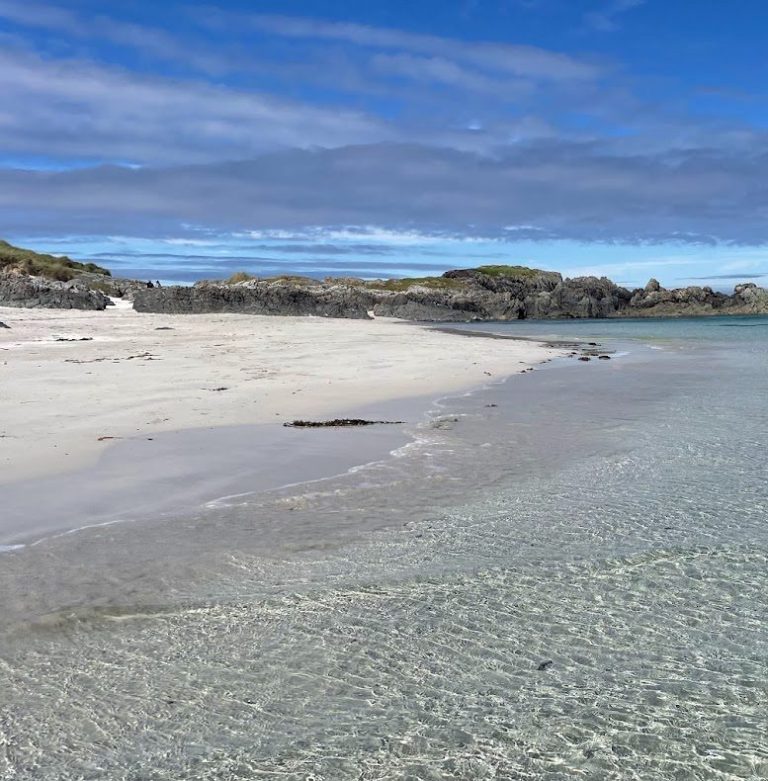
June 2026 - Sands of Iona
The island has a number of small white sandy beaches which are perfect to walk along or sit for a while. For myself I preferred to walk above the knee through the soothing crystal clear waters; welcome relief for all the bites on my legs. Hardly another soul around, and when you did meet someone it was always an interesting conversation. A lone (bag) piper stood near the rocks which took me by surprise. Pleasant strains waxing and waning on the breeze as I waded alongside the "white strand of the monks". An amazing experience, and one which will live in my memory of the place for a very long time.
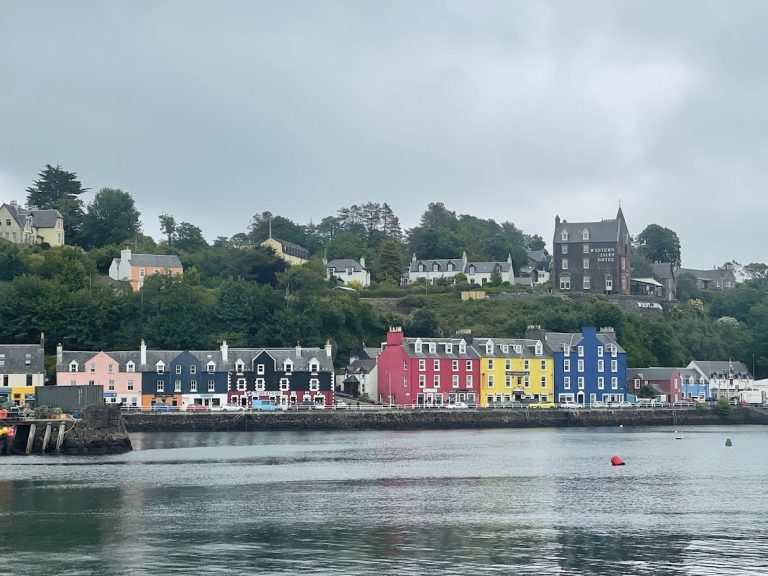
June 2026 - The Road to Tobermory
Road which is not single track on Mull? Yes, there is some, and it flows quickly, which is a nice change of tempo. Stopping for local roasted coffee and a bacon baguette at The Coffee Pot in Salen; I take a short walk to photograph the photogenic mysterious Salen ships and then head to Tobermory. The iconic and distinctive row of colourful houses is unmistakable. A visit to the Mull museum, a circular walk up the hill to the top of the town, and rounding out the visit with acquisition of gifts in the form of locally distilled spirit at the distillery. A busy and rewarding day. Tobermory is far more than the row of colourful houses it is widely recognised for.
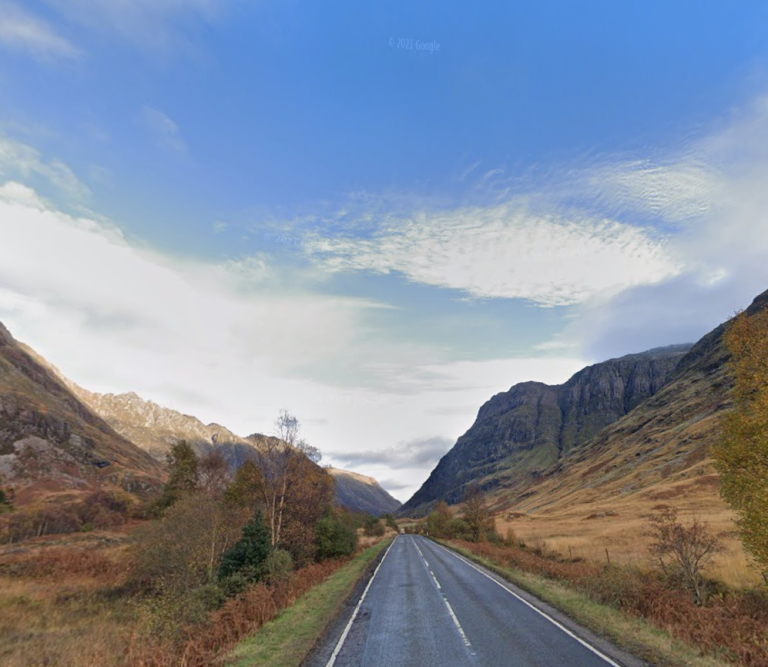
June 2026 - The Glencoe Valley / A82
Riding the delightful A82 towards the East is always a pleasure, despite high volumes of traffic and people. I ask myself the question - how did the people who designed and built this road through the iconic Glencoe valley do such an amazing job? Were they motorcyclists? The greatest piece of engineering on the A82 wasn't done by engineers. They recognised what had already emerged and been shaped by 100,000 years of glacial activity during the last ice age - energy flowing through deep time, carving a corridor through the remains of volcanic activity from around 420 million years ago. Time and energy on a scale I find difficult to imagine. Patience is a virtue - a beautiful end result and worth the wait!
May 2026 - Peak District, Welsh Coast, Pembrokeshire, Somerset
May 2026 - Journey To The Peaks
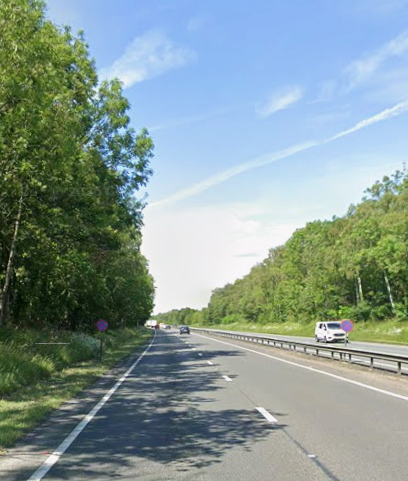
"A journey of a thousand miles begins with a single step", so goes the saying originating from a Chinese proverb. Travelling from home, inevitably the first 50 to 100 miles go through familiar territory where there is little new discovery. The open road feels good; the route locked in, cruise control set, and the beat of mechanical music my companion. My goal was to get to Hayfield as soon as possible, to setup and explore the local area as it was a one night stop. An unplanned comfort stop at a retail park led to a wrong turn and then serendipity struck in the form of GPS route optimisation, leading me away from the popular and busy dual carriageway to discover some beautiful backroads and stunning landscapes. Sometimes what seems like a disaster at the time can work out better than you ever imagined - what a great result!
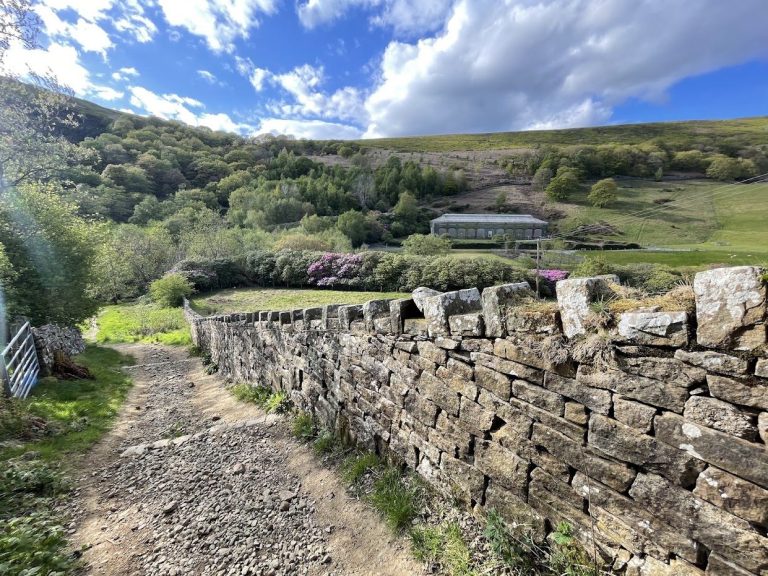
May 2026 - Hayfield - Kinder Scout/Reservoir
The High Peaks are a great staging post for journeying to and from Wales keeping me away from large populations. Epic roads and scenery. I had some time to explore Hayfield, which historically produced wool clothing and in time cotton (spinning, weaving and calico printing) as the industrial revolution brought with it extraordinary economic expansion and technological progress, but also immense human suffering during its early stages. I was camping right next to Kinder Reservoir and Kinder Scout, the highest hill in the Peak District and the site of 1932 mass trespass movement which sought freedom of access to roam privately owned moorlands. A potent mix.
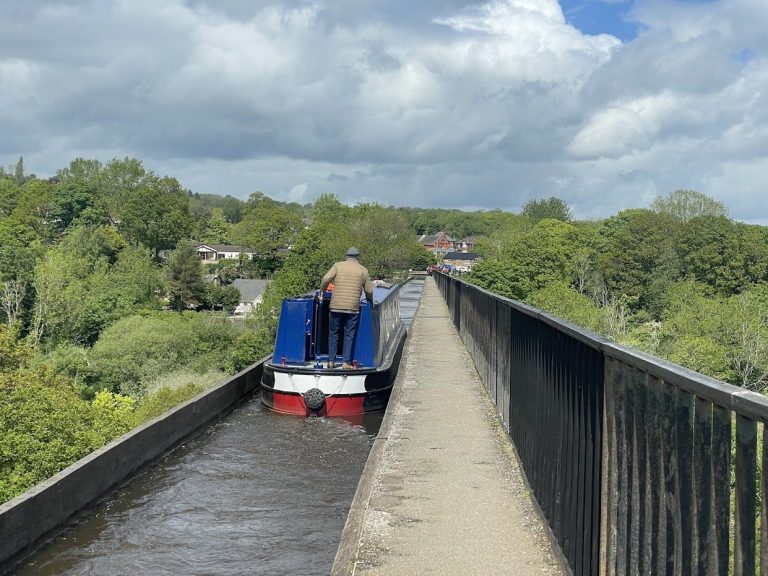
May 2026 - Dee Valley Landscape and Pontcysyllte Aqueduct
On my way to Bala, I visited the Pontcysyllte aqueduct conceived by Thomas Telford. The aqueduct is a pioneering masterpiece of engineering overcoming landscape and geography on a huge scale, and is a UNESCO world heritage site. Walking the aqueduct gave high views over the Dee Valley which I later rode through taking in Llangollen and eventually bearing South to Lake Bala. I'd chosen a good route for the bike which rewarded me with panoramic views of hills and valleys from long wide sweeping curves at speed. Magic!
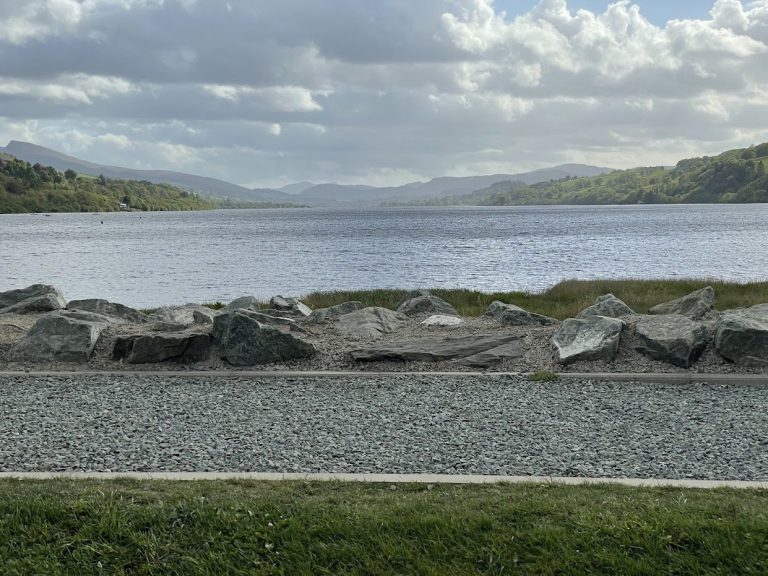
May 2026 - Lake Bala
Another overnight staging post before I headed West to begin the coastal leg of the journey. It was quiet here. The roads around Bala were spectacular for riding, almost dangerously so. No near misses for me as I toured a little in the early evening, but this stretch of tarmac bears witness to some sobering statistics. A great base for taking in the southern end of Snowdonia.
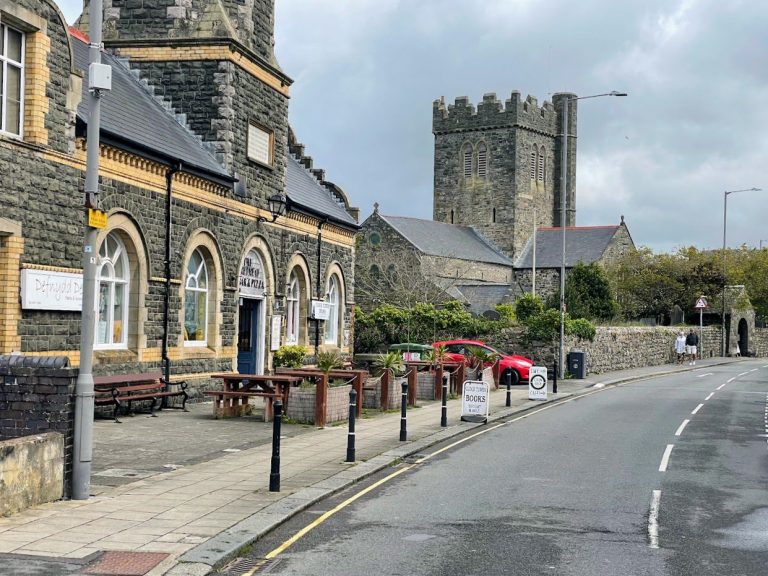
May 2026 - Tywyn
Having packed up in the rain I took the roughly one hour saunter from Bala to Tywyn taking the long way around the peninsula for the coastal road views. On a bright sunny day the dramatic climbing road out of Friog would not be out of place on the riviera, worthy of a James Bond car chase with Roger Moore starring in a Lotus Esprit. Tywyn was rewarding. Firstly as the best bacon sandwich and cappuccino I had on these travels, and secondly for St. Cadfan's Church, host to the Cadfan Stone engraved with the earliest known Welsh writing, and also an important site for pilgrims.
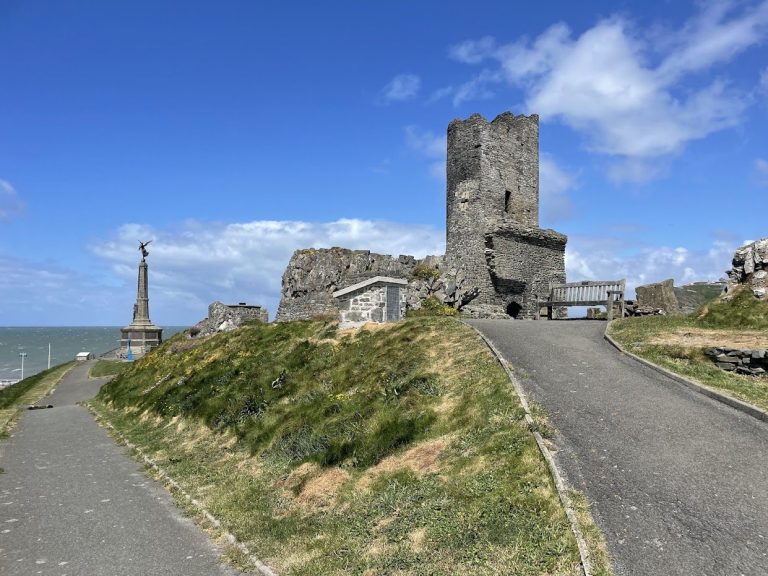
May 2026 - Aberystwyth
Aberystwyth was a rest point for me en-route to Newquay. A couple I chatted with in Tywyn over coffee described it as "the last resort" on the Cambrian coast railway. They smiled and chuckled. You can't beat a good castle and I enjoyed the walk up the hill through the castle ruins, taking in the views over the coastline.
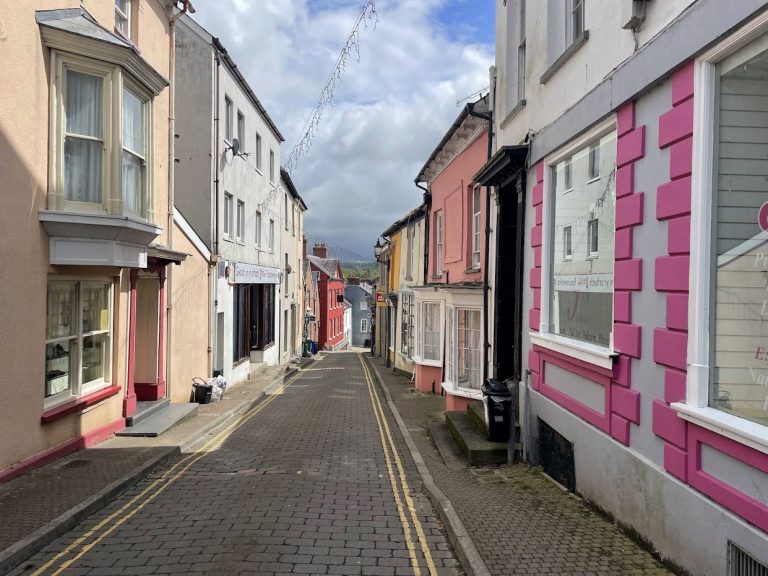
May 2026 - Cardigan
A first for me - single lane tarmac country B roads with wild grass down the middle. After packing up in the rain, this stop offered some sun and another first class bacon sandwich and cappuccino, along with service with a genuine smile - I can heartily recommend Crwst. Historically a significant trading port, my short stay here didn't scratch the surface; the town seemed to have a lot to offer on multiple levels; the Norman castle, shopping, culture, and a thriving arts and music scene.
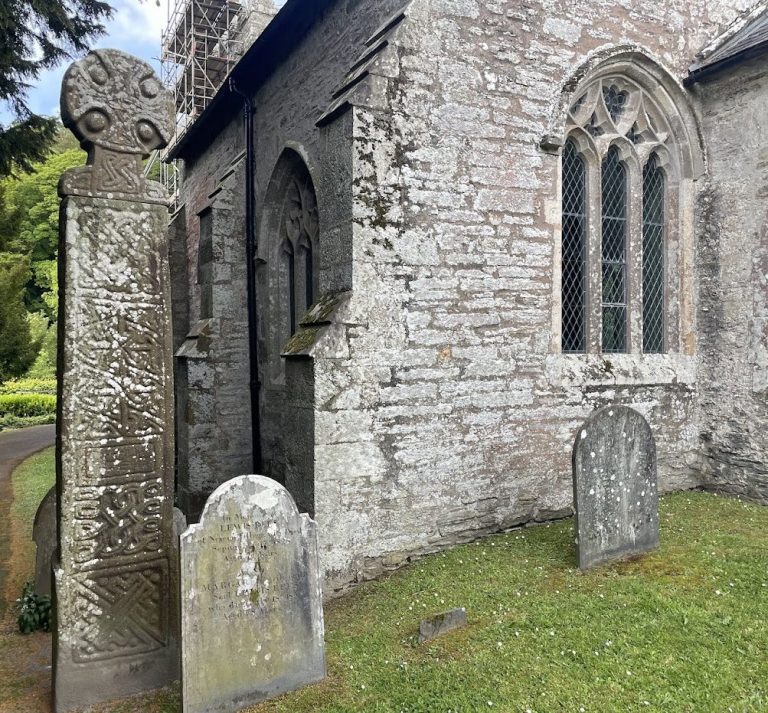
May 2026 - Nevern
The visit that nearly didn't happen. The grade 2 listed bridge leading from the main road into the village was closed unexpectedly not long before I arrived, causing quite a stir amongst local folk. Backtracking almost to Cardigan I found a B road as an alternative. St. Brynach's Church was interesting hosting a 10th century celtic cross, a "bleeding" yew tree and the Vitalianus Stone with it's dual language Latin/Ogham inscriptions. There were the friendliest people here and I spent as much time chatting to other tourists and locals as taking in the sights. I also discovered who holds the power in this small village.
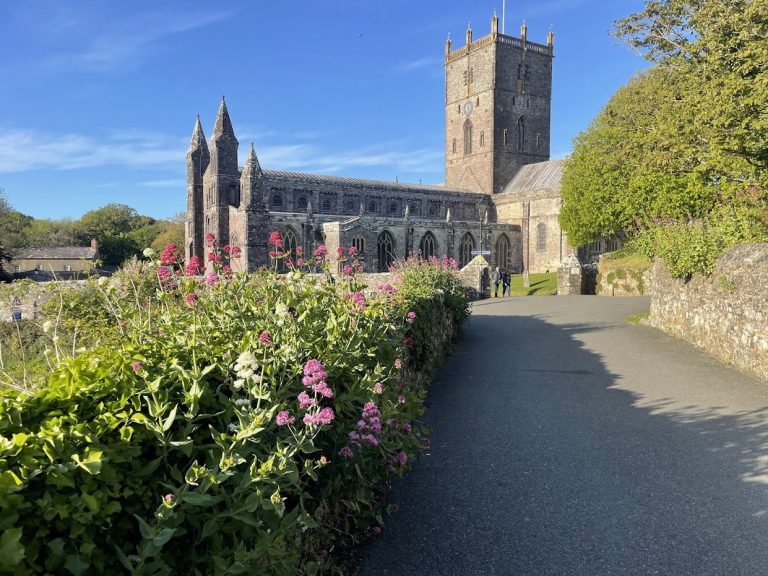
May 2026 - St. Davids
I stayed two nights at St. Davids, the smallest city in the United Kingdom, to enjoy the Pembrokshire coastal roads, visit the cathedral and also the colourful Tenby. Arriving in brilliant sunshine, I parked up near the cathedral just in time to sit in on the evening service. One of the drawbacks of the bike as a mode of transport is that when you get to where you're going, it's not often easy to change into something more comfortable or fitting. A church service in motorcycle gear was a first for me, and I was made very welcome into a beautiful space to enjoy the human connection, amazing acoustics and a pause to reflect with gratitude.
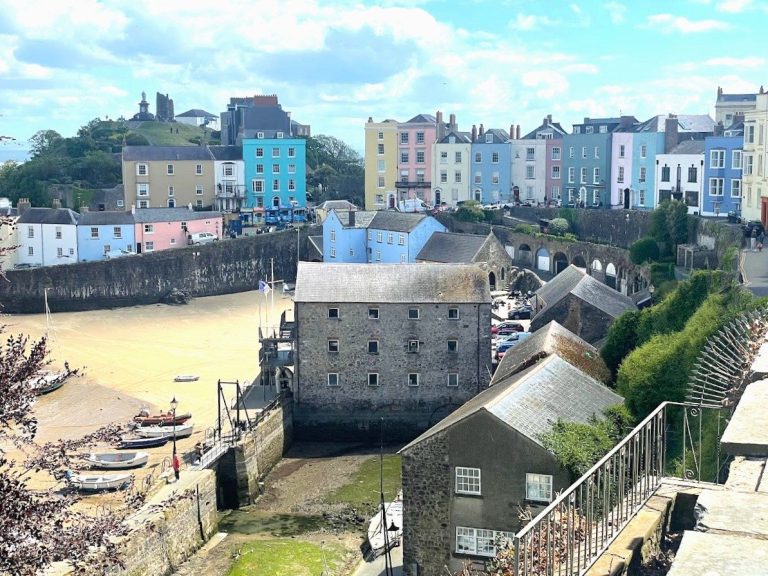
May 2026 - Tenby
Taking the lower coastal road from Pembroke, I headed to Tenby, a town I had been recommended to visit by everyone I'd spoken to on this tour. It exceeded my already high expectations, and it easily stood out as one of the best coastal locations of the tour - wide vistas over bays, framed by picturesque pastel coloured houses, historic battlements and town walls, along with plenty of shops and eateries. All enhanced by sunshine and lots of interesting conversations with other tourists and locals, including some revealing insights from a parking inspector.
May 2026 - Cheddar and Wells
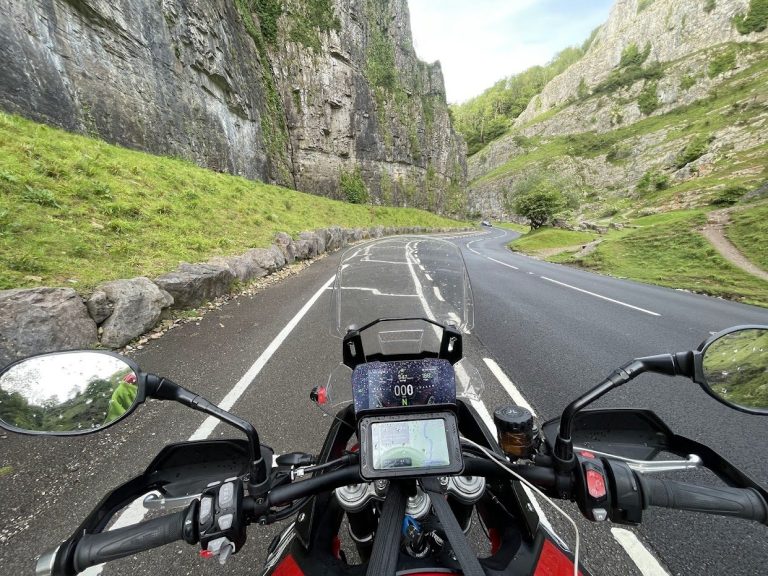
In 2024 I visited here primarily exploring the gorge on my way South and West. I returned this time to visit Wells, including the cathedral there, which I didn't have time for previously, but of course took the opportunity for a few laps of the magnificent limestone gorge.
Carved out over about a million years, the gorge is rightfully popular which makes riding through it particularly frustrating - overtaking is very rarely possible, high volumes of traffic with regular police patrols, and a lot of people of all ages walking and cycling down the edges. Early morning and later evening rides help.
My visit to Wells began with a look around the Church of St. Cuthbert, the largest parish church in Somerset, followed by attending a service and a tour of Wells Cathedral with its iconic west front and scissor arches. Magnificent masonry and engineering and some interesting contrasts to St. Davids Cathedral I had visited just a couple of days earlier.
May 2026 - Peak District - Leek
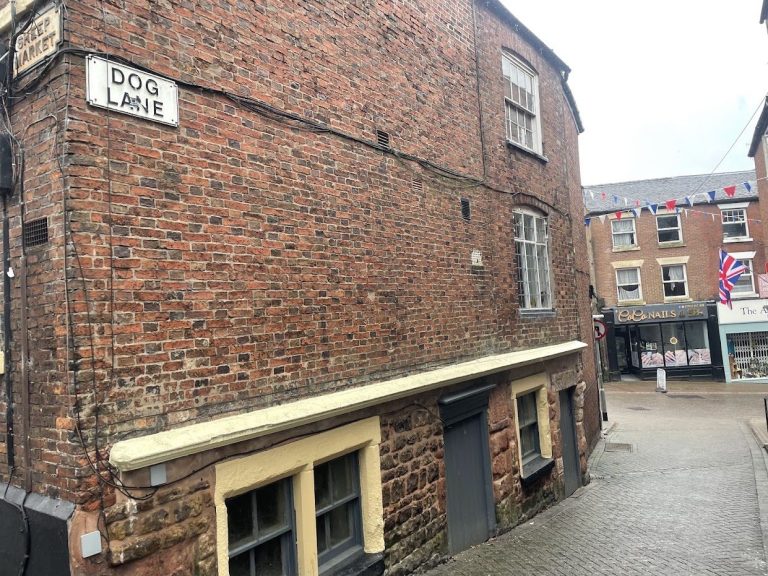
On the return leg I stayed at Leek for two nights and toured Leek itself, Buxton, Tideswell and Bakewell. The road from Leek to Buxton was such a blast, like a big kid, I lapped the 12 mile tarmac ribbon of fun four times with a huge smile on my face as the Tiger again showed me what it was capable of.
May 2026 - Glossop to Holme Valley - epic!
The final day's ride saw me pouring over the maps to find the optimal way to navigate between Manchester, Huddersfield and Leeds without encountering high volumes of cars or population. I was largely successful in carving out a route from Buxton, to Glossop and then the rewarding Woodhead Road past a number of reservoirs and finally ascending Holme Moss and down to Holme, then a precarious climb to Meltham and the Colne Valley. Majestic!
May 2026 - Journey to The Peaks
"A journey of a thousand miles begins with a single step", so goes the saying originating in a Chinese proverb. Travelling from home, inevitably the first 50 to 100 miles go through familiar territory where there is little new discovery. The open road feels good; the route locked in, cruise control set, and the beat of mechanical music my companion.
My goal was to get to Hayfield in the High Peaks as soon as possible, to setup and explore the local area as it was a one night stop.
After the obligatory stop at the ever busy Wetherby Services, and declining various over priced and over subscribed food offers, I decided to push on, figuring I would find calories further along the way.
A brief and functional sojourn at a small retail park next to Garforth near Leeds led to a wrong turn, and then some strange GPS magic happened. I was rerouted away from the popular and busy dual carriageway. Rather than stop to sort out the routing, I decided to blindly follow the magical mystery tour and trust the process.
After passing by Wakefield I was routed over sections of the Trans Pennine Trail, at times questioning if in fact I was on a cycle path, not a public road. These aren't roads to speed along; a comfortable pace allows enjoyment of all the senses, and not just an adrenaline rush - every nerve aware.
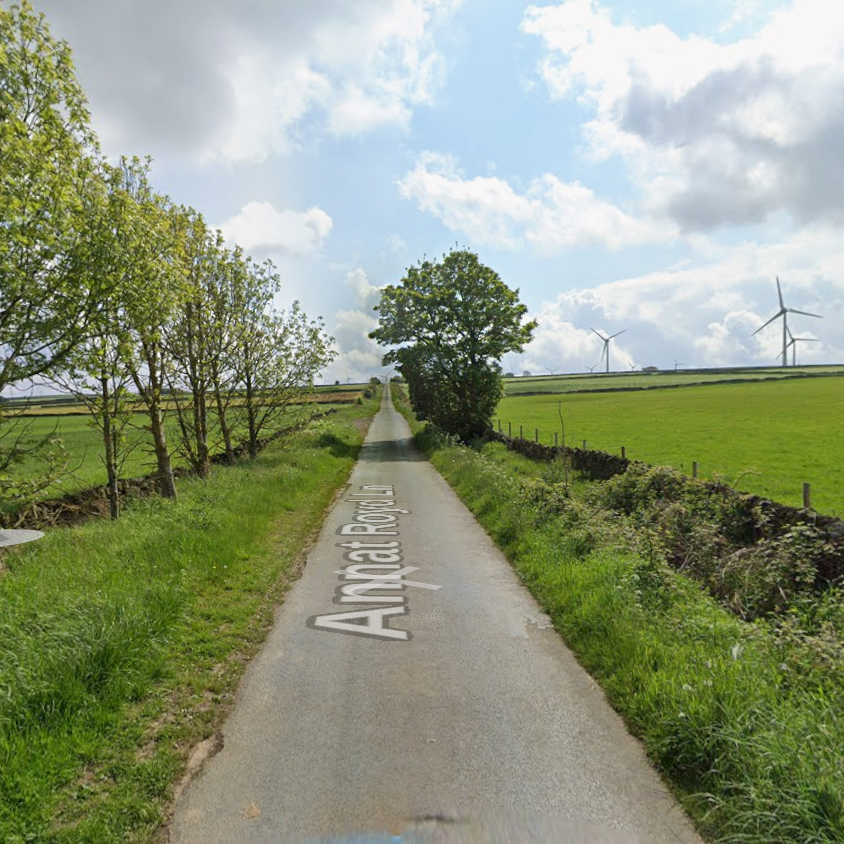
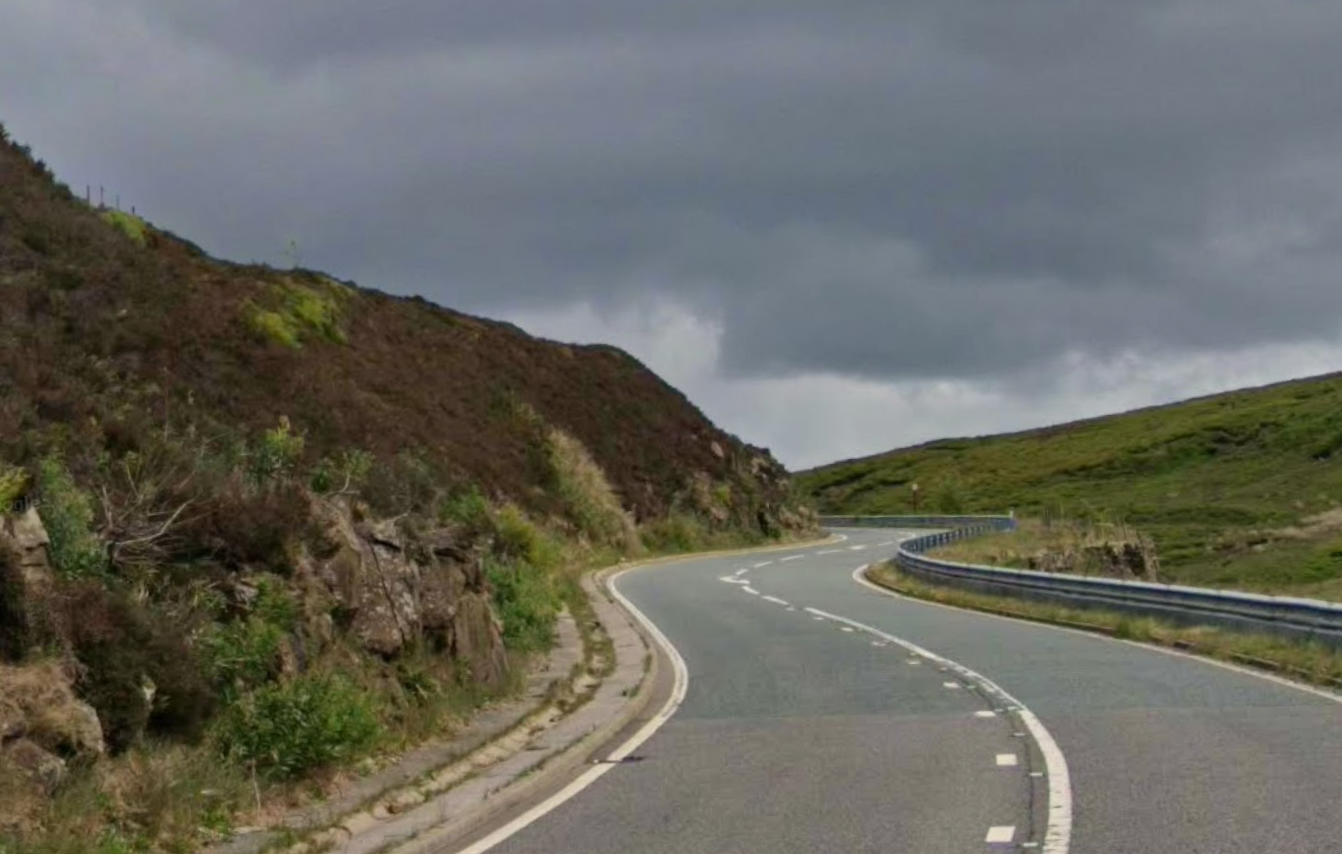
I didn't stop for photographs but below is a grab from google maps. At one point the route took me to the highest point of the trans pennine trail over Windle Edge offering sweeping views over the ever green Peak District.
In the picture below you can see the Royd Moor Wind Farm. In an earlier post I wrote about the first offshore wind farm in the UK off the coast at Blyth in North Eastern England. I discovered later that Royd Moor Wind Farm was one of the earliest onshore wind farms in the UK. The turbines are nearing the end of their agreed lifespan with the current extension running to the end of 2027. The age of cleaner energy has made its mark on land and sea - ancient and timeless landscapes shaped by layers of human intervention and endeavour - farms, mining, roads, wind turbines, reservoirs - all leaving their mark.
I'm grateful for the detour. Once again I find myself noticing; the point of the journey is not to arrive.
The next stop is Glossop for another comfort break and a refuel. The sun is shining and rather than take the 5 mile road direct to Hayfield, I decided to do a 35 mile circuit I did two years ago when visiting the region. Snake Pass to Bamford, along the Hope Valley through Hope, then Castleton, and then the brief grand finale - the majestic Winnats Pass.
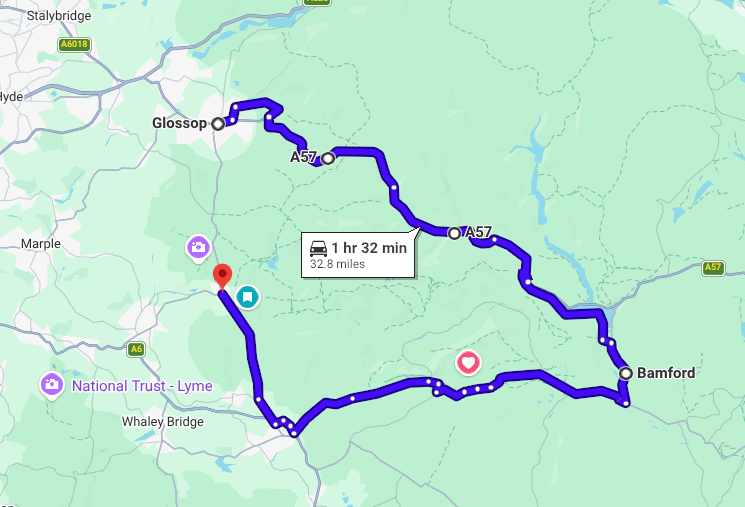
Snake Pass (A57) has suffered from land slips which the local Council have struggled to afford to repair and a number of contra flow lights were in operation. There have also been periods of full closure for investigations and repair. I was grateful that the road was open. It's an exhilarating ride with sections of open views, decent climbs and plenty of curves. The landscape blurs as I accelerate through a double S-bend, racing to the summit - every nerve alive. Yep, that hit the spot. (warning: watch out for the free roaming sheep!).
Freedom by design is not the absence of constraint, it's the ability to choose your route.
The end of Snake Road takes me past Ladybower Reservoir, famous for its plug hole style spill ways. The creation of the reservoir between 1935 and 1943, required flooding the villages of Derwent and Ashopton - during times of extreme drought I've read that portions of the villages can eerily break the surface. The reservoir is also notable for its involvement in practice runs during 1945 for bombing of German dams which required precision low flying and bomb release. The ladybower dam had strong resemblances to specific targets.
Passing the reservoir and turning right takes me through Bamford - a tranquil village and after the adrenaline of Snake Road the mode and mood switch to something much more relaxed and observational. It's hard to believe this is all just 10 miles or so from a major city.
Sauntering along the Hope Valley I take a short break in the village of Hope. What a great name for a place. I took a wander through the grounds of St Peter's Church for a stretch of the legs.
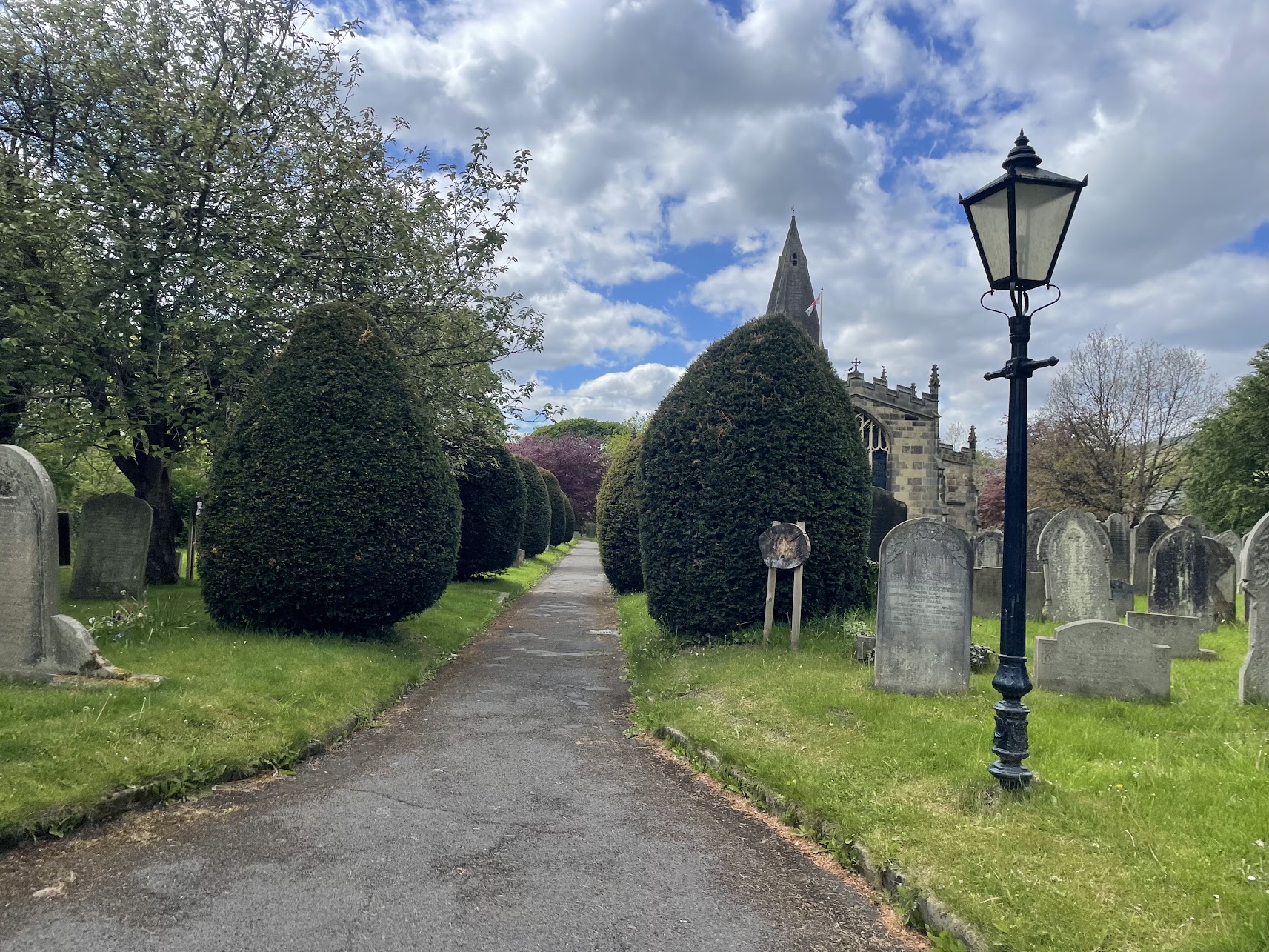
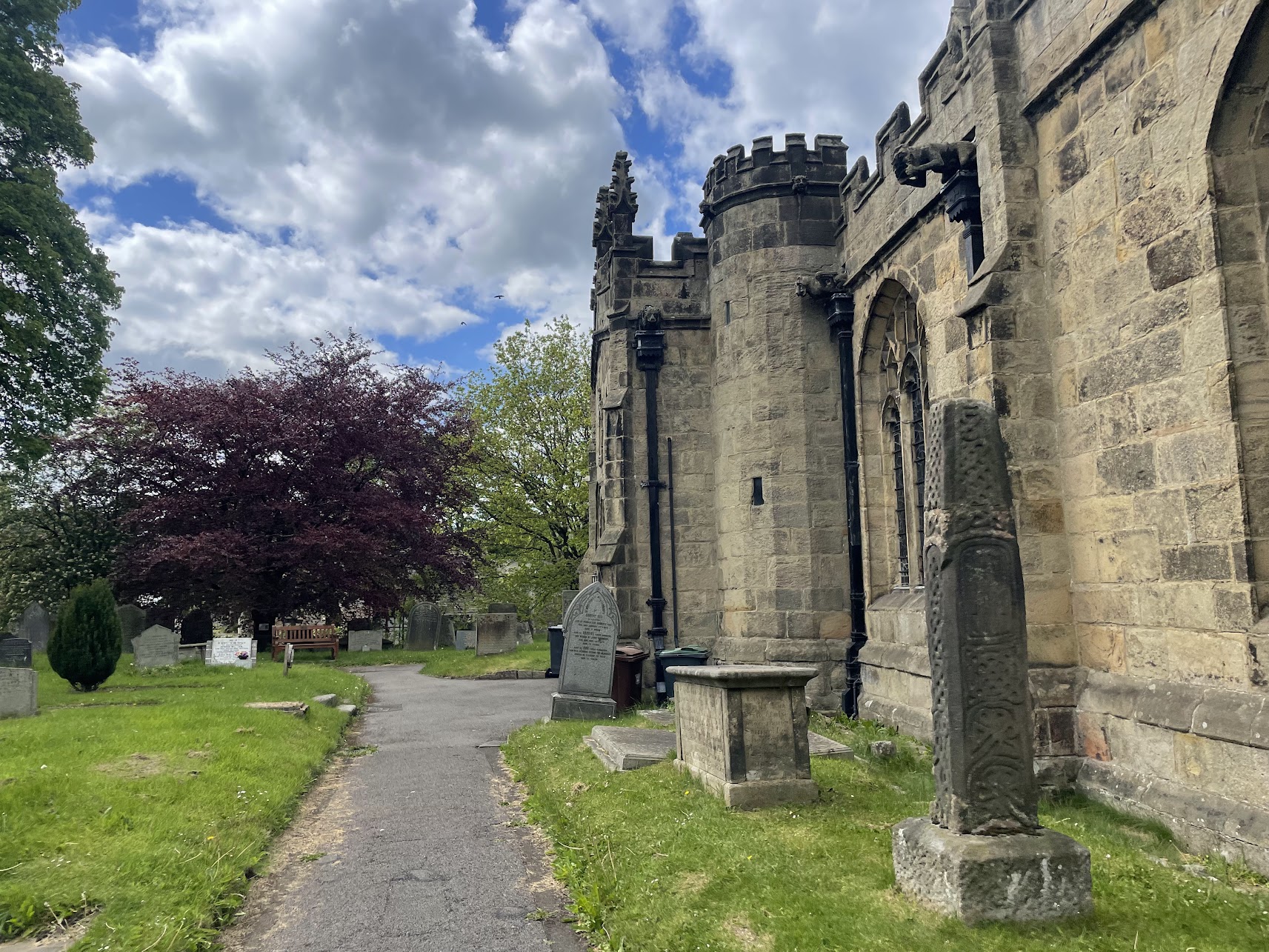
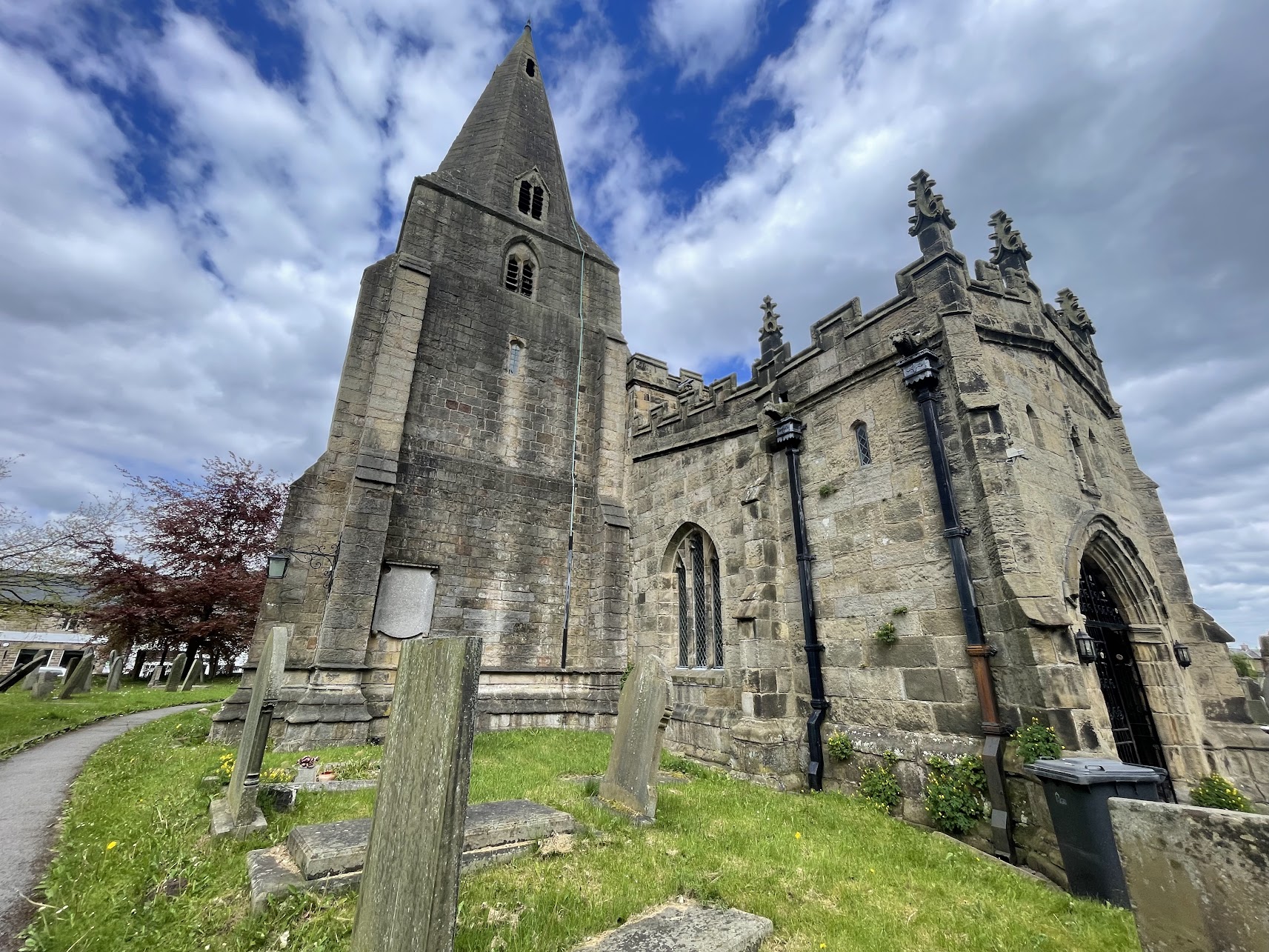
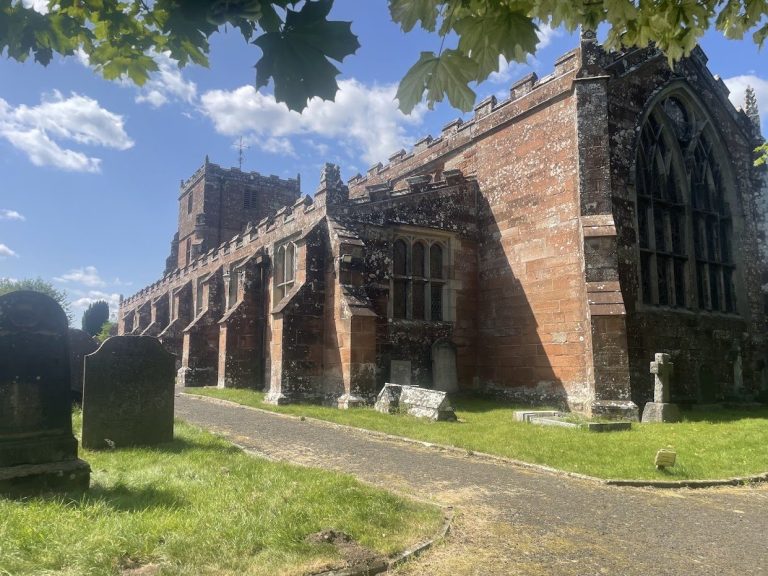
The grade 1 listed church dates from the 14th/15th century and I was drawn to the distinctive look of the crenelated tower - almost like castle battlements bolted onto a church. I later learned that this tower largely originated from the 18th century. In the middle image above you can also see the shaft of an ancient cross which dates from the 9th or 10th century. After walking the grounds I mount my steel horse and head for Castleton and Winnats Pass.
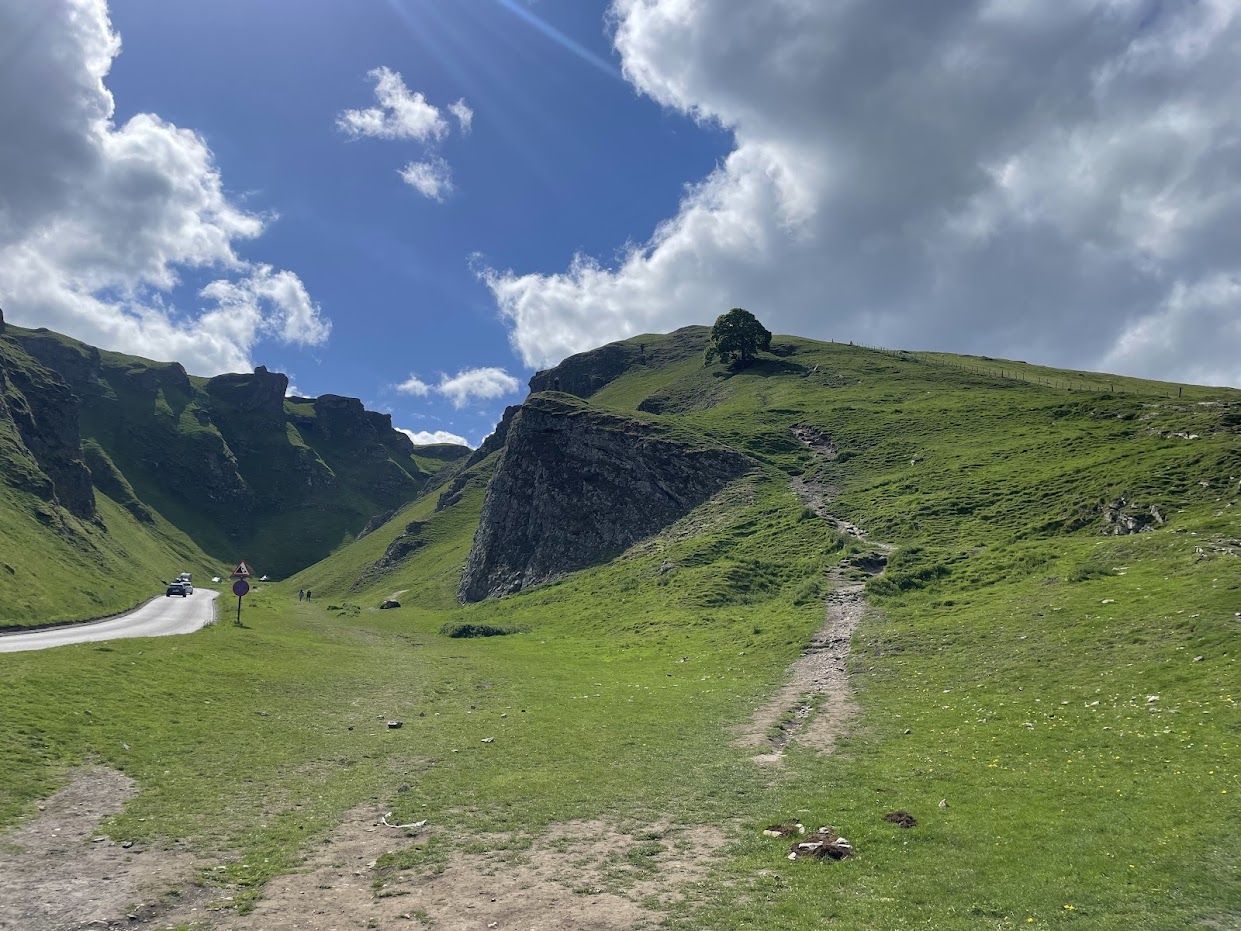
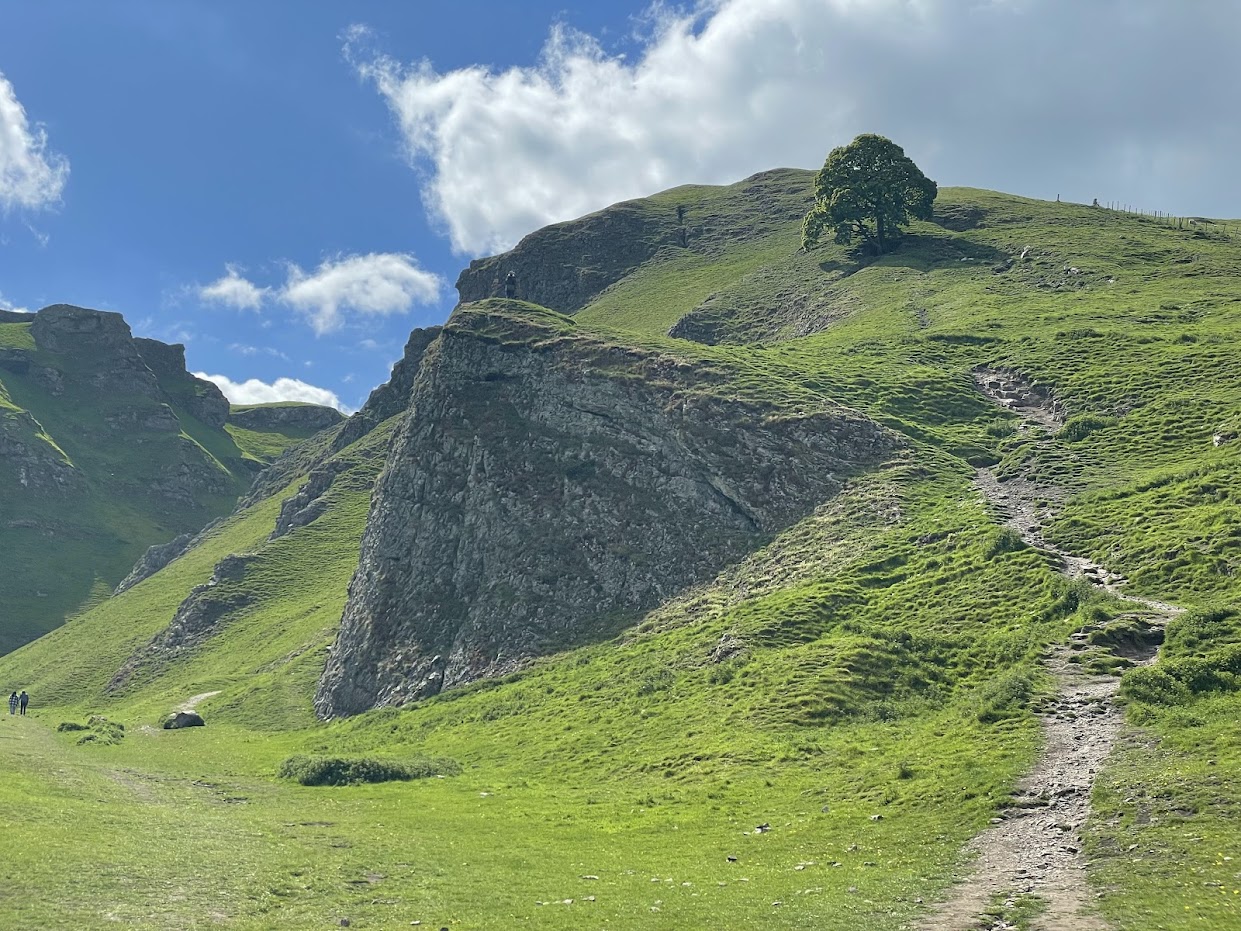
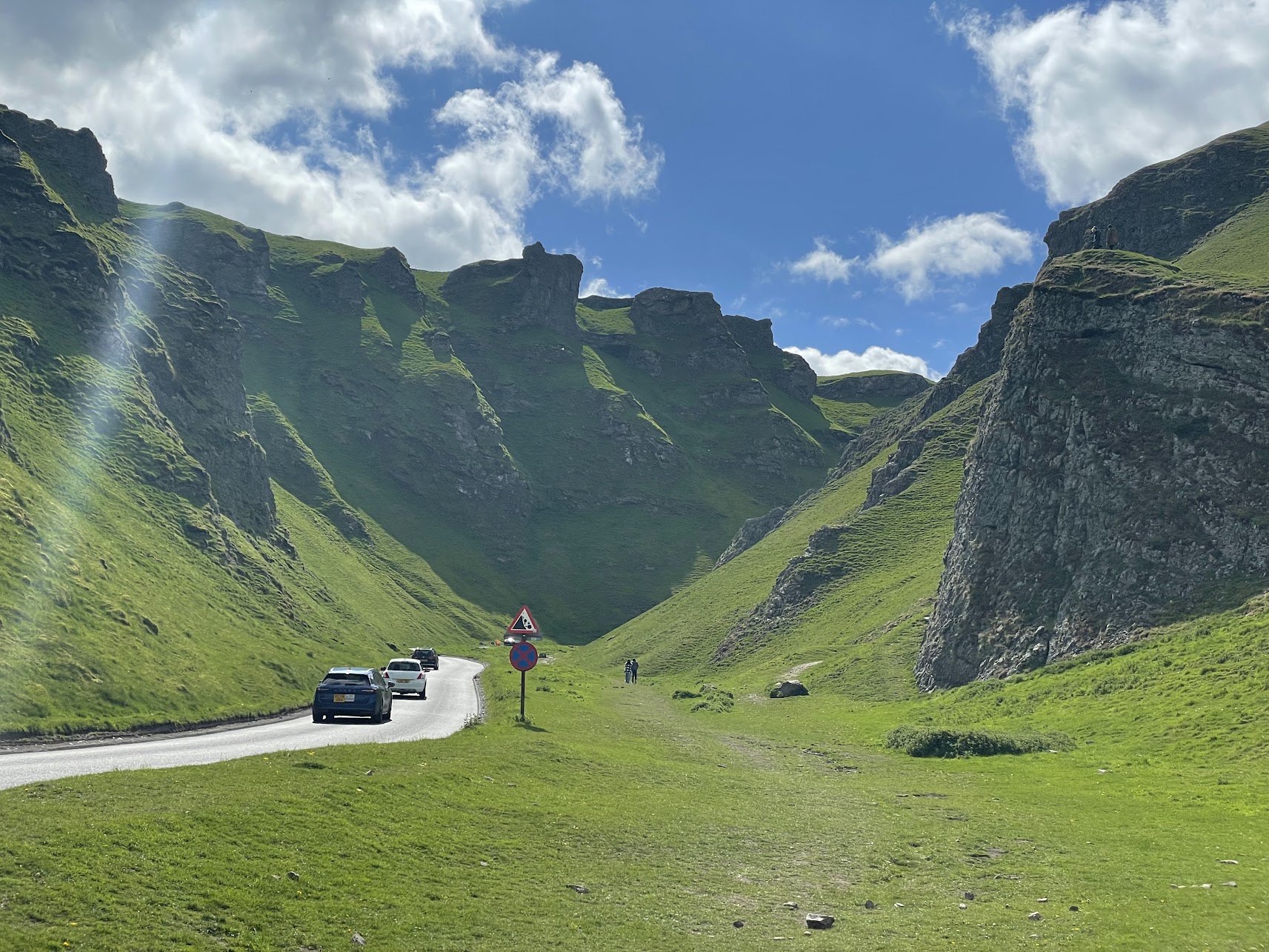
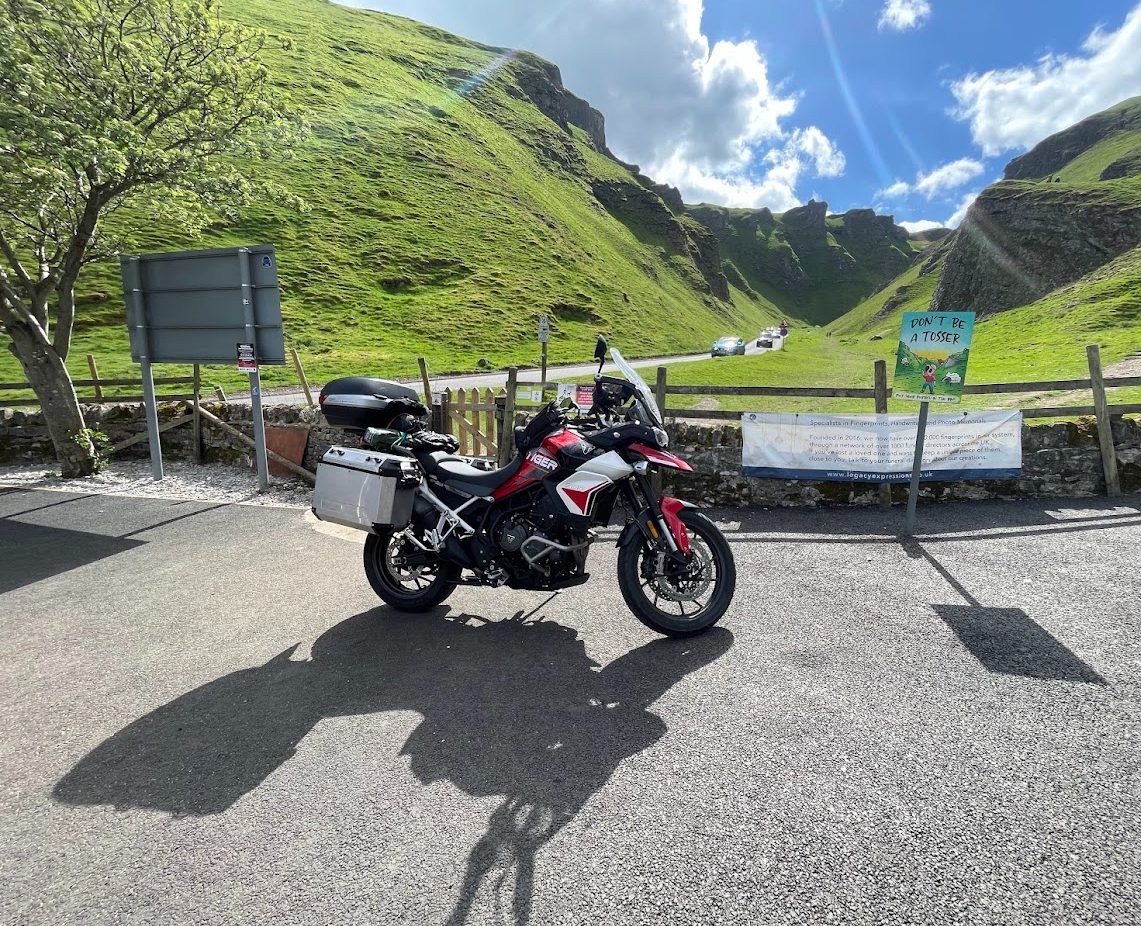
After a very laid back ride through Castleton I arrive in glorious low level sunshine at the entrance to the gorge, which was lit beautifully, the low light bringing the landscape alive with deep shadows. The pass was relatively quiet at this time; a few walkers heading up the sides, and I would have loved to have ascended to gain an aerial view. Heavy motorcycling boots, trousers and jacket are often an impediment - the dichotomy is real; that freedom of movement and experience afforded by the motorbike comes with restriction of movement in other ways - something for your protection in one setting, is actively holding you back in another - on balance the price paid is worth the rewards.
Littering can be a problem in the Peak District generally, and in this gorge in particular due to high volumes of visitors in all their guises. The bottom photo shows a humorous sign driving home a serious message - "Don't be a tosser" - a zero tolerance campaign championed by Keep Britain Tidy. I spend a lot of time in coastal locations and it reminds me of the good advice when visiting any beach - ensure all you leave behind are your footprints.
Riding through the gorge is a pleasure; the sun on my face with the dramatic landscape towering above me with enough curve and hill in the road to keep things interesting. It's a short but rewarding passage.
Leaving the gorge I complete the 9 miles or so to Hayfield, arriving in sunshine with a tent to setup and more exploring to do.
April 2026 - The Work of Being
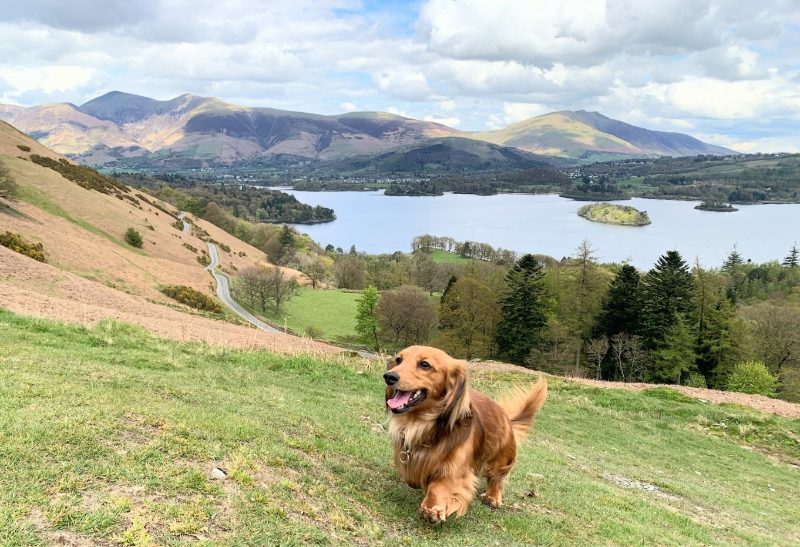
Some time away hiking in the hills has been long overdue, waiting out the Winter season, and it came gift wrapped in decent amounts of sunshine peppered with a few April showers. I've always thought of time spent in the "great outdoors" - being closer to nature, and enjoying walking through often majestic scenery - as visiting a kind of giant spiritual church. A place to disconnect from everyday life and marvel at landscapes carved over geological spans of time, filled with beauty, colour and life in all its forms. A place to simply be human - more being and less doing.
Four days of walking, talking and laughing. Soul food.
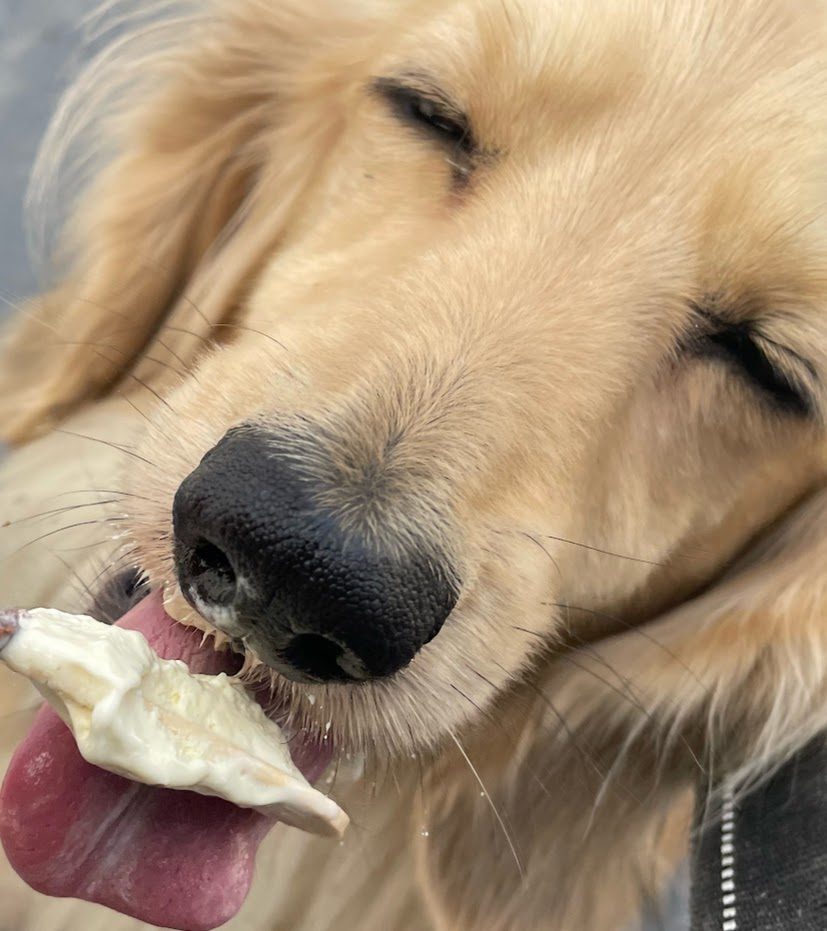
After years of field research and data collection, I'm pleased to report a strong correlation between sunshine, walking and quantity of ice cream consumed. It's a serious business - the definitive cooling technology v2.0 - no installation required, just a mouth and poor self control.
I've been looking back over my photography recently, which is now a considerable body of work, and which has become increasingly casual and phone based over the years. There are a lot of pictures of dogs and beaches, and it struck me just how much dogs are at ease and totally immersed in whatever they are busy with.
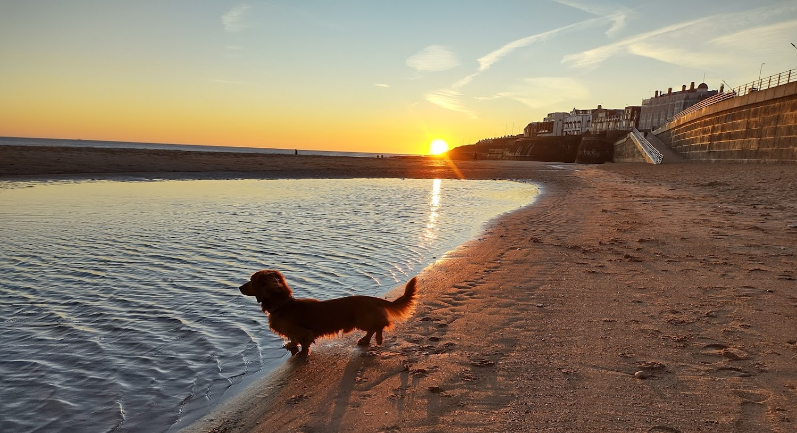
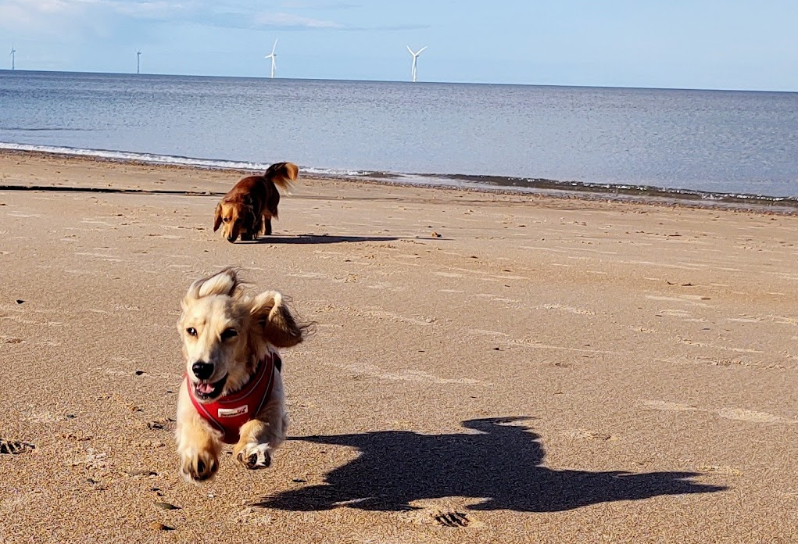
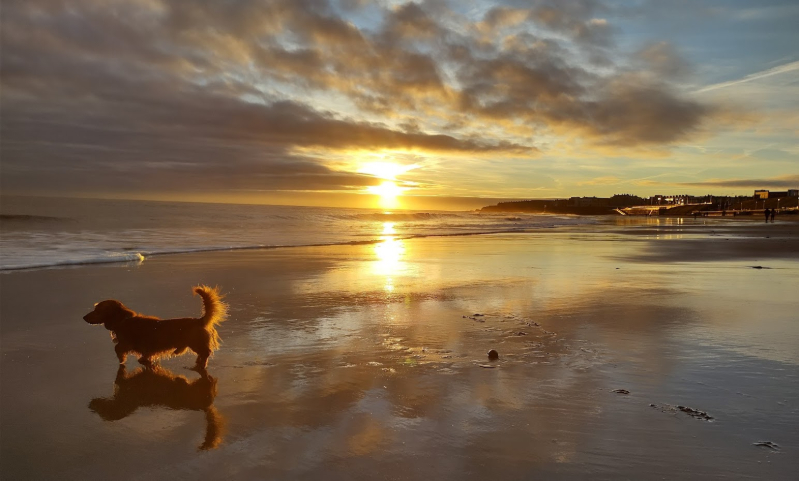
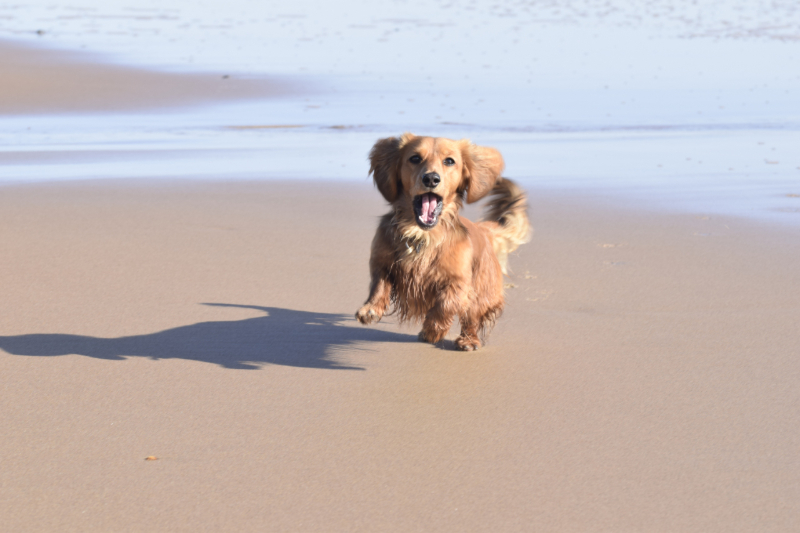
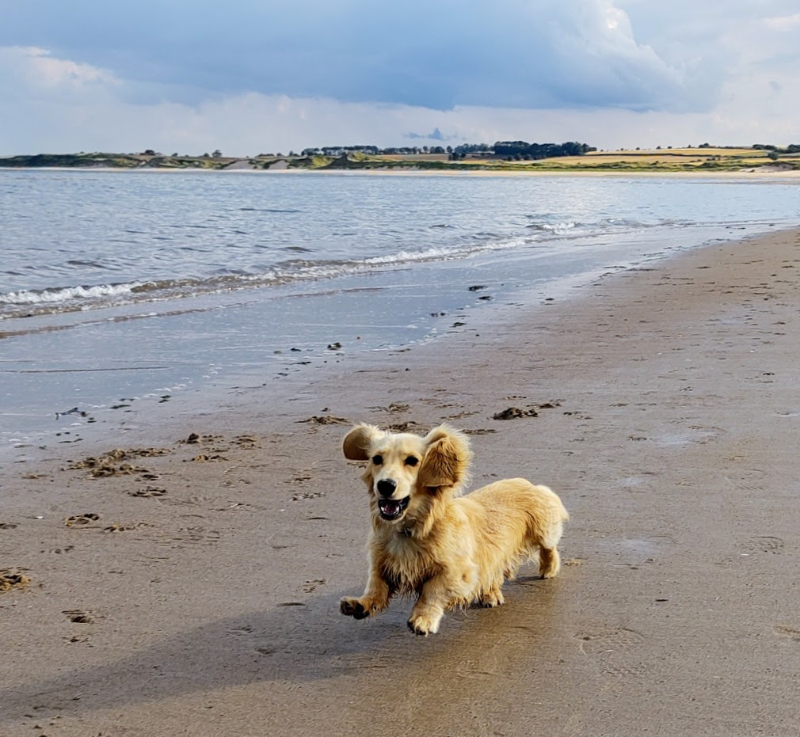
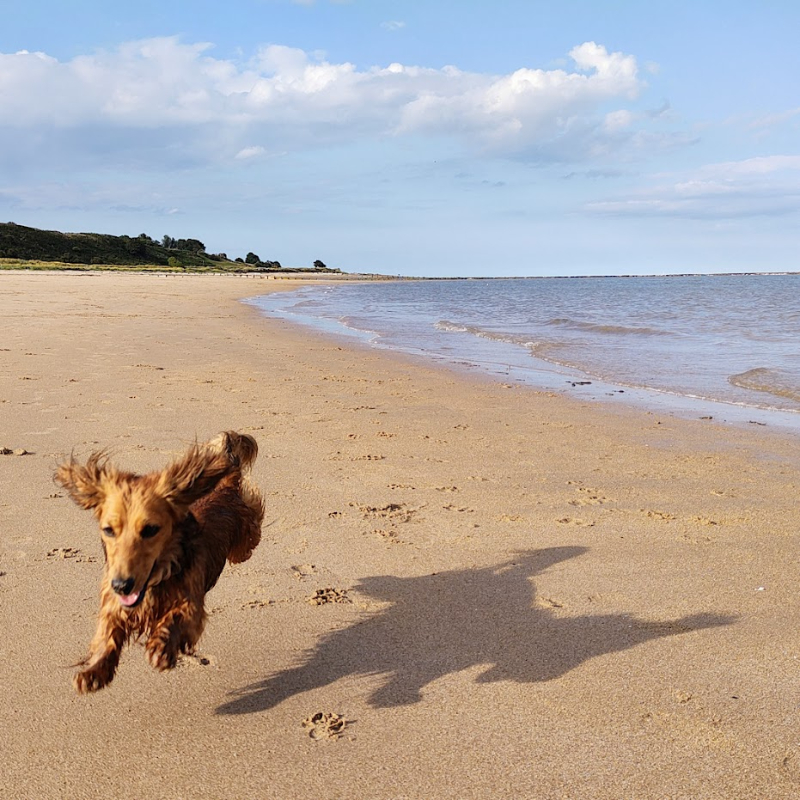
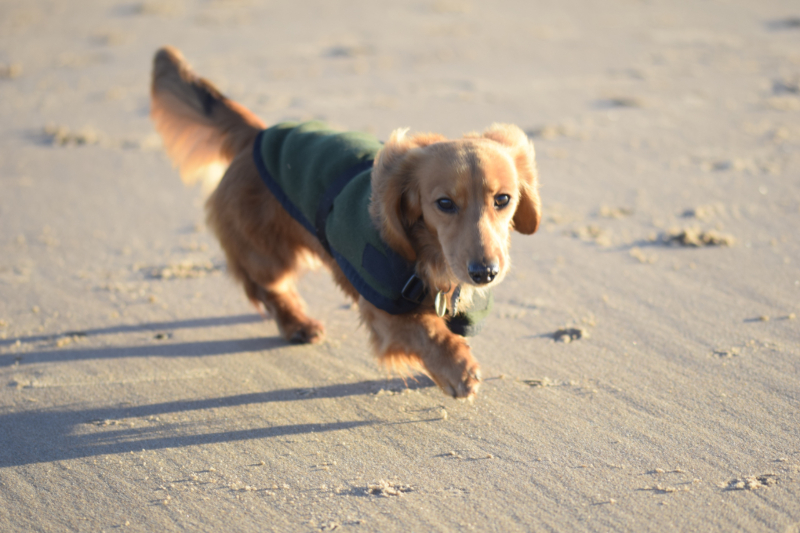
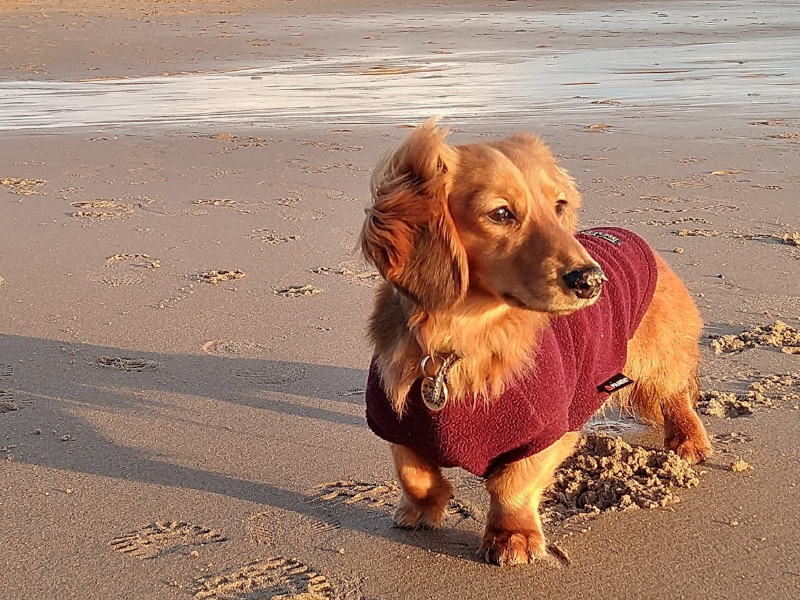
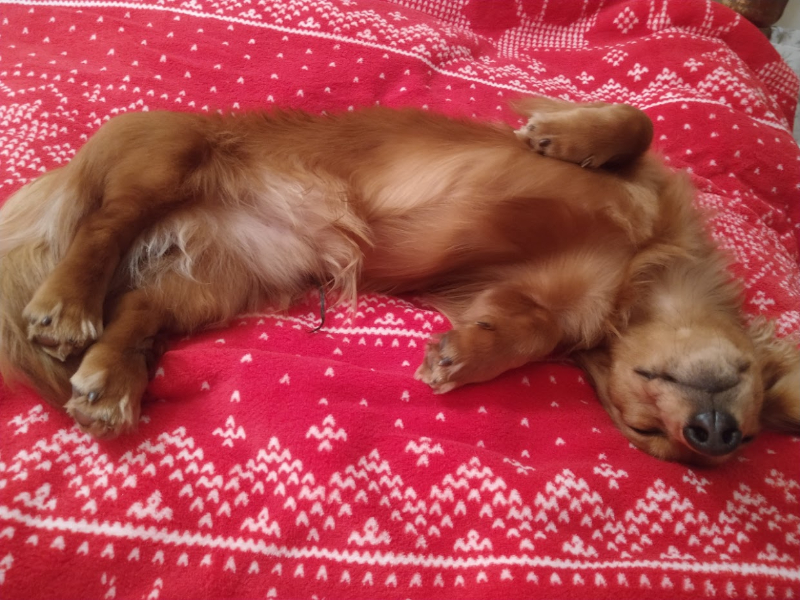
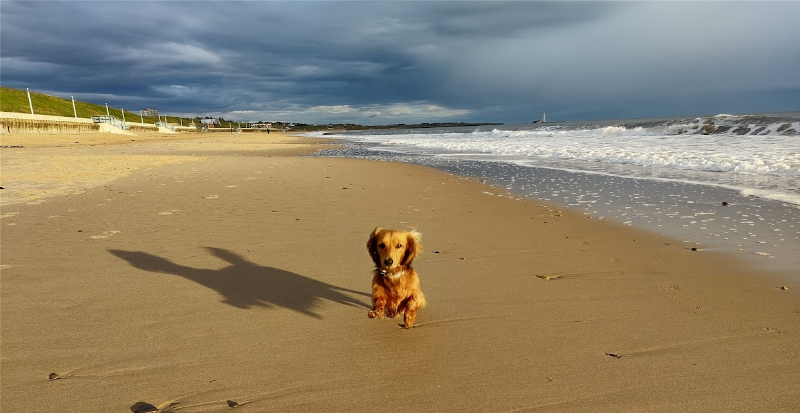
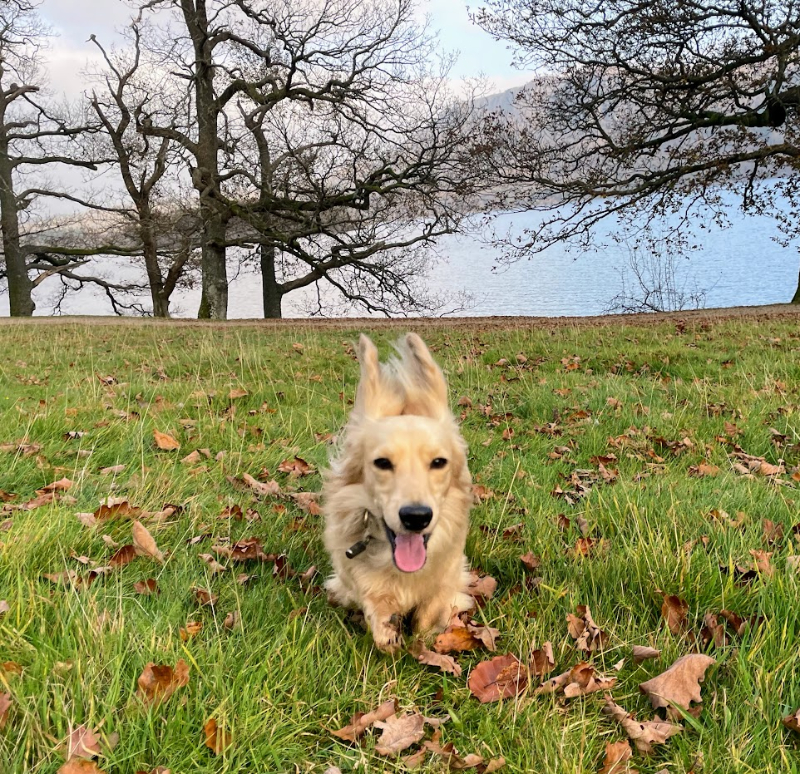
Ask a dog who it is.
There's no title, no job, no explanation.
Only what it moves toward and what it moves away from.
They seem to inhabit this state without effort or reflection - just moving through the world in direct response to it.
Running. Resting. Watching. Following. Sleeping in patches of sun. Eating. All without any narrative. Meeting whatever is in front of them as it is.
No sense of presentation. No sense of self being performed for others.
No job titles attached to the way they exist.
No explanation required for how they spend their time.
Just being.
Nothing put together as an identity - no mask.
We generally don't usually see people like this. We see fragments, roles, titles - performances - filtered through our own lenses, shaped by assumption and perception.
And perhaps that is all we can ever see; not because there is nothing deeper but because there is never enough time to see it all at once. We are always meeting versions of each other.
Rarely the whole person.
A reminder of some of my favourite lyrics from a song called "Entres Nous" penned by Neil Peart of Rush, published in 1980 on their Permanent Waves album.
We are secrets to each other
Each one's life a novel
No-one else has read
Even joined in bonds of love
We're linked to one another
By such slender threads
We are planets to each other
Drifting in our orbits
To a brief eclipse
Each of us a world apart
Alone and yet together
Like two passing ships
(chorus)
Just between us
I think it's time for us to recognize
The differences we sometimes feared to show
Just between us
I think it's time for us to realize
The spaces in between
Leave room
For you and I to grow
We are strangers to each other
Full of sliding panels
An illusion show
Acting well-rehearsed routines
Or playing from the heart?
It's hard for one to know
(chorus)
We are islands to each other
Building hopeful bridges
On a troubled sea
Some are burned or swept away
Some we would not choose
But we're not always free
(chorus)

Another one from the archives - some graffiti I snapped during a road trip through France.
You are not your job....
March 2026 - Reignition! - Northumberland and Borders
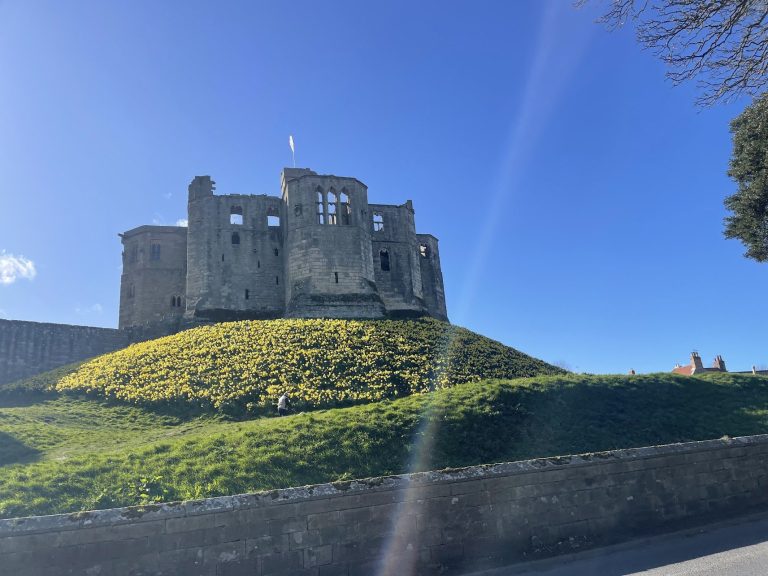
March 2026 - Warkworth - En/closure
Journeying North through Amble and on to Warkworth, taking in the castle’s magnificent daffodil display, and reflecting on the two years and 30,000 miles of motorcycling since I last photographed it.
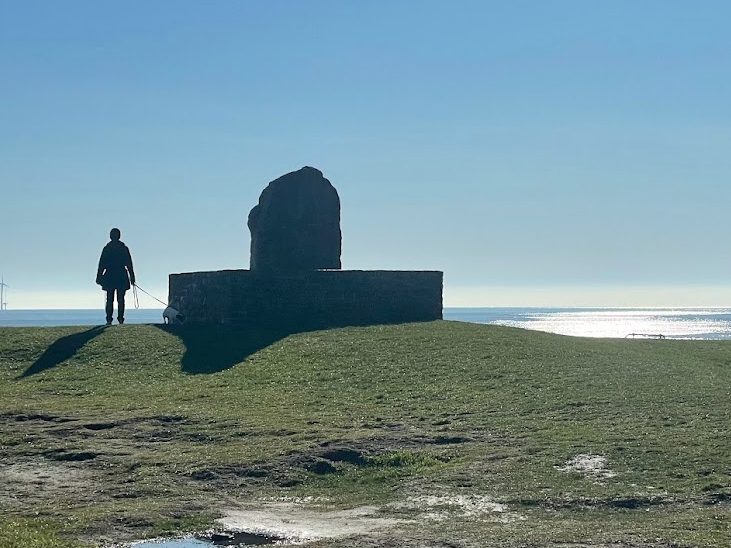
March 2026 - Woodhorn and Newbiggin - Urgent!
A pleasant run up the Northumberland Coastline - a well travelled road - with stops at Woodhorn and Newbiggin.
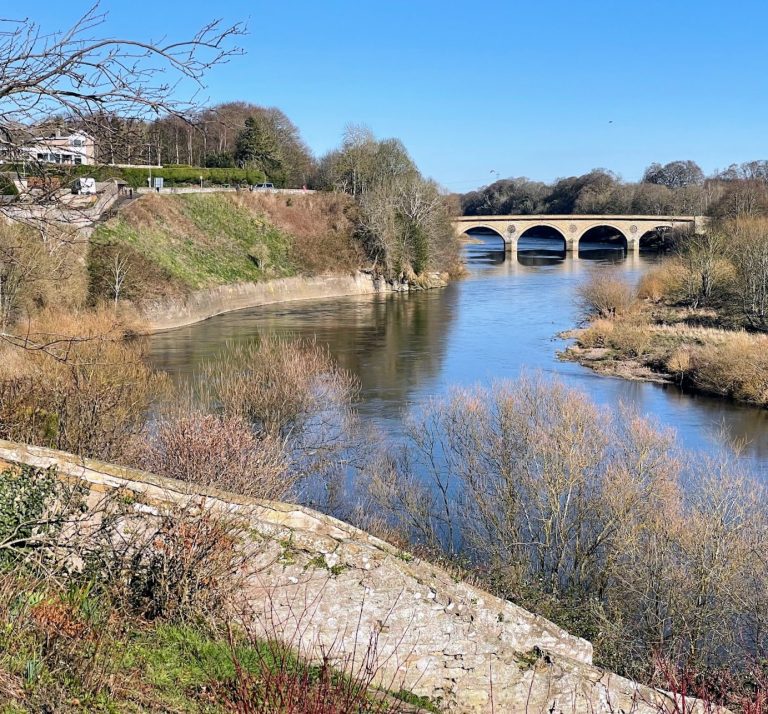
March 2026 - Coldstream - Water
Situated on the Scottish side of the England-Scotland border, Coldstream has a long and interesting history. It is the namesake of the Coldstream Guards, and was also a popular centre for runaway marriages in a similar way to Gretna Green. The border runs down the middle of the River Tweed, which is one of the great Salmon rivers of Britain. Unusually, a license is not required to rod fish in the river, adding appeal to an already world wide angling attraction.
My visit was on a blue sky and sunshine day as part of a full day 200 mile circuit, with a walk about of the town, some time in the picturesque Henderson Park and of course, ice cream.
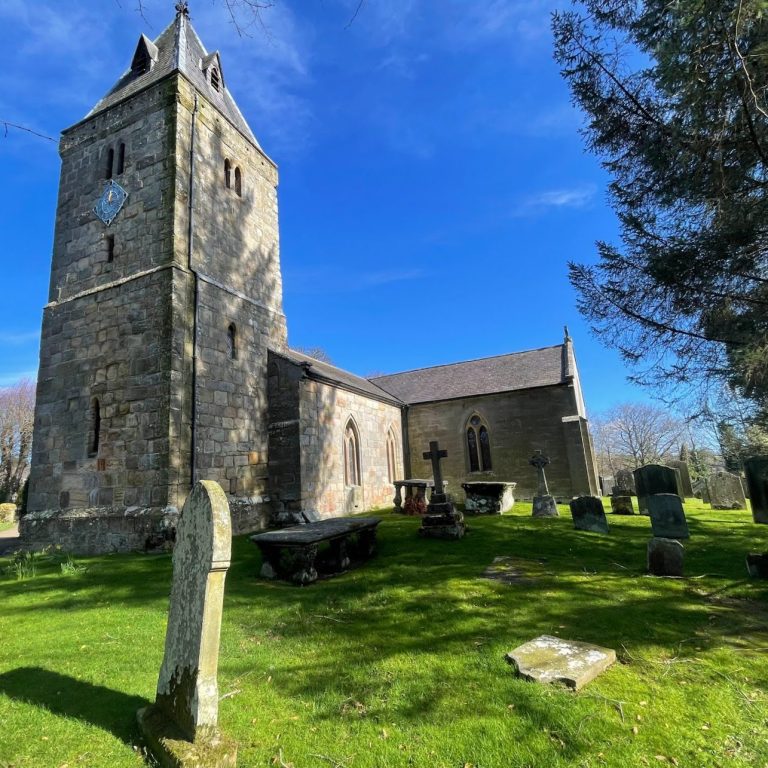
March 2026 - Eglingham - Roll The Bones
After a short stop at Alnwick, a 7 mile ride on the twisting and narrow roads just off the A1 leads to the small village of Eglingham. Nestled in the heart of the Northumberland countryside and just a few miles East of the Breamish Valley and the Cheviot hills. I have wanted to explore some of the smaller roads and lanes out this way for some time, and took the opportunity to seek out an older building on the circuit.
March 2026 - Hexham - The Missing Piece
For myself, Hexham is a town often passed but rarely stopped at, except when picking up samples from the infirmary on duty with the blood bikes. As part of a one day ride around Western Northumberland, I took the opportunity for a wander around the town and the historic Hexham Abbey which was founded by St. Wilfrid in 674. Possibly the friendliest place I've visited on the bike.
March 2026 - Hexham - The Missing Piece
A pleasant journey westwards, the Tiger only just breaking into a jog at the speed limit on the dual carriageway. Brilliant sunshine. Blue sky. Destination Hexham - a significant Northumberland town, shaped by its abbey, its market, and a long and interesting history.
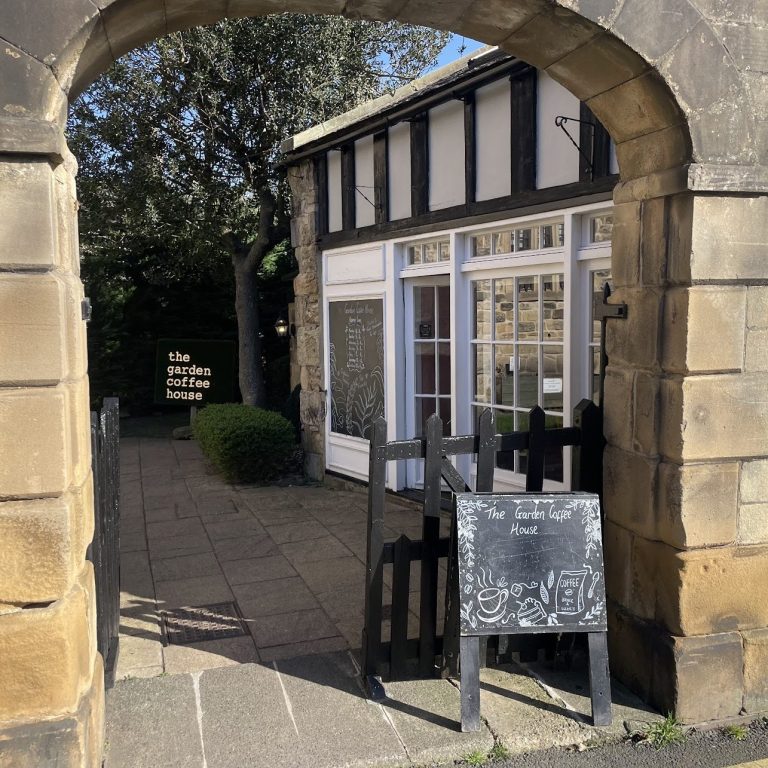
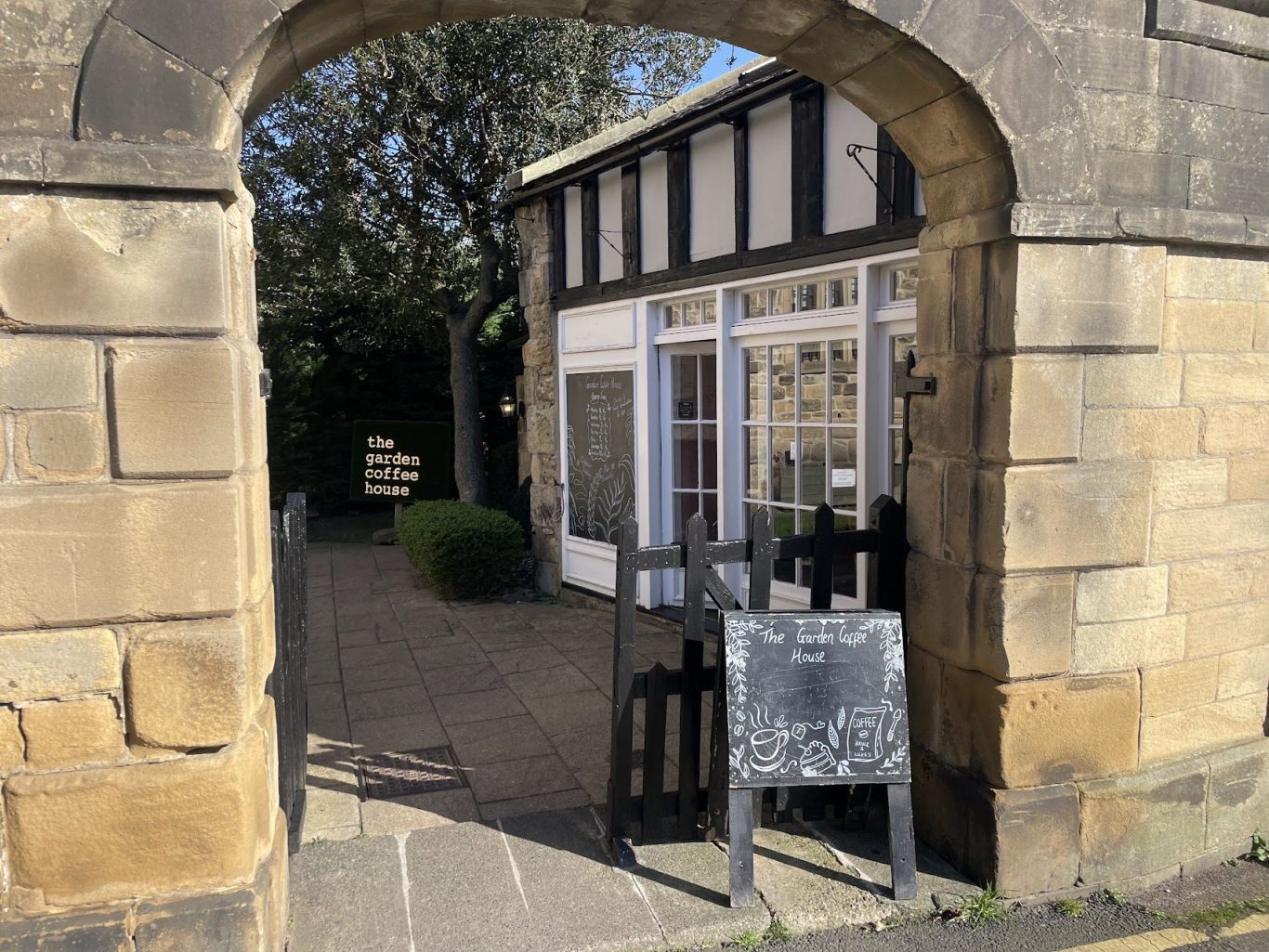
Easy parking and a short stroll uphill towards the centre brought the second reward of the day: a good coffee.
Coffee has been around for perhaps a thousand years, but our understanding of its active ingredient - caffeine - only really came together in the last century. What’s in the cup is more than just habit; it’s chemistry working quietly in the background.
Caffeine blocks adenosine, the chemical that tells your brain it’s time to slow down. At the same time, it nudges dopamine levels upwards, delivering a sense of contentment. And it stimulates the central nervous system, sharpening focus and energy.
A powerful trifecta, and it's not hard to see why the feeling becomes something you come back for.
Perfect. Mine's a large cappucino.
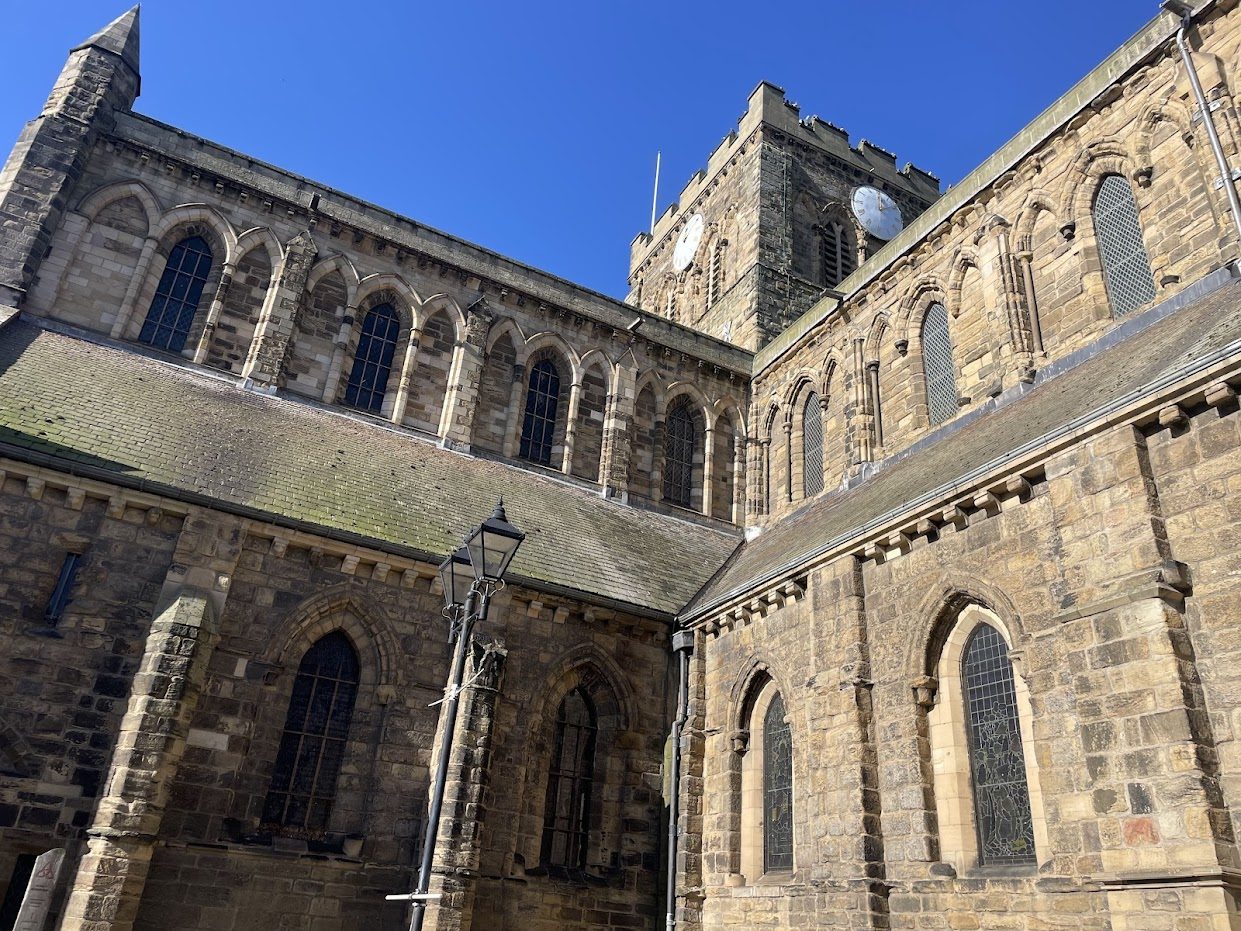
St Wilfrid was an interesting character - not the sort of man to blend into the background.
Born into a Northumbrian noble family, he entered the monastery at Lindisfarne at just fourteen.
A trip to Rome in his early twenties was influential upon him, and before long he was abbot at Ripon.
With a gift for persuasion and a strong sense of direction, he went on to influence King Oswy of Northumbria and Bernicia about matters influencing the future of Christianity in the region. Shortly afterwards he was made a bishop and went on to found Hexham Abbey around AD 674.
The abbey is deeply linked to Ripon Cathedral, which was also founded by him - both featuring 7th century, subterranean Saxon crypts built to house relics, with passageways constructed using recycled Roman stonework from nearby ruined forts, showcasing Wilfrid's Roman inspired architecture couple with a "waste not, want not" mindset. Back then, local materials were regularly reused and upcycled, if for no other reason than the high cost of production and transportation. The contrast with modern society couldn't be more stark. Where earlier cultures repaired and repurposed with existing materials, the modern consumer age often favours demolition and replacement, treating resources as temporary conveniences rather than enduring assets. I wonder at how much longer our throw away and replace economic model is sustainable.
(you can read about my August 2025 visit to Ripon Cathedral here)
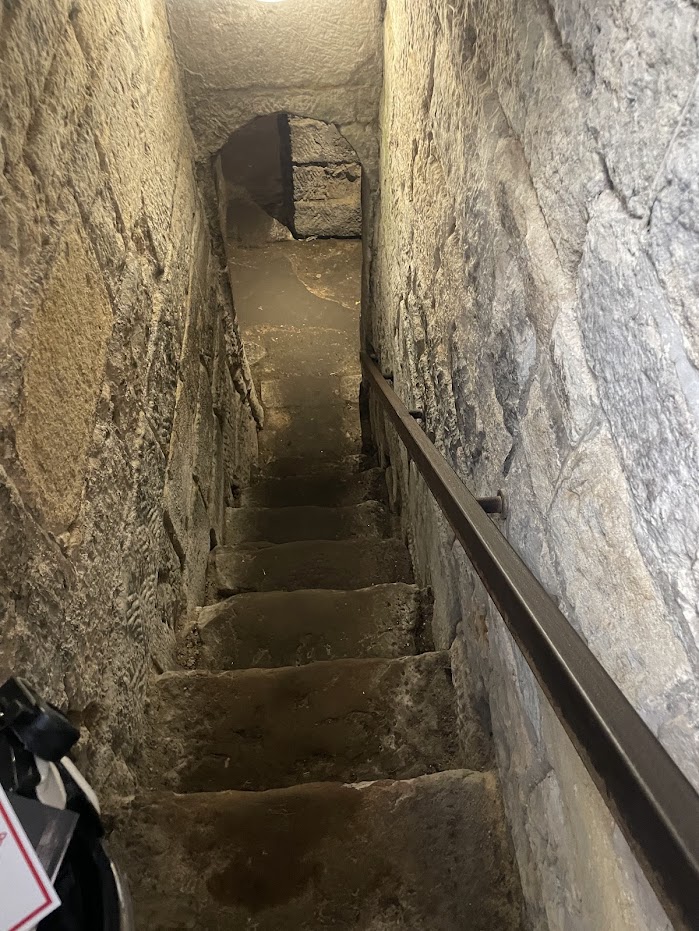
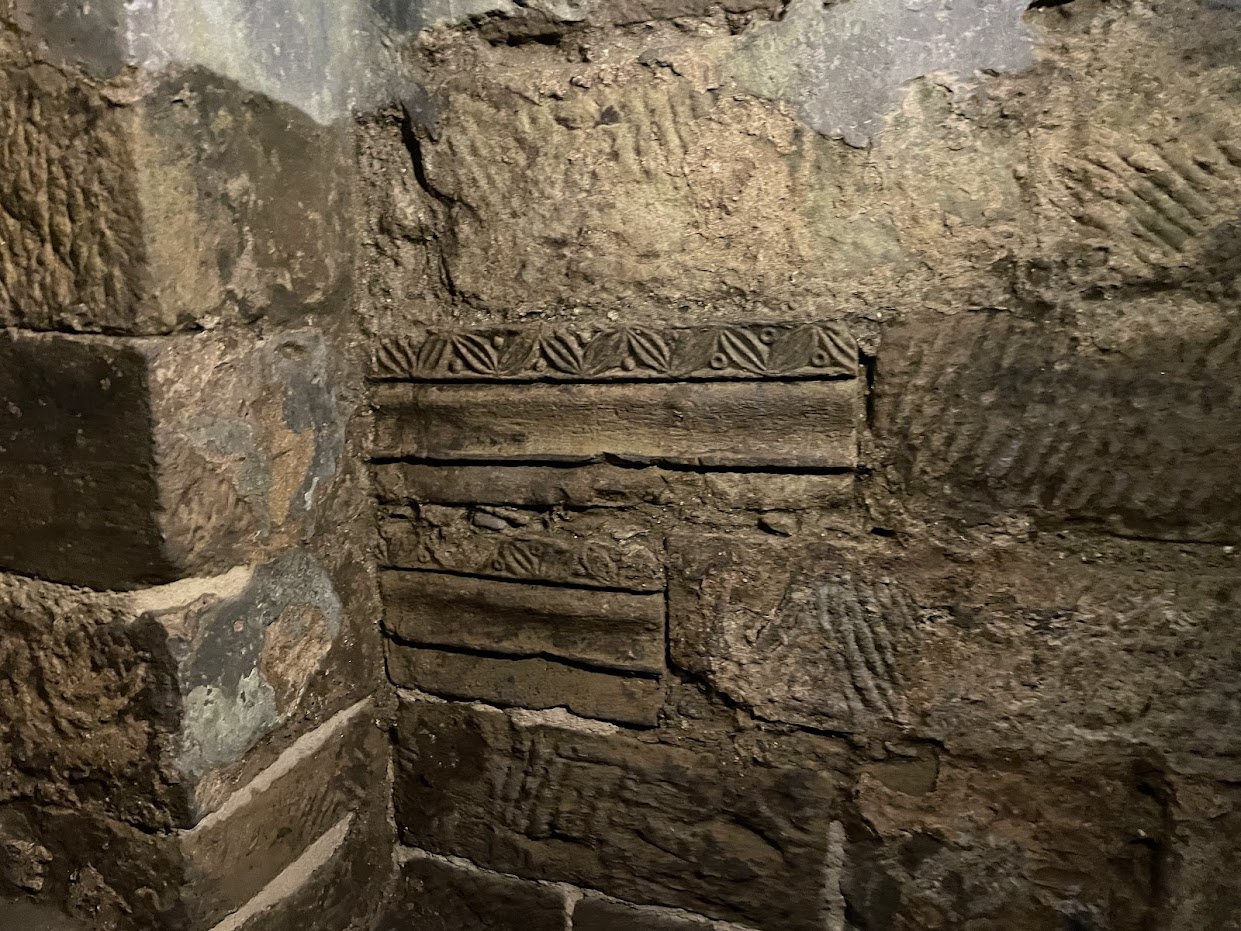
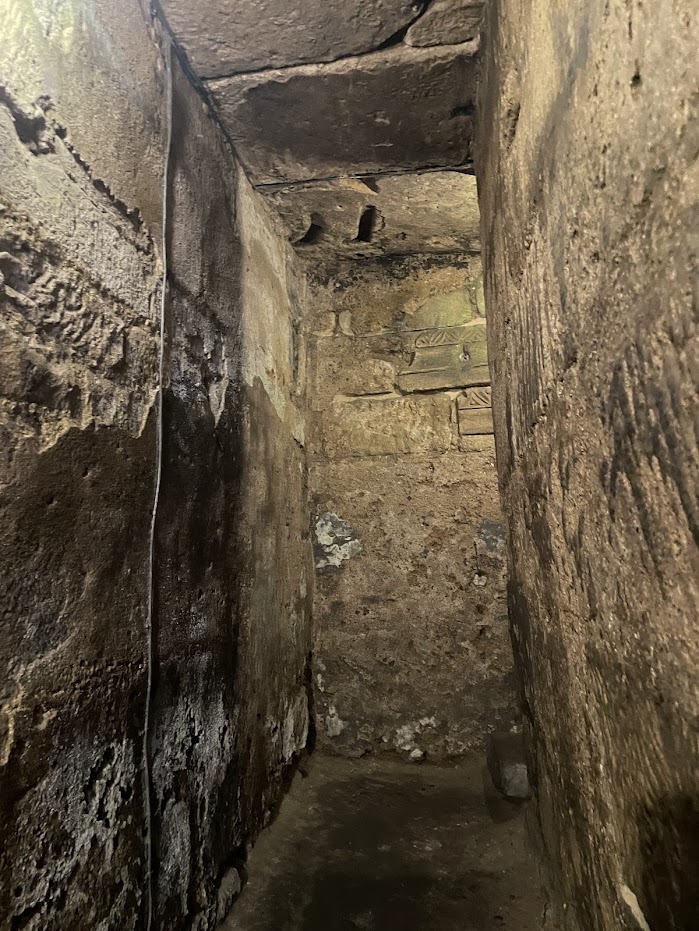
There is much of interest to see within the abbey, but two particular aspects stood out to me.
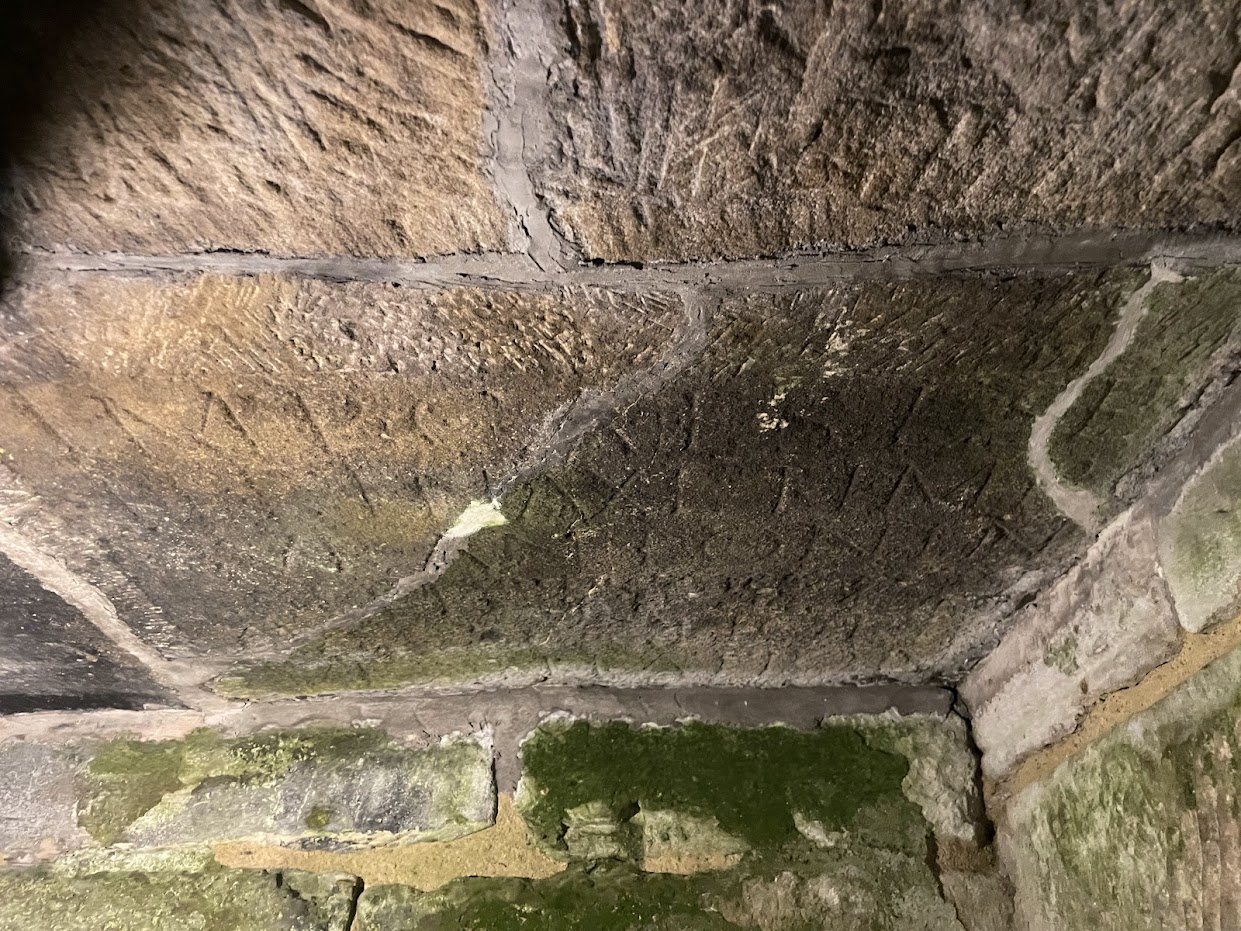
Firstly the 7th century subterranean crypt which is open to the public. The re-use of stones from other places is evident throughout and one inscribed stone in particular has a story attached (see the last picture above with the stone as a ceiling slab. Another fragment is in the nave north wall near the west end - the missing piece).
The Geta stone, as it is now known, was created as a dedication for a building in nearby Corbridge at around 208-211 AD. It was commissioned by Emperor Septimius Severus and his two sons, Caracalla and Geta, who were meant to share power. Their names are all included in the stone's inscription. Following the death of Septimius, the lifelong rivalry between the two siblings intensified, driven by jealousy, and a complete inability to share power. What was intended as a co-emperor arrangement descended into intense hatred. Caracalla was known for his ruthlessness, whereas Geta was far more popular amongst the troops and refused to live in his brother's shadow.
Facilitated by their mother, a meeting between the three of them was arranged in her private chambers to settle any disputes. No guards were allowed given the nature of the meeting. At the meeting Caracalla had Geta assassinated in front of their mother by centurions to seize all the power for himself.
Such was his intense jealousy of his sibling that he enacted a Damnatio Memoriae - the complete erasure of all evidence of someone's existence from the public record. This involved the murder of about 20,000 of Geta's supporters and friends, and the erasure of Geta's name from all public records, including inscriptions and coins bearing his head. The "missing piece" of the Geta stone shows evidence of this erasure, but not so well that it could not be worked out in the context, once joined with the main part in the ceiling of the crypt.
What struck me most was not just the brutality of the murder itself, but what followed. Caracalla did not merely want to defeat his brother politically, he wanted to erase him completely, as if removing a name from a stone could somehow remove a person from history and memory altogether.
The attempt failed and the damaged inscription survives as a very public record of jealousy, insecurity, ambition and the lengths people can go to in the pursuit of unchecked power.
The technology changes, empires rise and fall, but when it comes to human behaviour, the song remains the same.
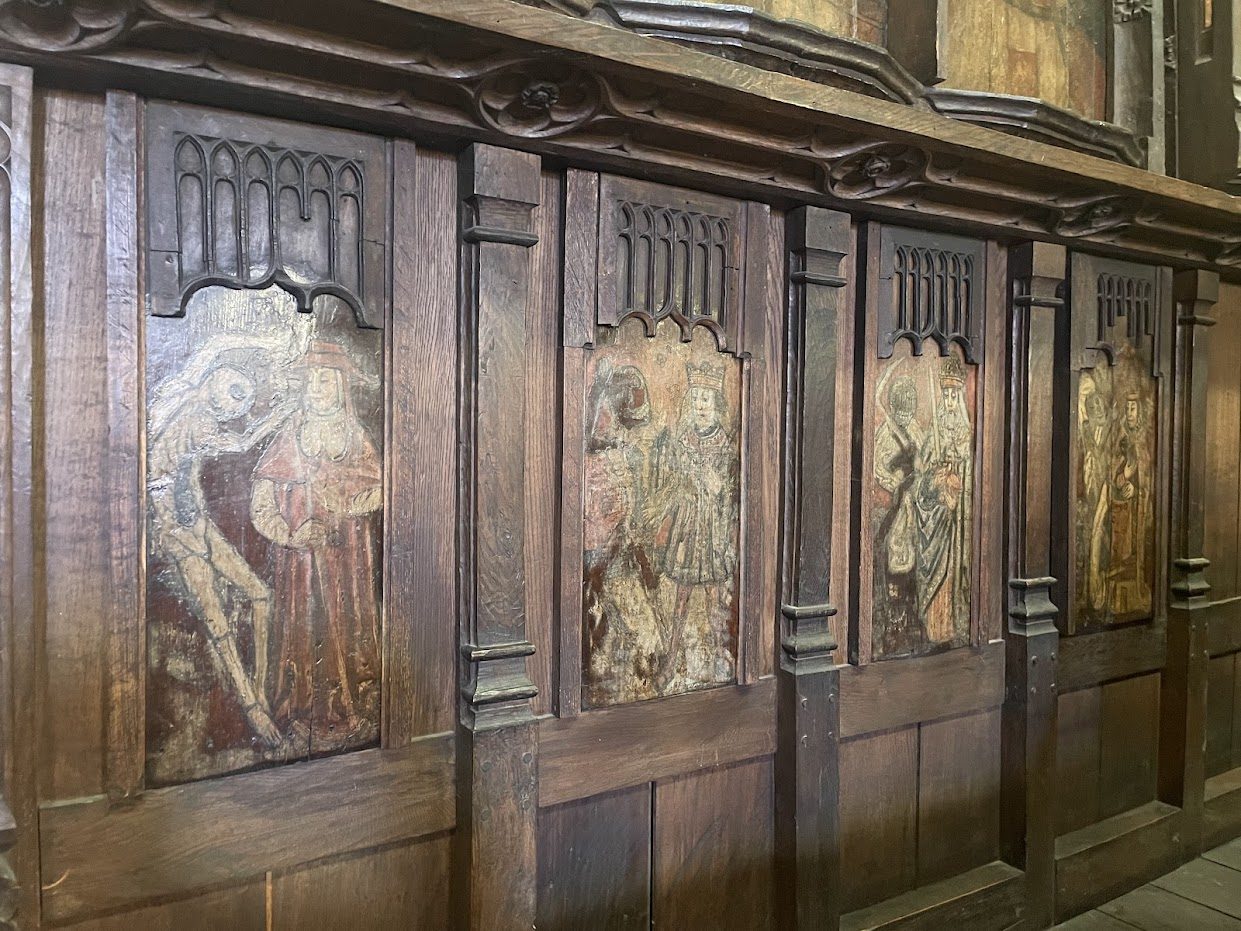
There are quite a few panel paintings within the abbey, a number of which require expensive restoration work. The set pictured above stood out - memento mori ("remember you must die") - the dance of death - dating from the 15th century.
The four panels depict a shadowy skeleton dancing in turn with a cardinal, a king, an emperor and a pope. Rank and power are illustrated as irrelevant in light of our universal mortality - death catches everyone eventually. It's not our power or station that matters, it's what we do with the time we have that matters most.
A likely fifth panel is believed to have been found in a different area of the abbey and following spectral analysis by Northumbria University - another missing piece. This additional panel brings the "call to action," acting as the crucial opening or thematic connector of the series.
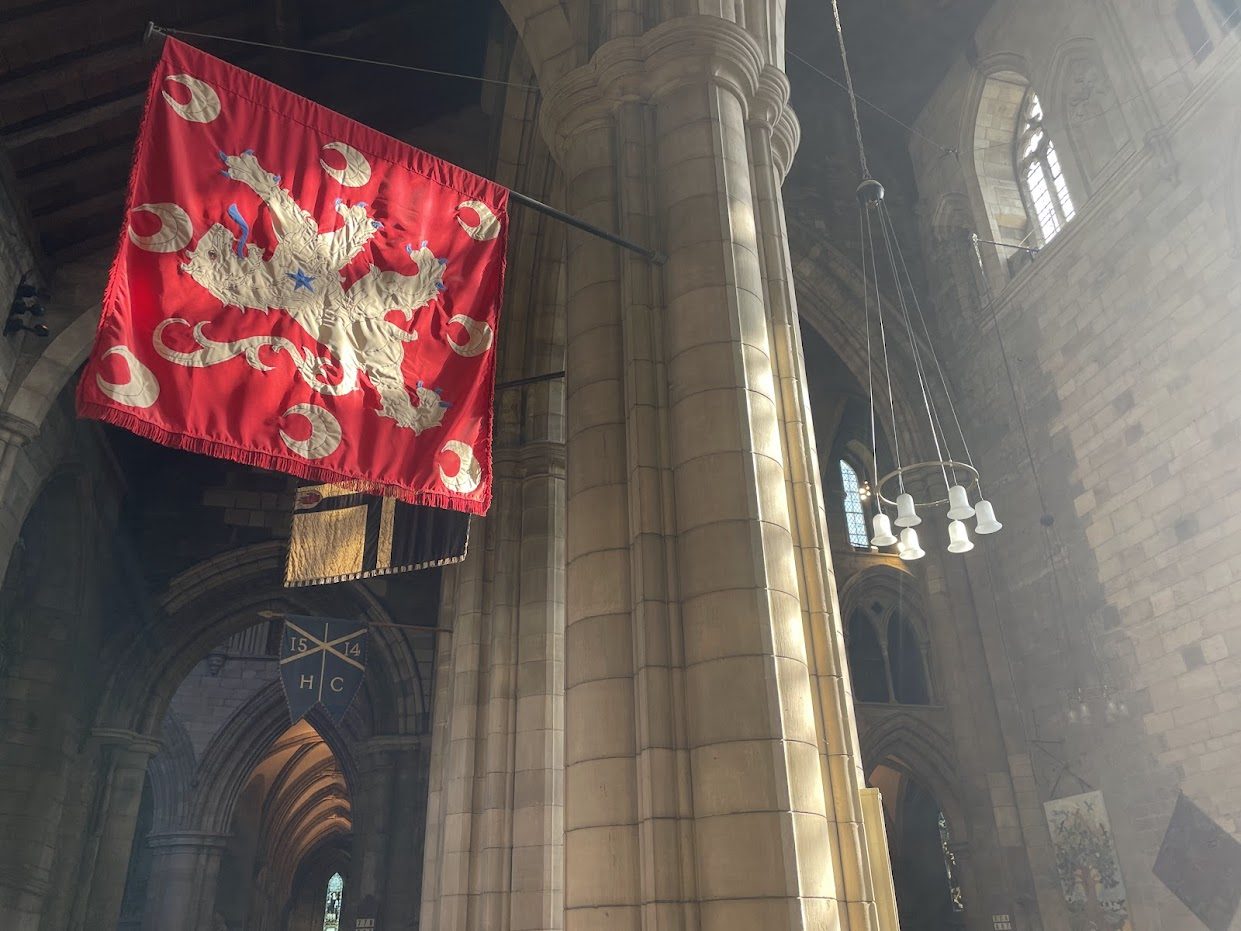
It often takes just one missing piece to change how we see things entirely - a complete pivot of perception on something that we thought was already complete and understood. Being prepared to re-evaluate our understanding based on new information received is an important skill.
Leaving the abbey I sauntered the streets of historic Hexham for a while. A blend of modern life and traditional culture sitting comfortably alongside each other, with independent shops alongside familiar chains, and stone built heritage beside everyday modern bustle.
Enjoying an ice cream in the sunshine, and having a few everyday conversations with passing people, it's definitely one of the friendliest places I've visited in a long time.
March 2026 - Warkworth - En/closure
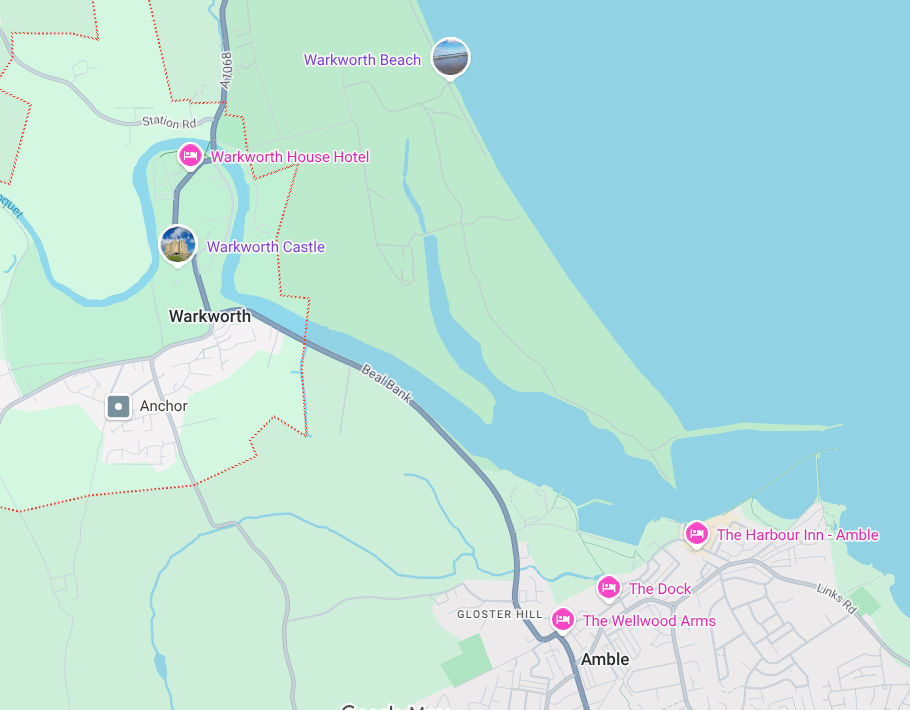
Continuing North up the main coastal route I reach Amble, a small harbour town with remnants of a bygone flourishing fishing industry. There are plenty of options for food and drink here - I've eaten at The Fish Shack many times and it comes well recommended for a good repast, and a pleasant stroll by the harbour afterwards.
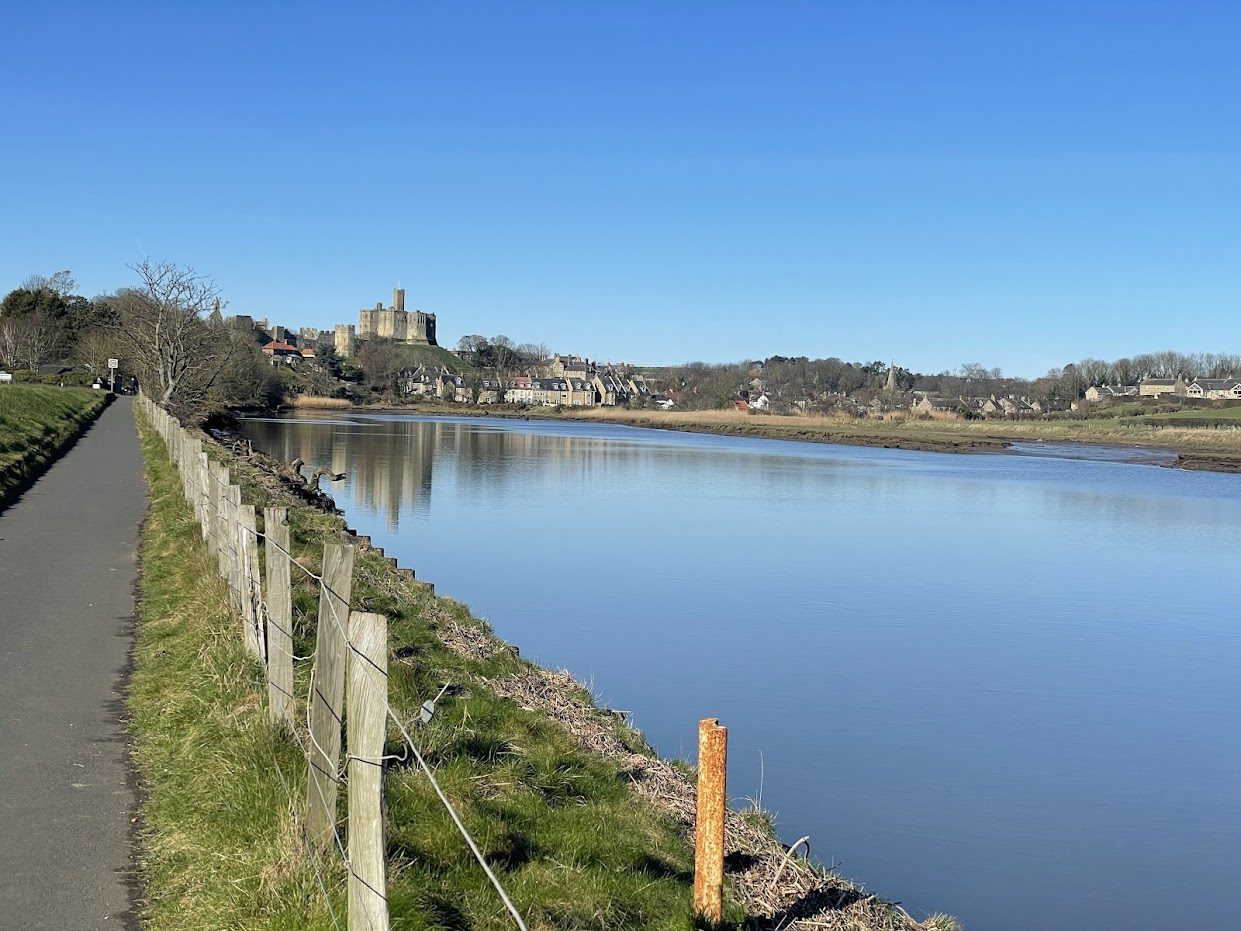
Progressing beyond Amble, the one mile road to Warkworth runs by the scenic River Coquet with a number of parking bays to stop and take in the view. With a good footpath, it's also a pleasant walk. You can often see heron, occasional otters and plenty of other wildlife - if you’re lucky, you may see a flash of kingfisher colour.
In the distance the castle stands proudly atop a defensive mound - a testament to endurance - laughing in equal measure at time and the elements.
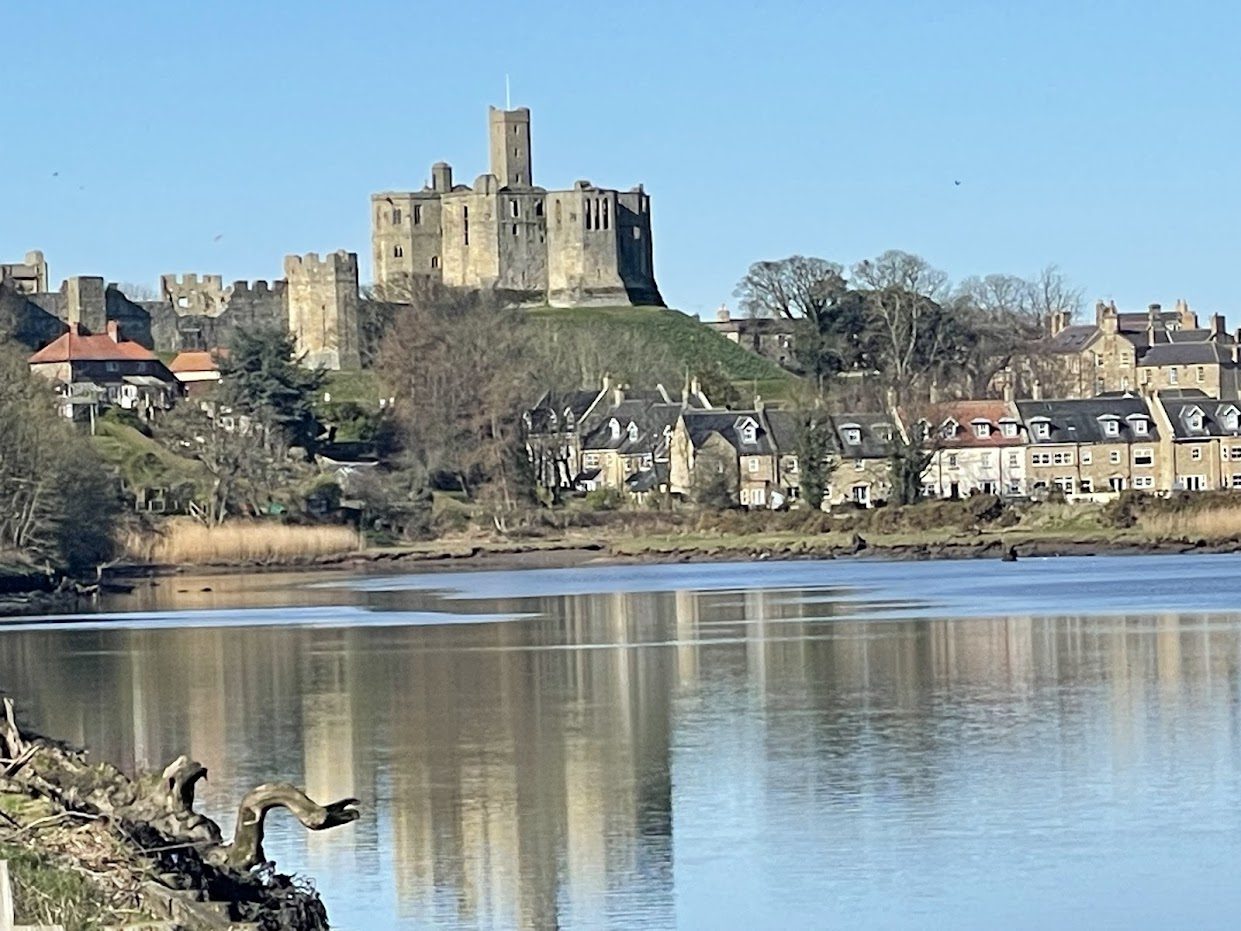
Warkworth was strategically founded in the middle of a large loop in the River Coquet, protecting it on three sides. The name derives from an Anglo-Saxon settlement here called Wercewode, which means an “earthwork enclosure” - the enclosure of Werce.
Both “closure” and “enclosure” share the same root in the Latin - claudere - which means to shut. An enclosure marks a boundary - something defined and contained. Natural boundaries like the River Coquet have long been used to protect and defend the value within.
Further South, Durham Cathedral and Castle sit similarly protected, held within a loop of the River Wear.
Human boundaries are often formed unconsciously, shaped by upbringing and past experiences - grief, hurt, rejection - protective mechanisms we may not even realise are operating.
They can shift over time through self-awareness, but not without some effort - noticing patterns, questioning our assumptions and reflecting on our emotional reactions.
At the North end of the town stands a medieval stone bridge, once manned and controlled passage into Warkworth. It is one of only two such bridges surviving in Britain today. A newer crossing now carries traffic alongside it, but the old remains - weathered but intact.
We too build bridges of human connection. Where our boundaries can be unconscious, our bridges are usually intentional. Not every boundary calls for a bridge, but those that exist benefit from maintenance to avoid falling into disrepair - trust, communication and emotional openness.
Grief presents us with an unbridgeable boundary - things left unsaid and conversations that will never happen. With time, we learn to live with what cannot be crossed, with acceptance.
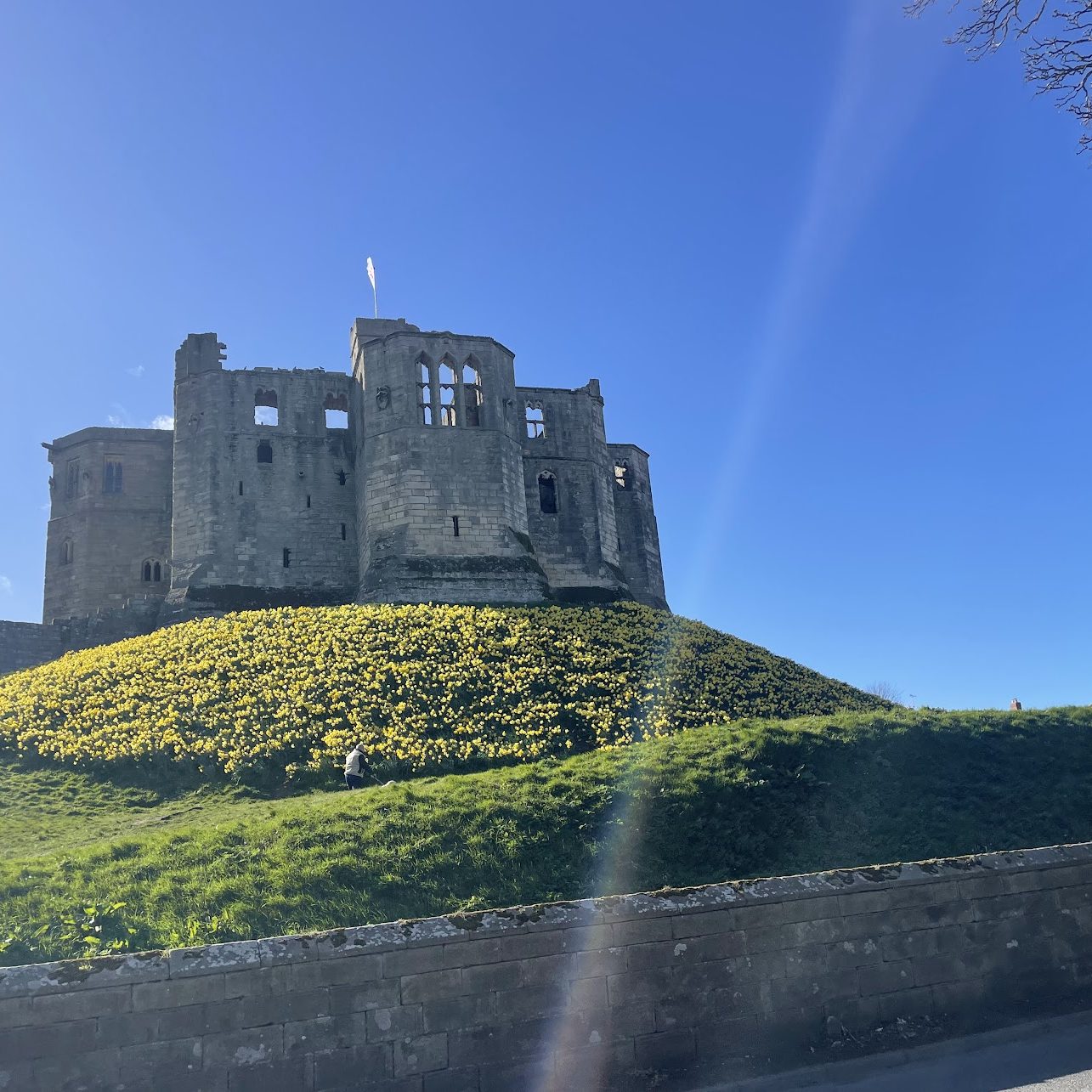
The annual show of daffodils at Warkworth is always stunning.
Above is the photo I took in March 2026.
Two years ago, almost to the day, I stood in the same spot and took much the same photograph. I recall sharing it with colleagues at work. I had just bought my first “big” motorbike - it felt exhilarating and was the beginning of many solo adventures around the UK. Delayed grief from the passing of my dad after his long illness, combined with the relatively recent and unexpected exit from a long term job, created a period of reflection and adjustment. Riding really helped me to gain perspective.
The two years that followed offered insights into organisations and into individual and group human behaviour, including my own, as I navigated new environments.
Some 30,000 motorcycling miles along this road - a journey that has offered perspective - the daffodils are no less striking now than they were then, although seen through very different eyes. Life feels steady, and peaceful. There is reassurance in this annual heartbeat, a cycle which reminds us that so often, the quiet labour, unseen and uncelebrated beneath the surface, is what matters. Roots and bulbs gather strength below ground, before finally breaking the surface and coming into flower.
I briefly look back, with gratitude, for what is gone, what remains, and what is new. Enjoying the warmth of the Spring sunshine, a smile on my face, I leave Warkworth in the distance behind me, as I ride on. New beginnings await…..
March 2026 - Woodhorn and Newbiggin - Urgent!
Another bright, blue sky day and the sun feels good on my face. I headed up the Northumberland coastline for a slow meander, not quite sure where I would end up. The first twenty to thirty miles are so often overlooked in the rush to be somewhere else, yet what’s right in front of us is easily missed.
I wonder at just how much of the urgency we feel is self made; a quiet pressure we impose on ourselves to do more, go further, fill the hours. In chasing the next milestone or deliverable, how often do we overlook the moment we’re actually in? Our minds locked on a future which does not exist, our energy scattered, even as the present holds everything we need to move thoughtfully and effectively.
We live in a culture that celebrates “urgent” work - long hours, immediate outcomes and constant visibility. Yet out on the road, with the sea to my right and nowhere particular to be, that relentless tempo is a distant memory. It’s a reminder that sustainable productivity is about focus, attention, and actively choosing where to invest time and energy selectively.
We all have the power to make time stand still; not literally of course, but by being mindful and grateful for the present, taking in what’s around us, and making conscious choices about where our attention goes. Learning to live as if each step were the end; because it could be. This isn’t a retreat from ambition, but a strategy for resilience, clarity and abundance.
There is a paradox - each morning you wake up is not one more day, it's one day less. That urgency reminds us that presence and choice matter, because our time is finite.
The ultimate abundance is having the freedom to decide how to spend your time, and the confidence to step away from environments or people that diminish your value, or activities that drain you. That freedom isn’t measured in titles or metrics; it’s in the autonomy and space to think, act, and live deliberately - to play the central role in your own life rather than a bit part in someone else's.
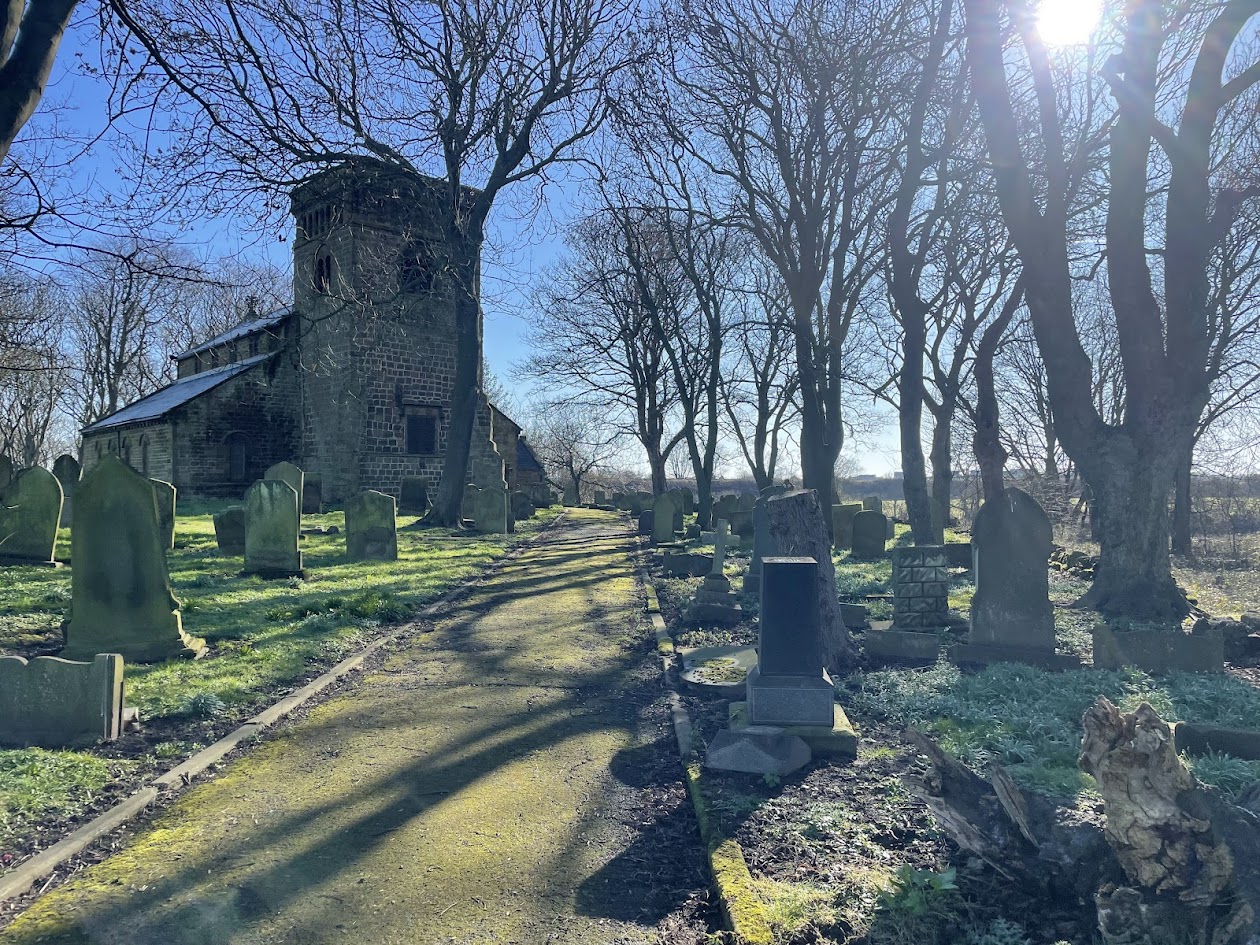
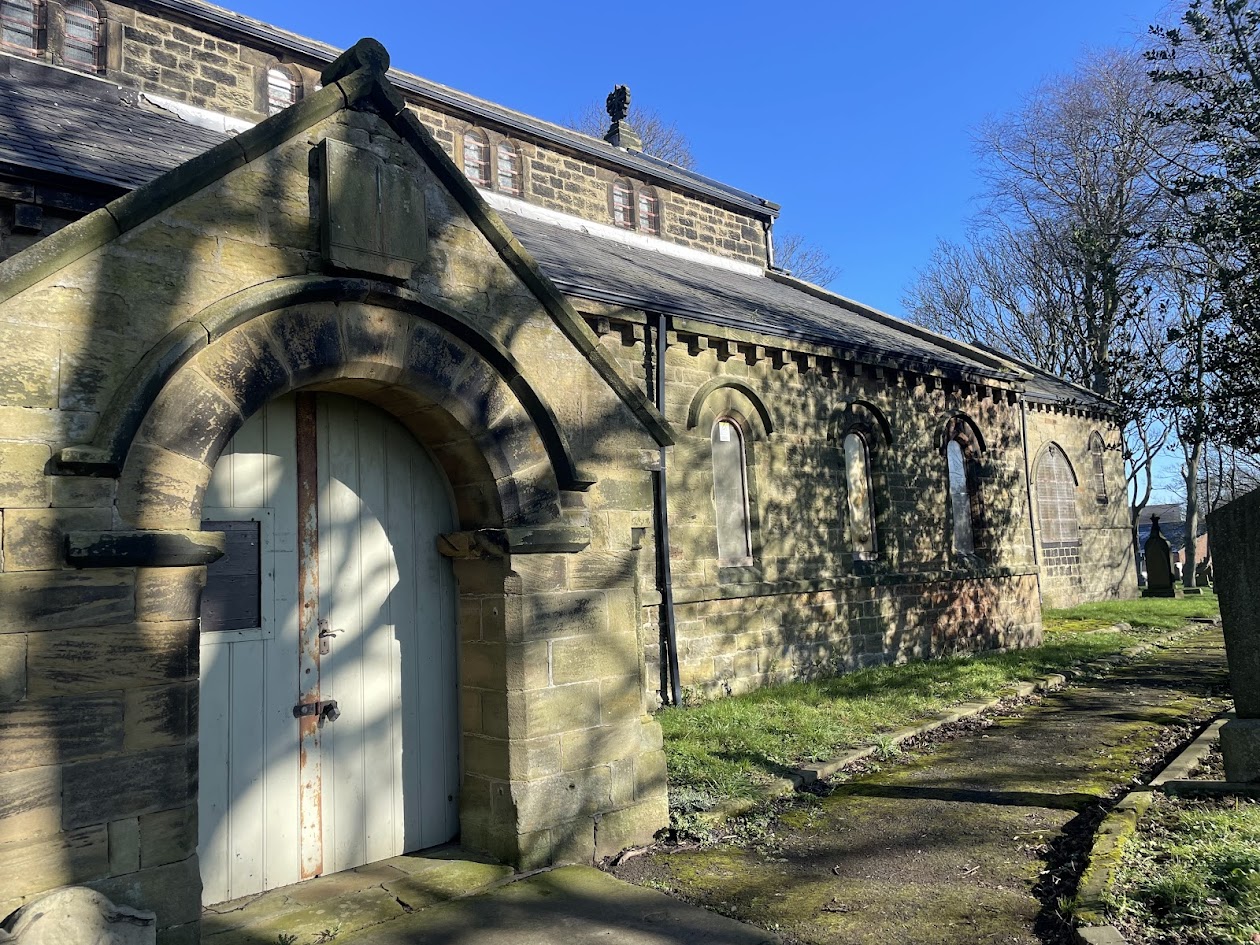
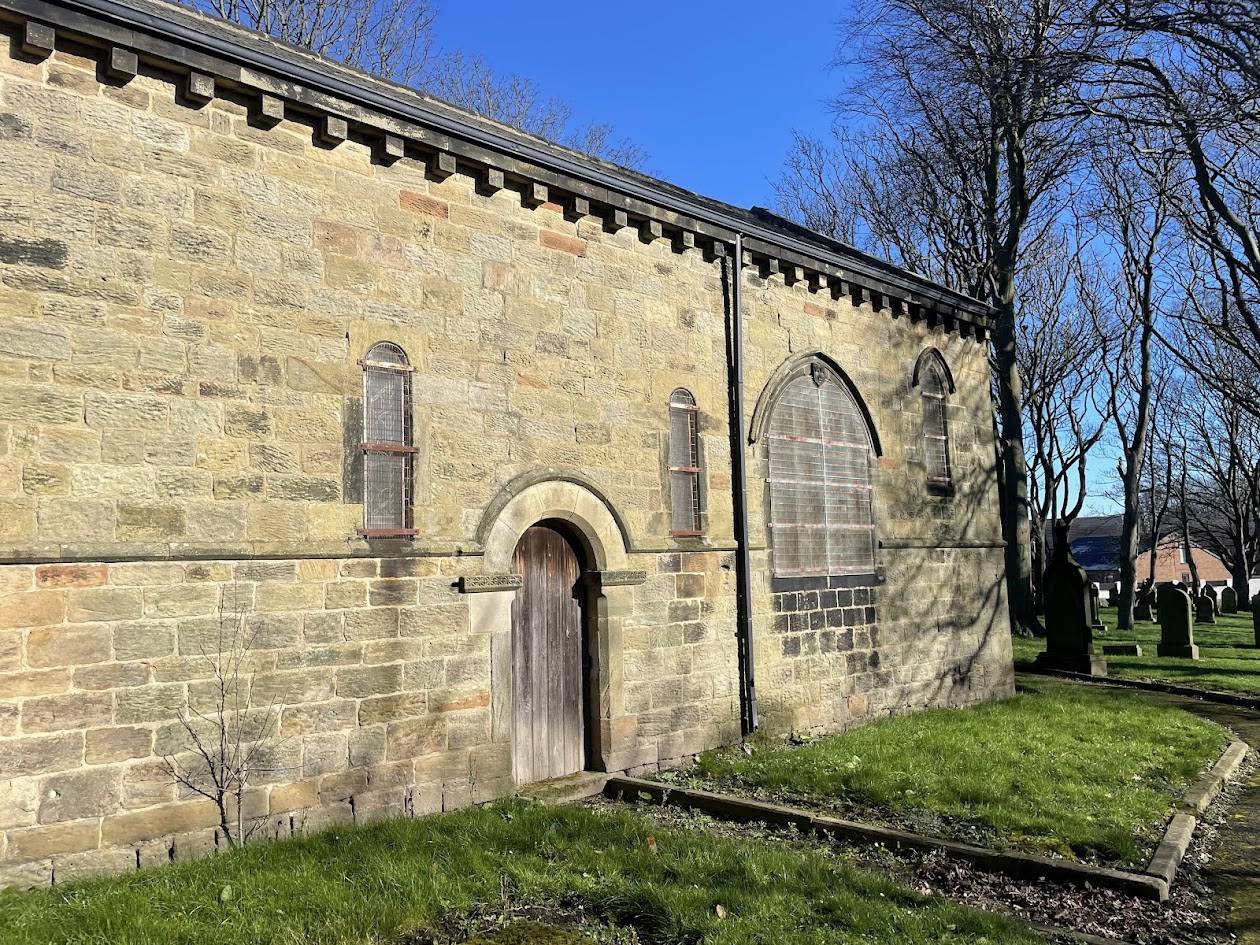
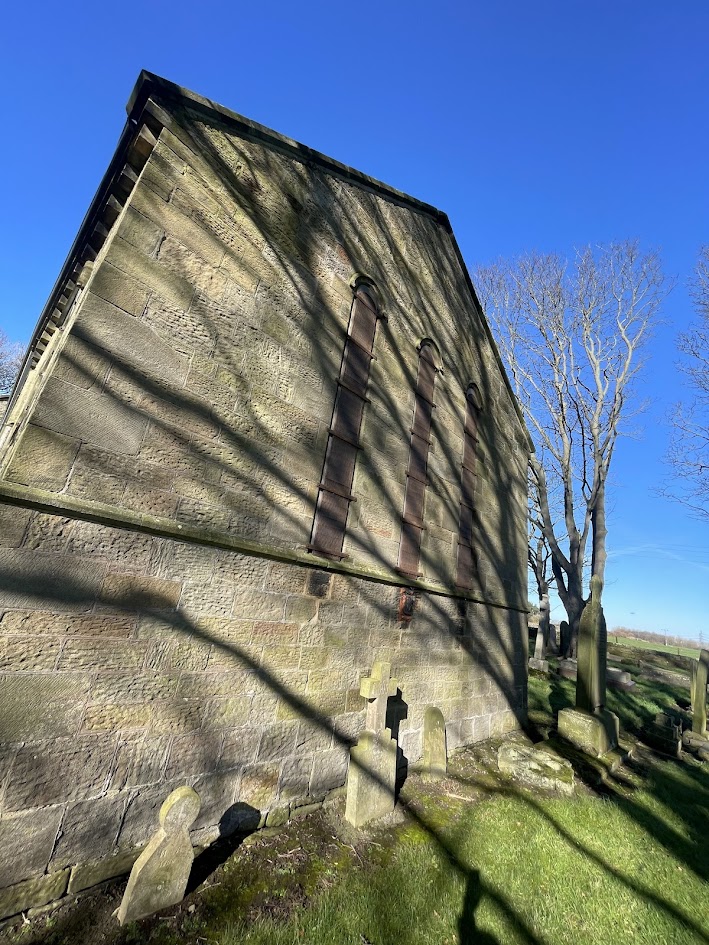
My first stop was at one of the oldest churches in Northumberland, dating from the 11th century - the Church of St. Mary the Virgin at Woodhorn. A Grade I listed building on the National Heritage register, it’s in a fairly poor state of repair. While the grounds remain open, the church itself is closed. The Saxon tower is a solid testament to its age.
The shadows of tree branches dancing on the stone walls made for some wonderful photography. While hard shadows can be harsh, I love the soft, shifting patterns created by leaves and branches which add depth to otherwise plain surfaces. Magic.
Just a few miles down the road I park up at Church Point for a stroll overlooking the bay at Newbiggin-by-the-Sea which provides an interesting mix - a strategic vantage point over the bay and town, a historic church, a holiday park and a mile of golden sand which is perfect for a short walk.
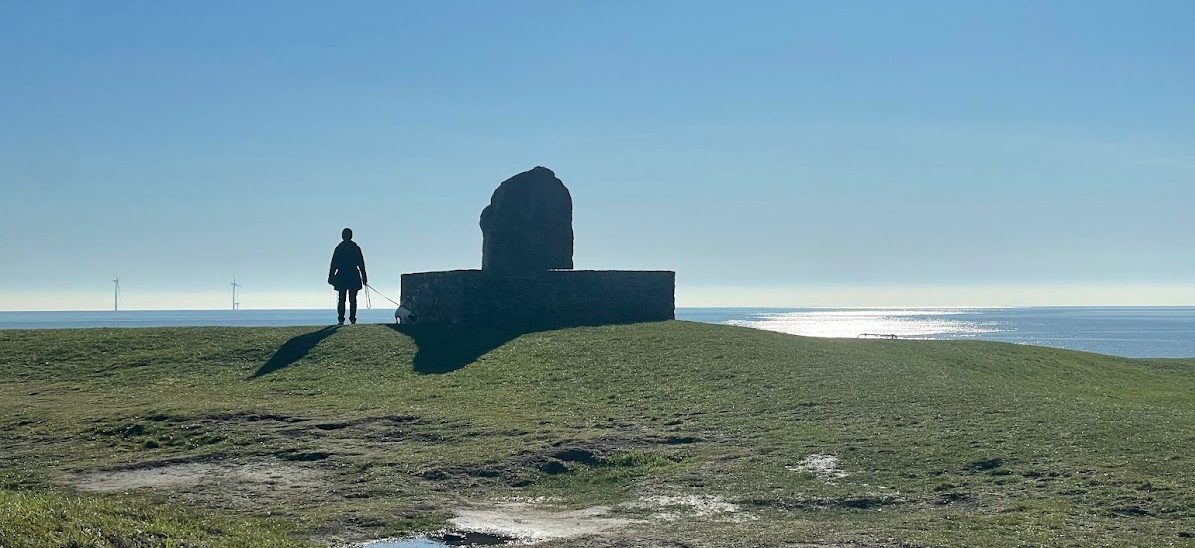
My eyes were immediately drawn to a dog walker in silhouette standing next to a large stone, a marker for the location of a time capsule, buried as part of millennium celebrations during 2000. A simple but powerful composition.
From their vantage point the dog walker is overlooking a coastal landscape rich in centuries of human effort and impact, with each era leaving its mark.
During the 14th century, the town was an important maritime centre and a large exporter of grain far and wide, to feed people and horses, surpassed only by London and Hull. Horses were strategically important back then, being central to agriculture, transport and military endeavours. They ate a lot of grain!
By the mid-19th century, fishing was at its peak here with over 140 cobles actively working from the harbour.
A century later, coal became the key export with a local colliery open from 1908-1967, peaking its output in the 1940s. Heating homes, generating electricity and feeding industry.
In the distance you can make out a small wind farm which is a successor to what was the first offshore wind farm in the UK. Offshore wind now a major source of renewable energy in the UK with a number of significant developments underway to help meet clean energy aspirations by 2030.
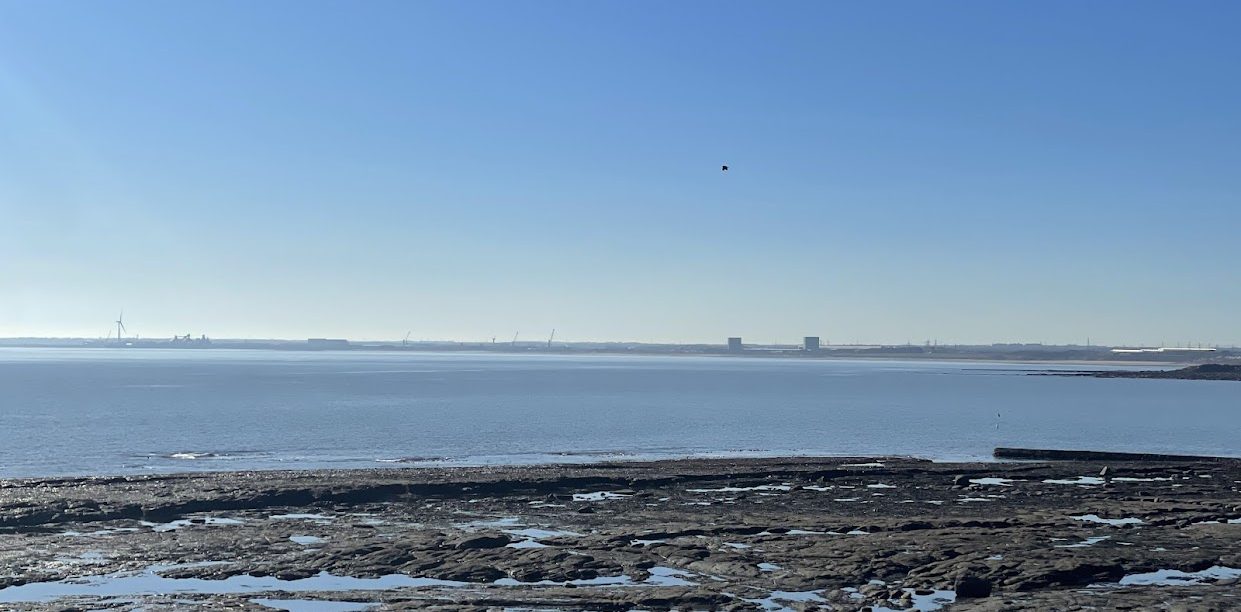
On the horizon of the photo above, are Blyth, and also Cambois, which are notable for fishing, a strategic port town, a coal fired power station, aluminium smelting (foil production) and now a centre for manufacture and research of renewable energy.
With the power station and aluminium smelting industry now gone, Cambois has been selected as the site for a planned hyperscale data centre - one of the largest in the UK - to power the age of artificial intelligence.
In every era the area has made a significant mark and had its own part to play.
From grain, to coal and fishing, to renewable energy and now artificial intelligence, each shift happens in its own time.
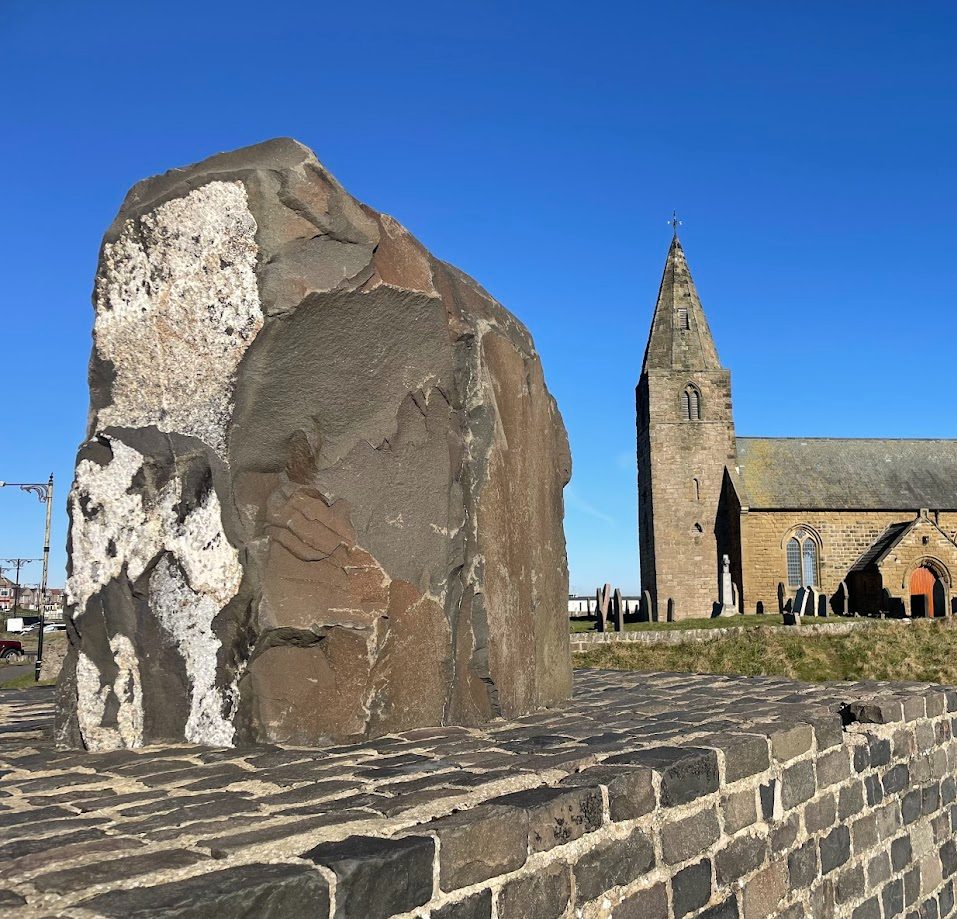
Progress seems to have no patience, and yet often needs to be measured in decades and centuries as an collective imprint of the lives of countless people, each striving for more, building and adapting, surviving.
The passage of time is relentless and unavoidable, but urgency is often optional. Life, like history, unfolds at its own pace.
Notwithstanding some huge medical breakthrough, in 150 years, every single person on the planet right now will no longer be alive. Recalling an ancient Greek proverb "A society grows great when old men plant trees in whose shade they know they shall never sit". (ok, ok, it should be people planting trees, not just men, and they don't have to be old... but you get the idea).
The best contributions are usually those made with care, attention and responsibility for the future to be inherited. Giving due consideration to those affected ought to be second nature.
Buried beneath the time capsule are poems, pictures and writings by the children of Newbiggin in the year 2000. It is to be opened in 2100 after a century has passed, and I wonder at just how different that world will be.
What will they think and feel about what they find inside?
Will they regret the choices made and what has been lost, or celebrate the progress and marvel at just how different things used to be? Perhaps both.
Time will tell, and each of us gets to play our own part on the stage. Our individual voices, actions and what we choose to encourage, tolerate or reject - actively or passively - will all combine to create the future; one which I hope can be lived closer to the heart.
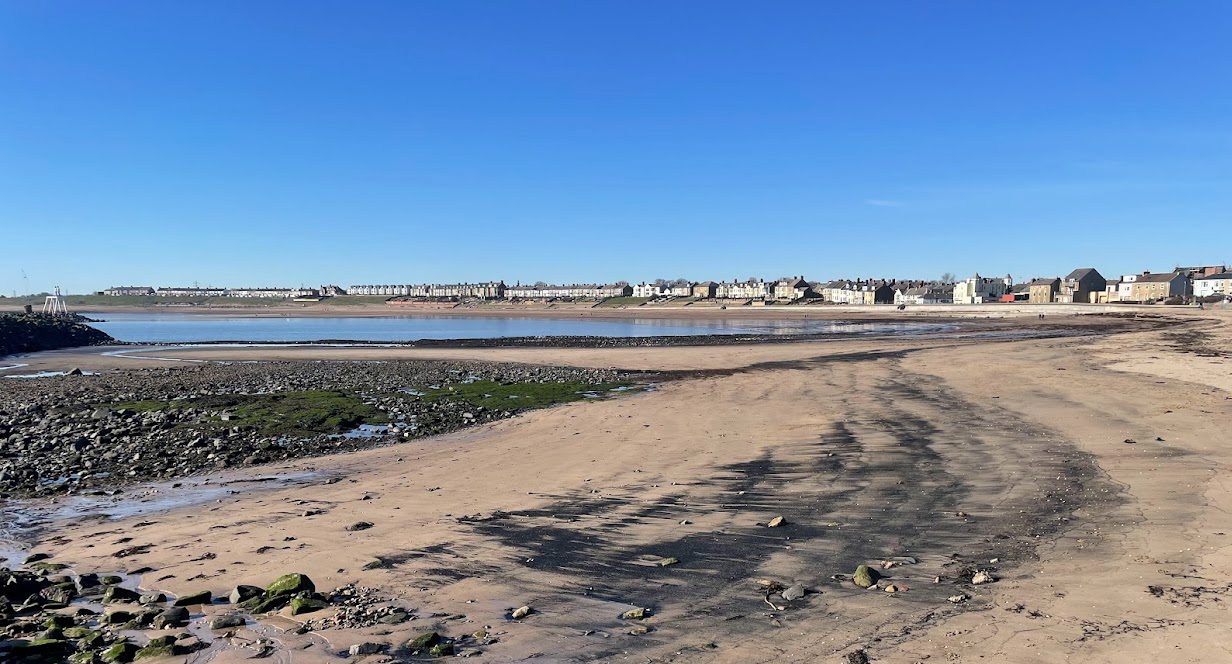
March 2026 - Coldstream - Water
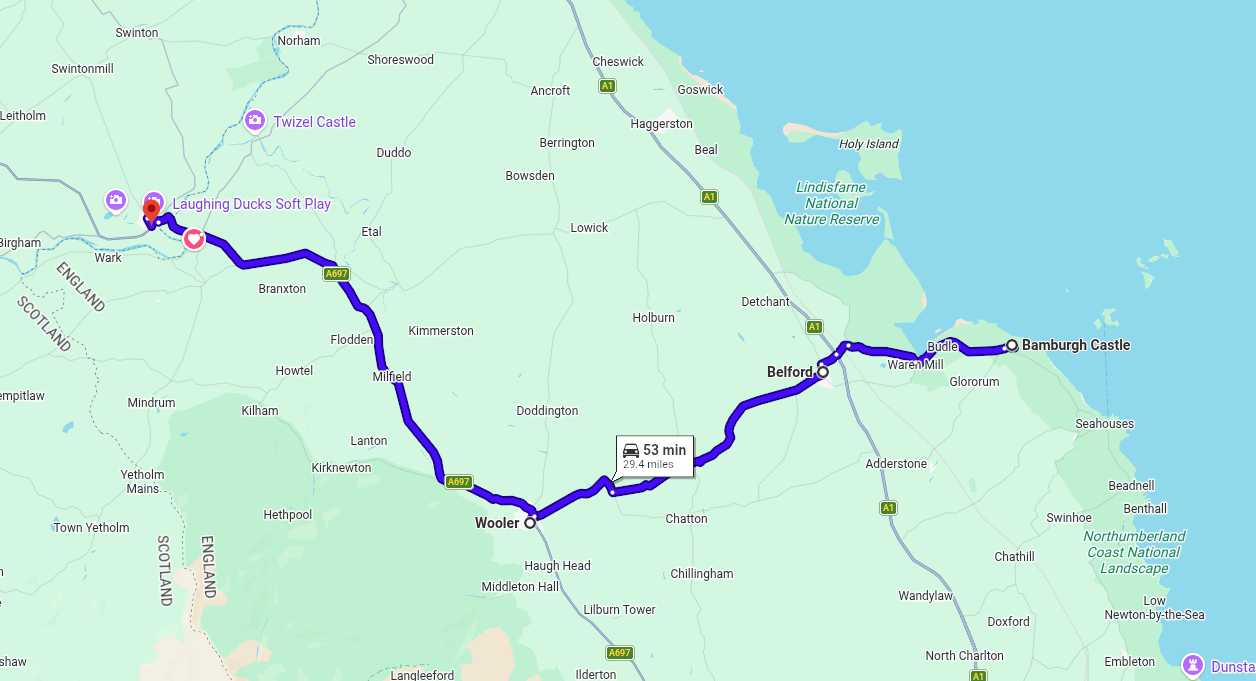
After a leisurely ride up the coastal road and a brief stop at Bamburgh, which is well worth a visit if for nothing else than one of the best beaches in Northumberland, I headed West and further North into the Scottish Borders. I took the Belford road on this occasion to bridge across to the main A697 North. Belford is an interesting market village and used to serve as a significant coaching stop - but not for this coach on this occasion as I pass through on my way to Wooler. It would make a good place to stay for exploring North Northumberland and the adjacent coastline.
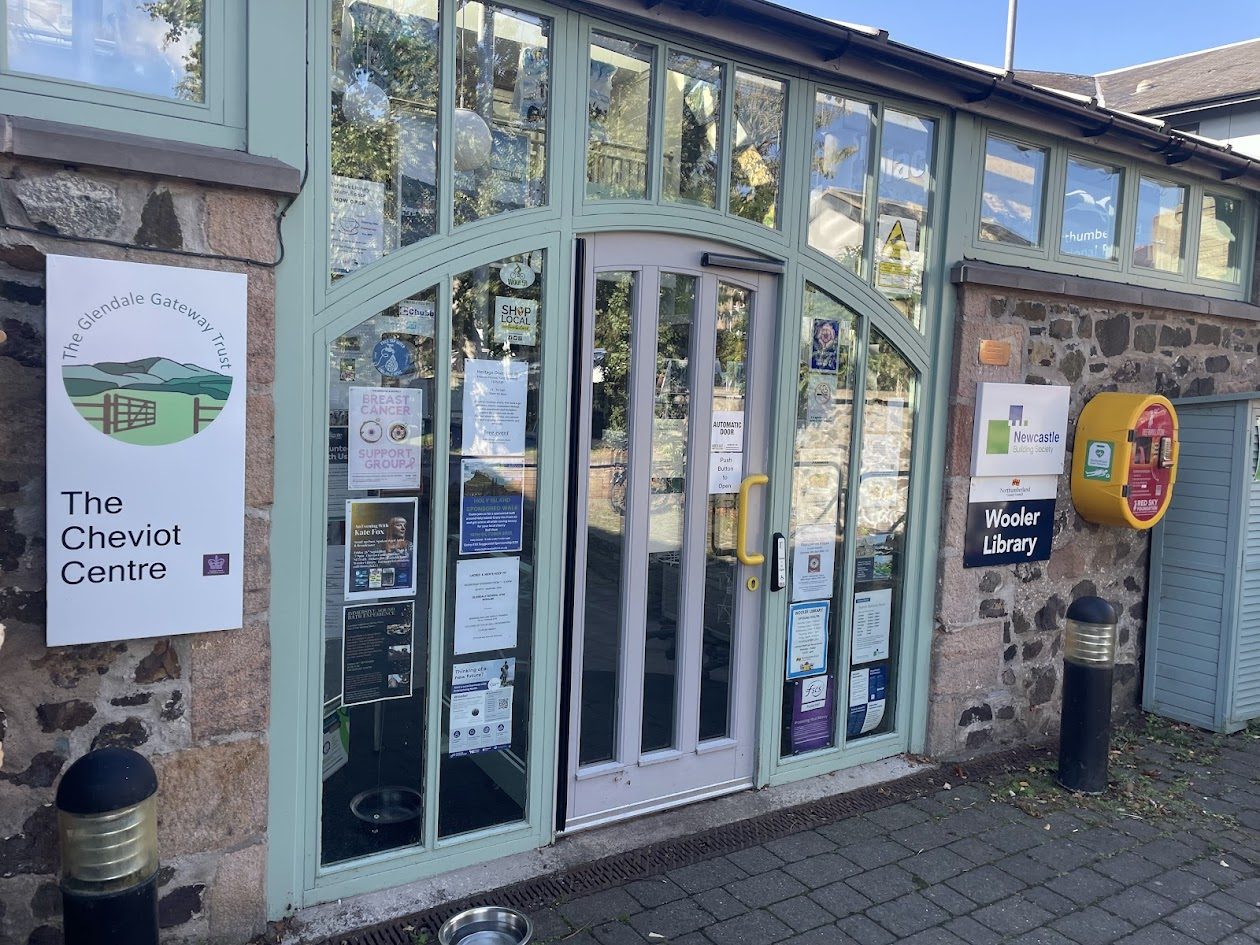
Wooler holds a lot of memories for myself, being the place I've primarily used as a base to walk and run in the Cheviot hills. The two highest hills are next to each other - The Cheviot at 815m and Hedgehope at 714m - both pleasant hill walks with the right weather, although the slopes of Cheviot can be boggy, the view from the top on a fine day is unsurpassed in the region.
I've walked both hills many times, including a number of times as part of the annual Chevy Chase fell race, something of a Northumberland institution which goes back to 1955. The race operates as a walk and run, with both following the same route - a 20 mile circular, with 1200 metres ascent, from Wooler taking in both the Cheviot and Hedghope peaks with the Harthope valley inbetween.
One year I braved the run as a physical challenge for myself and raising funds for a hospice in Alnwick; I had trained well and was fit for running marathon distances and well accustomed to long inclines. However it is fair to say that running on uneven ground with peat bogs and real hazards on downhill sections made for a significant challenge for a wanna-be fell runner more accustomed to tarmac. All that combined with possibly the hottest day of the year which led to excessive water loss and in turn leg cramps. Water stations on the route are very limited due to the remote location, so it's about how much you want to carry in tension with the added weight. Water is truly life giving and so valuable and yet so often it is taken for granted in our daily lives. We just assume a never ending supply, on tap, at our convenience. A situation of lack can truly shift your perspective - you value every drop.
Not as fast a time as I might have liked, but a great experience and it was the fittest I'd been in my life, the after effects of which I still benefit from to this day. My running days are behind me now, but passing through Wooler always evokes misty memories.
There are many other great walks in the local area and if you want something gentler and less time consuming I can highly recommend the 4 or 5 mile circuit from Wooler around Humbleton Hill. A perfect early morning invigorator or post lunch stroll.
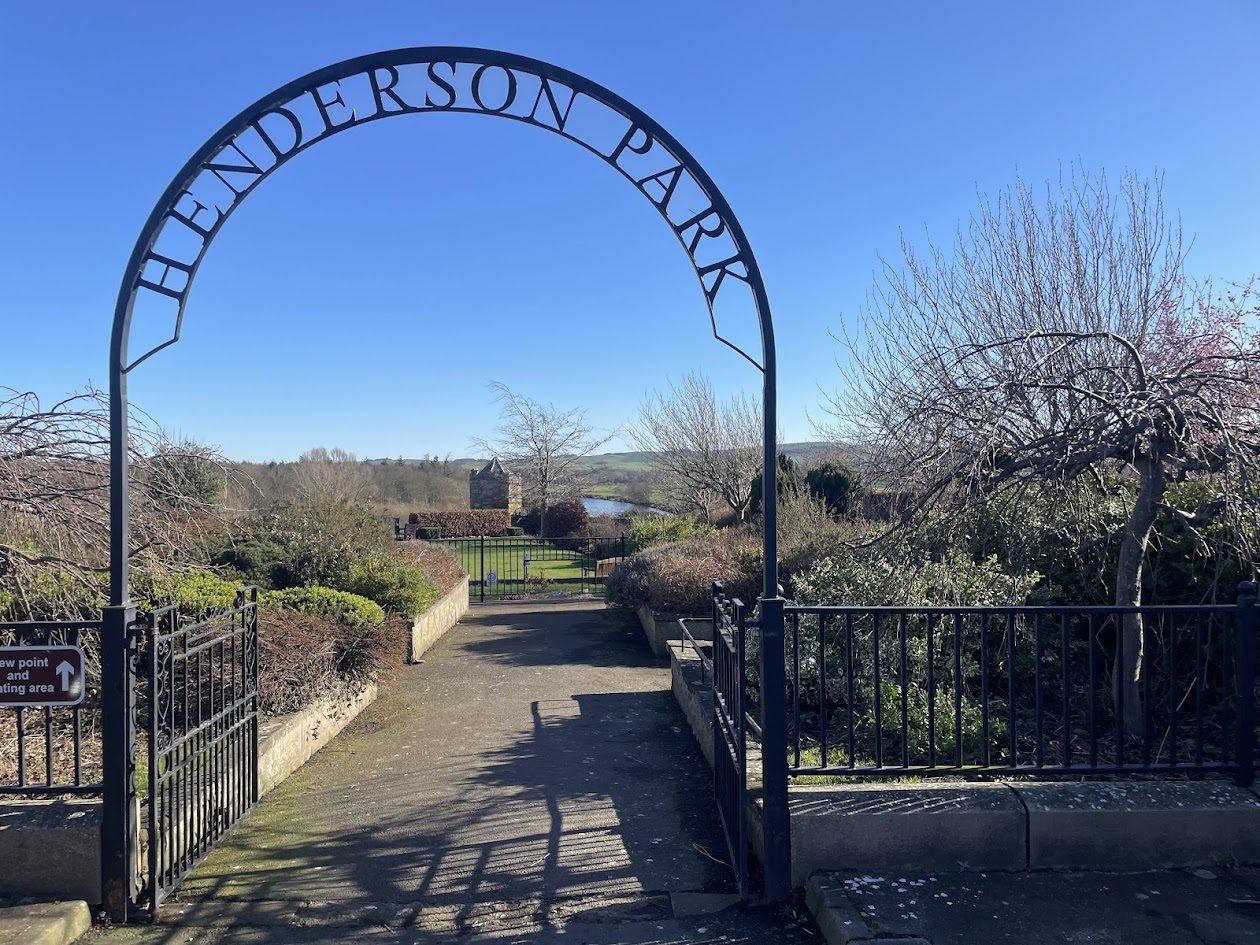
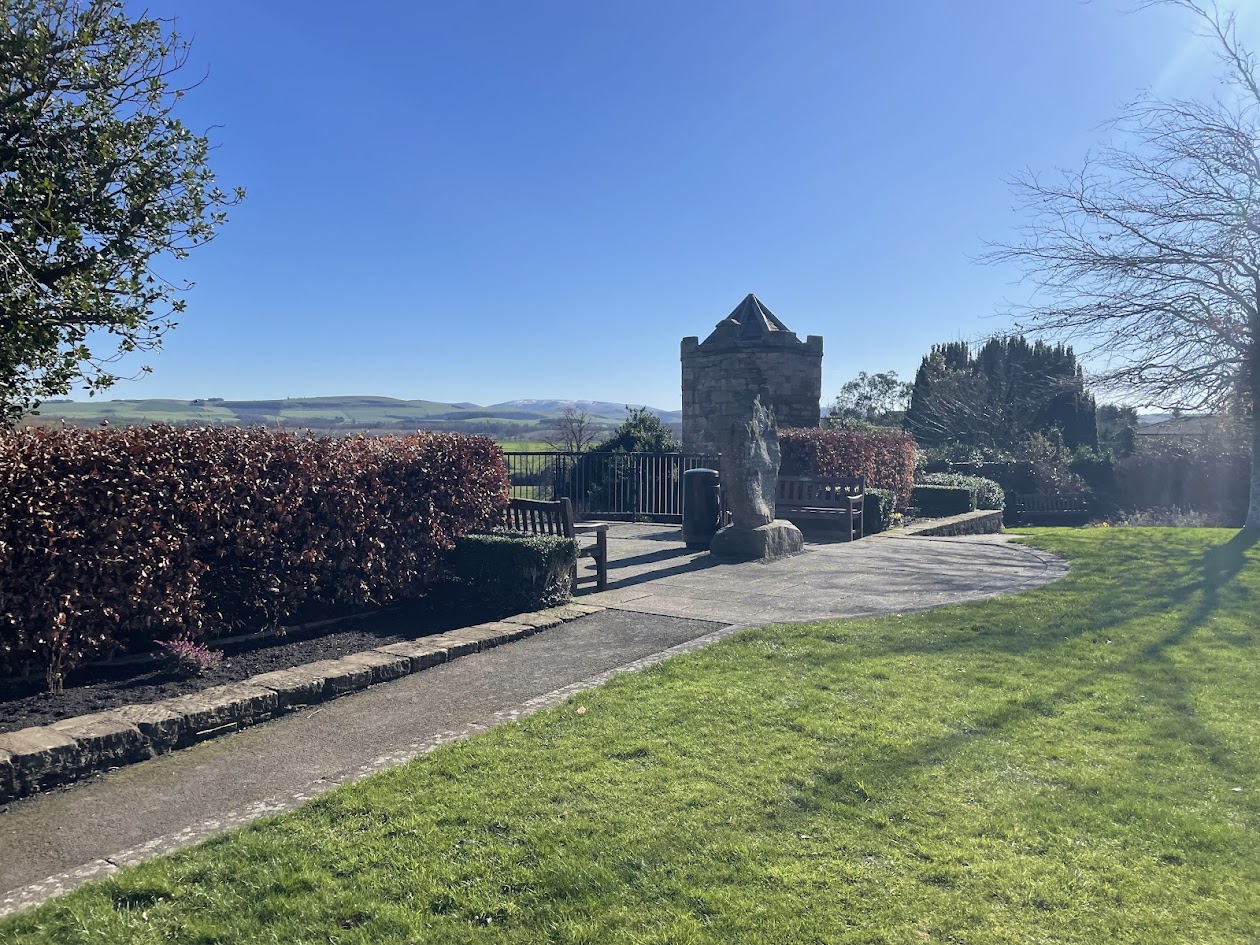
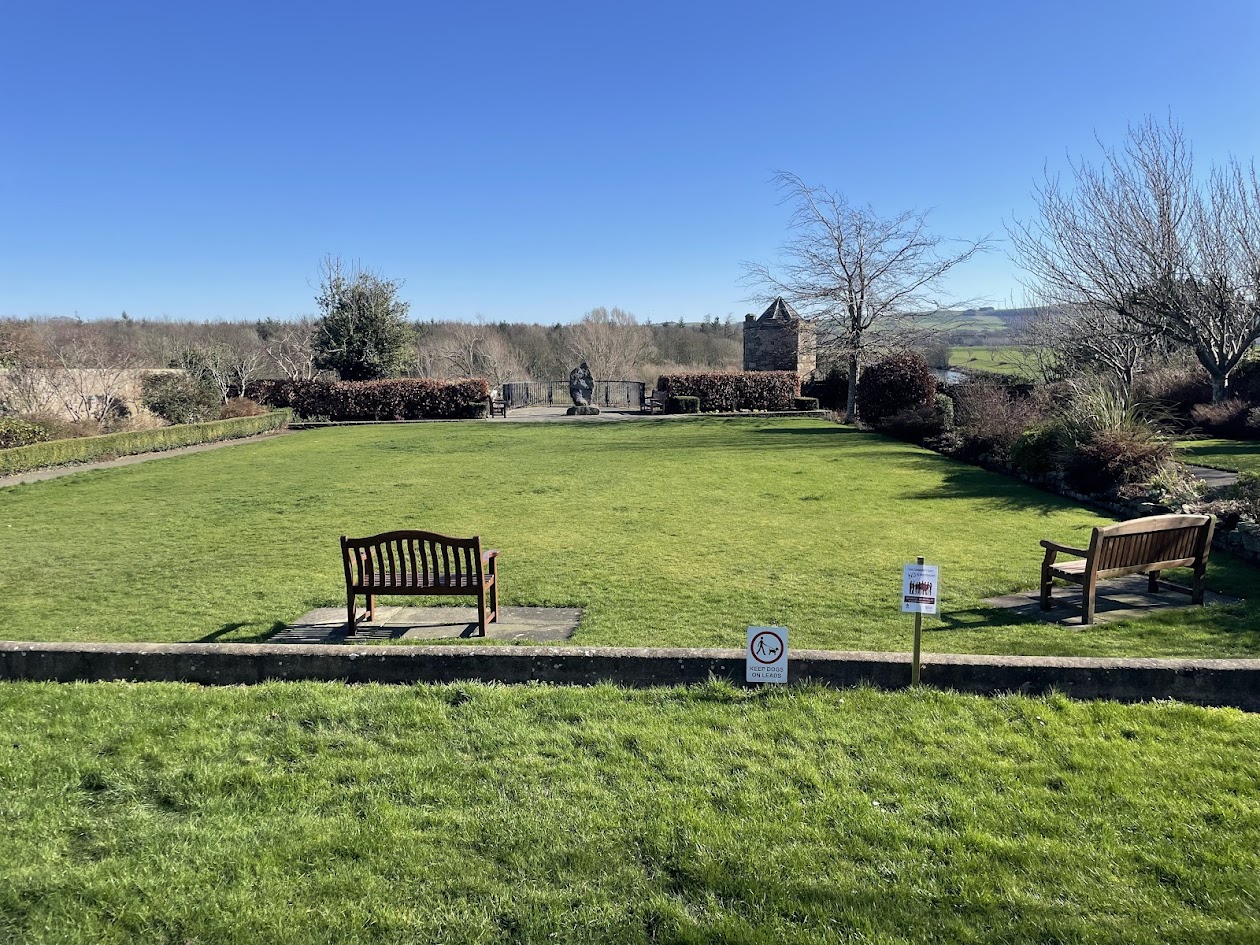
Parking up at the small car park outside Henderson Park, I explored the small well kept gardens.
The park was created from a former tennis court of Doctor Henderson's estate, and was named in honour of the doctor and his family.
I was naturally drawn to the wide sweeping vista over the River Tweed from a semi circular railed vantage point.
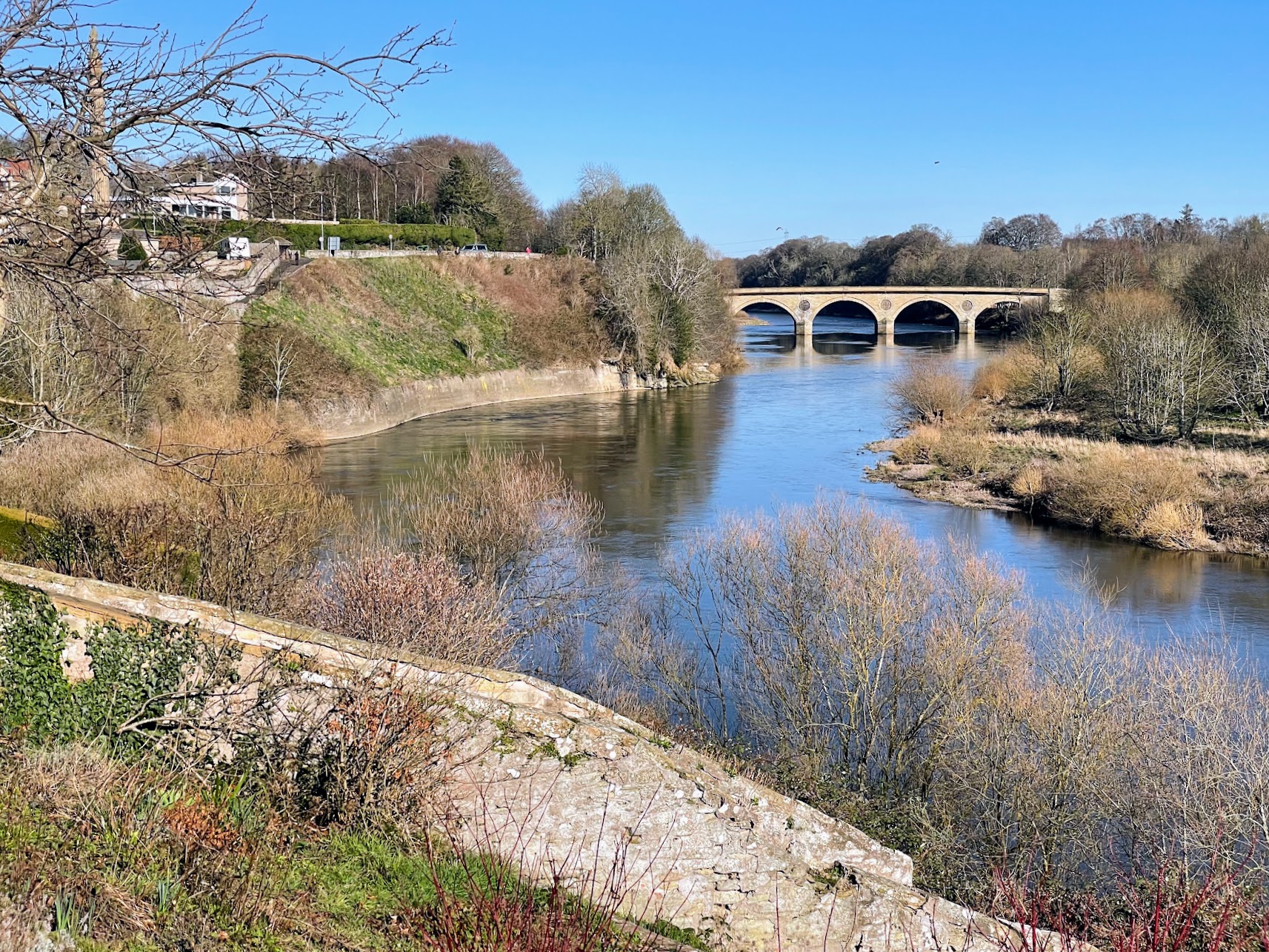
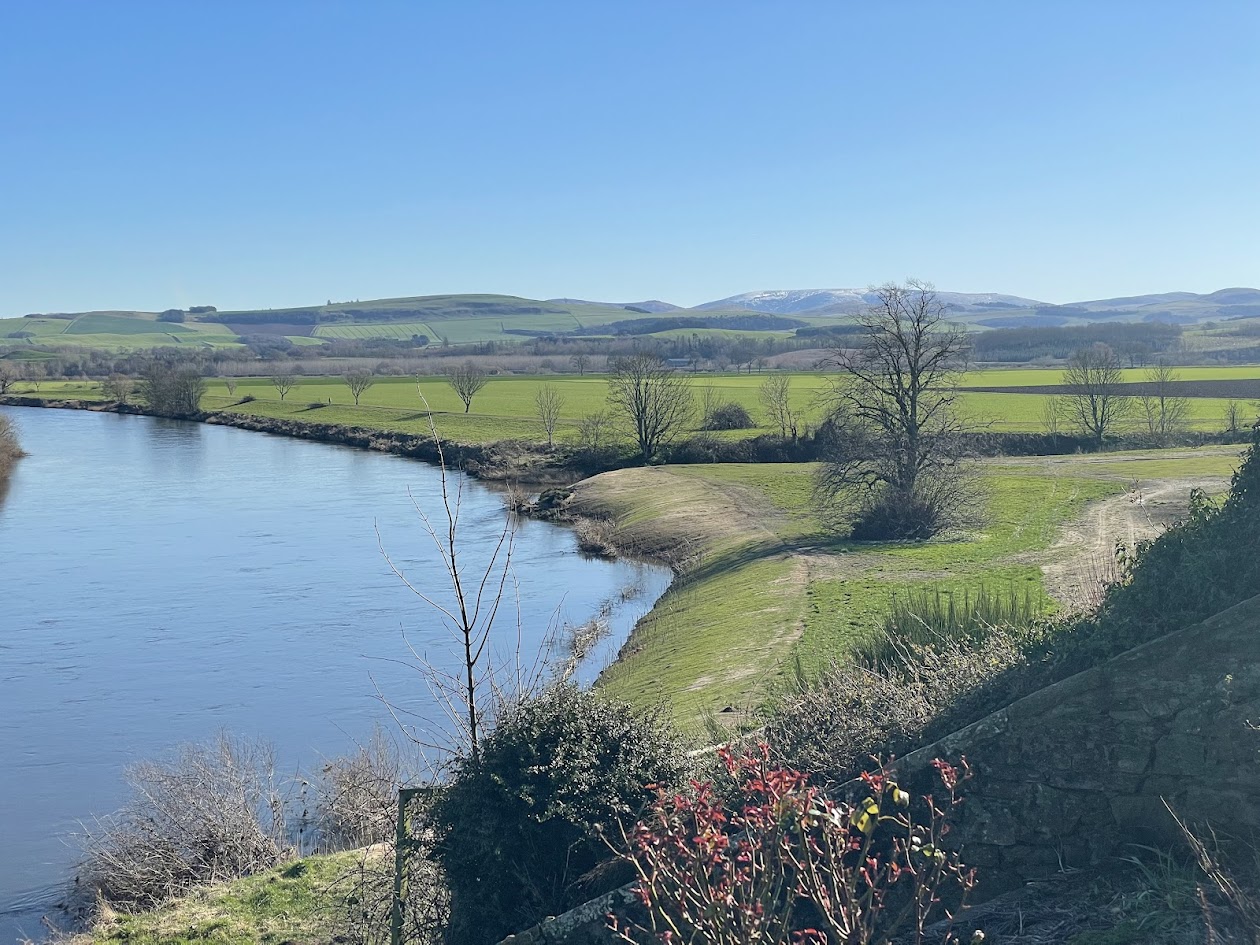
A magnificent and rewarding view looking South over the river to England, West (pictured second above) towards the Cheviots and East toward the Coldstream bridge (pictured first above) which allows passage over the England-Scotland border.
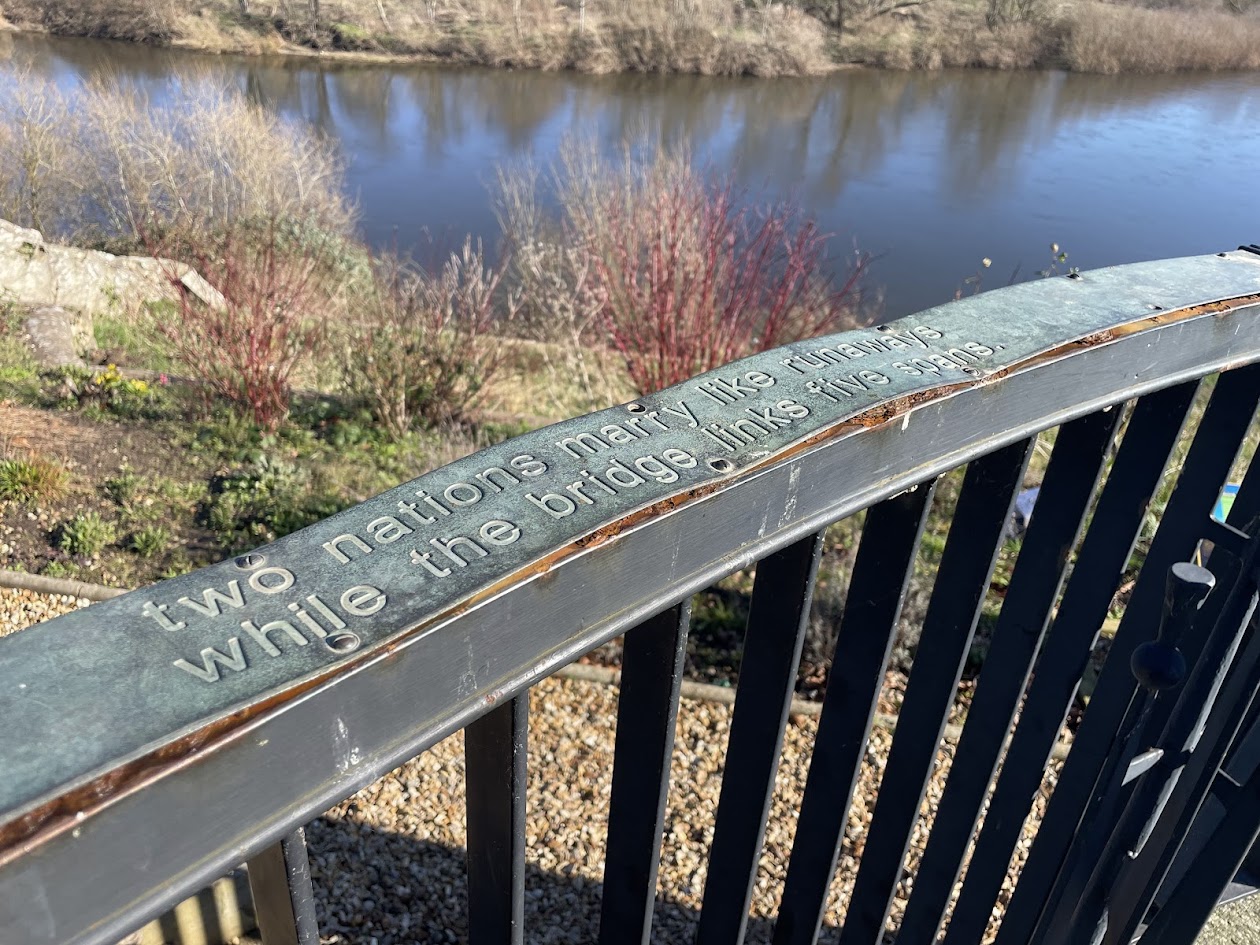
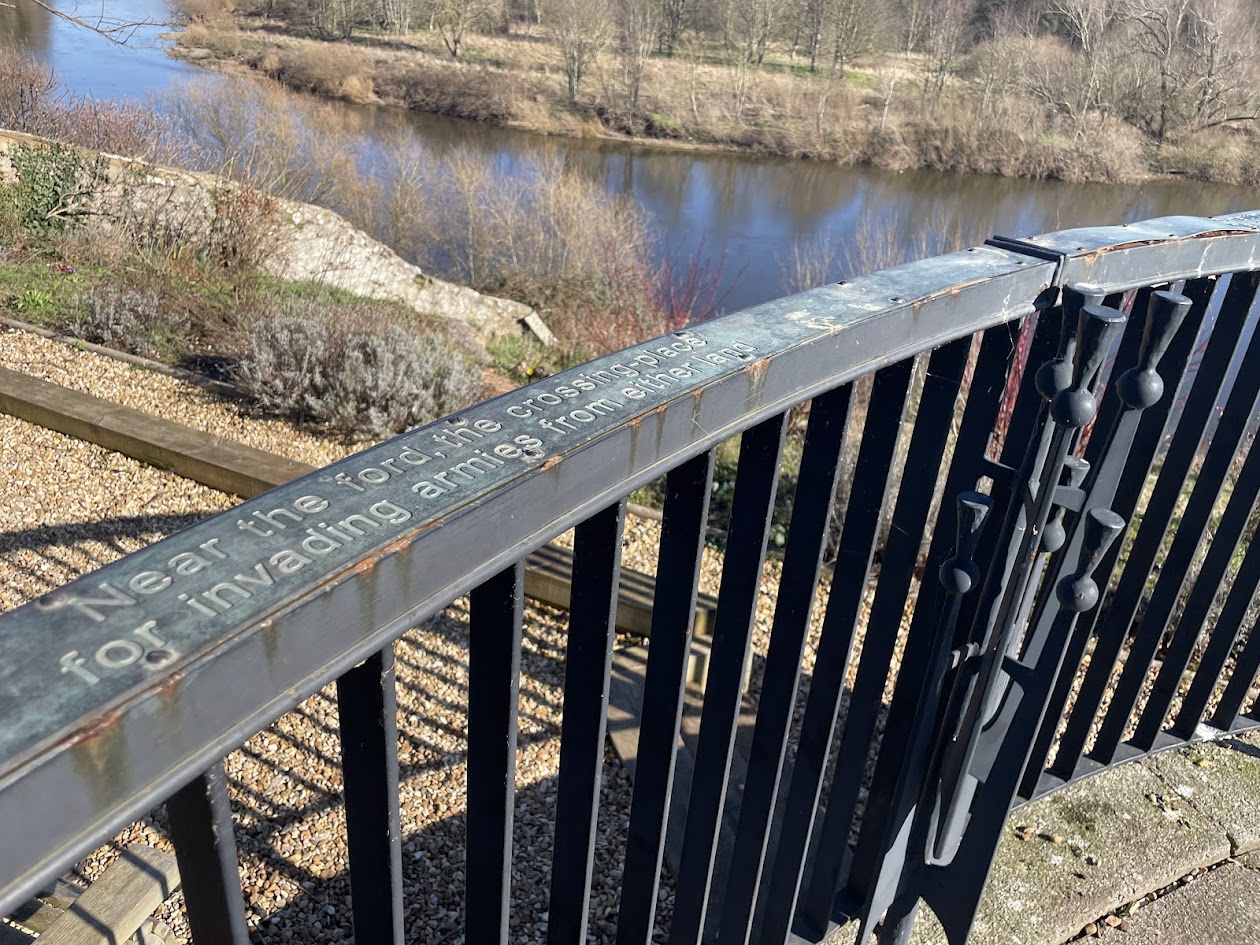
Embossed into the top of the railings are selected lines from poetry in Valerie Gillies, The Lightning Tree (Edinburgh: Polygon, 2002).
Two pairs of lines in particular stood out to me:
"Two nations marry, like runaways / while the bridge links five spans"
In 1754, a law was passed in England and Wales which made it illegal for anyone to marry under the age of 21 without parental consent. This was an attempt to prevent clandestine marriages which were becoming an increasing problem at the time. No such law in Scotland though!
After 1754, young couples in England and Wales, lacking consent but not resolve, could elope across the border and be married without question. Places like Gretna Green and Coldstream became known for providing "marriage houses" just beyond English jurisdiction. In Coldstream, the marriage house stood on the Scottish side of the bridge, in what had previously been a toll house for the crossing.
In 1856 a new Act mandated that at least one of the parties in a Scottish wedding must have lived in Scotland for at least three weeks prior to the marriage.
"Near the ford, the crossing-place / for invading armies from either land"
At Coldstream, the England–Scotland border runs down the middle of the River Tweed, a river world famous for its salmon fishing. Unusually, a licence is not required to rod fish in the river, adding to its appeal as a worldwide angling destination.
Prior to the building of the bridge, a perilous ford provided a crossing, allowing passage back and forth over the Tweed.
During the Borders Wars, the village was destroyed at least twice and attacked on many other occasions. Incursions across the river were not unusual; the crossing was as much a point of conflict as it was of connection.
Back then, while ale may have been preferable, the river water would likely have been drinkable without harm. Not so today. Although still one of Scotland’s cleaner rivers, the Tweed, like many others, suffers from agricultural runoff (pesticides) and the discharge of sewerage.
I'm struck by the river’s paradoxical nature: life giving water, fish, trade, and passage, and at the same time a long standing, natural political boundary. It is both unifying and divisive, a line that connects and separates.
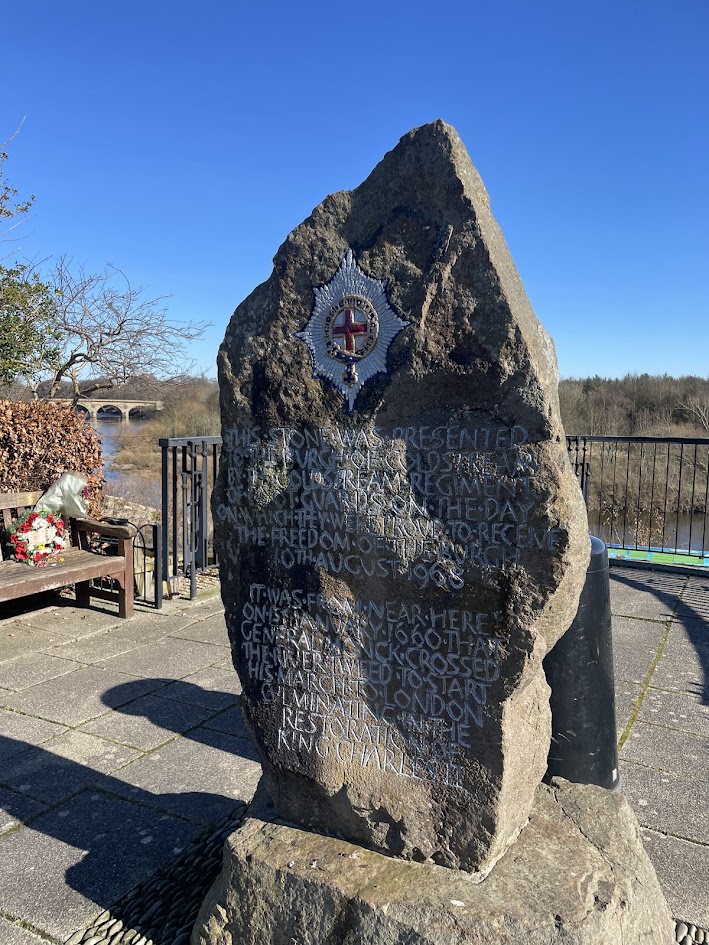
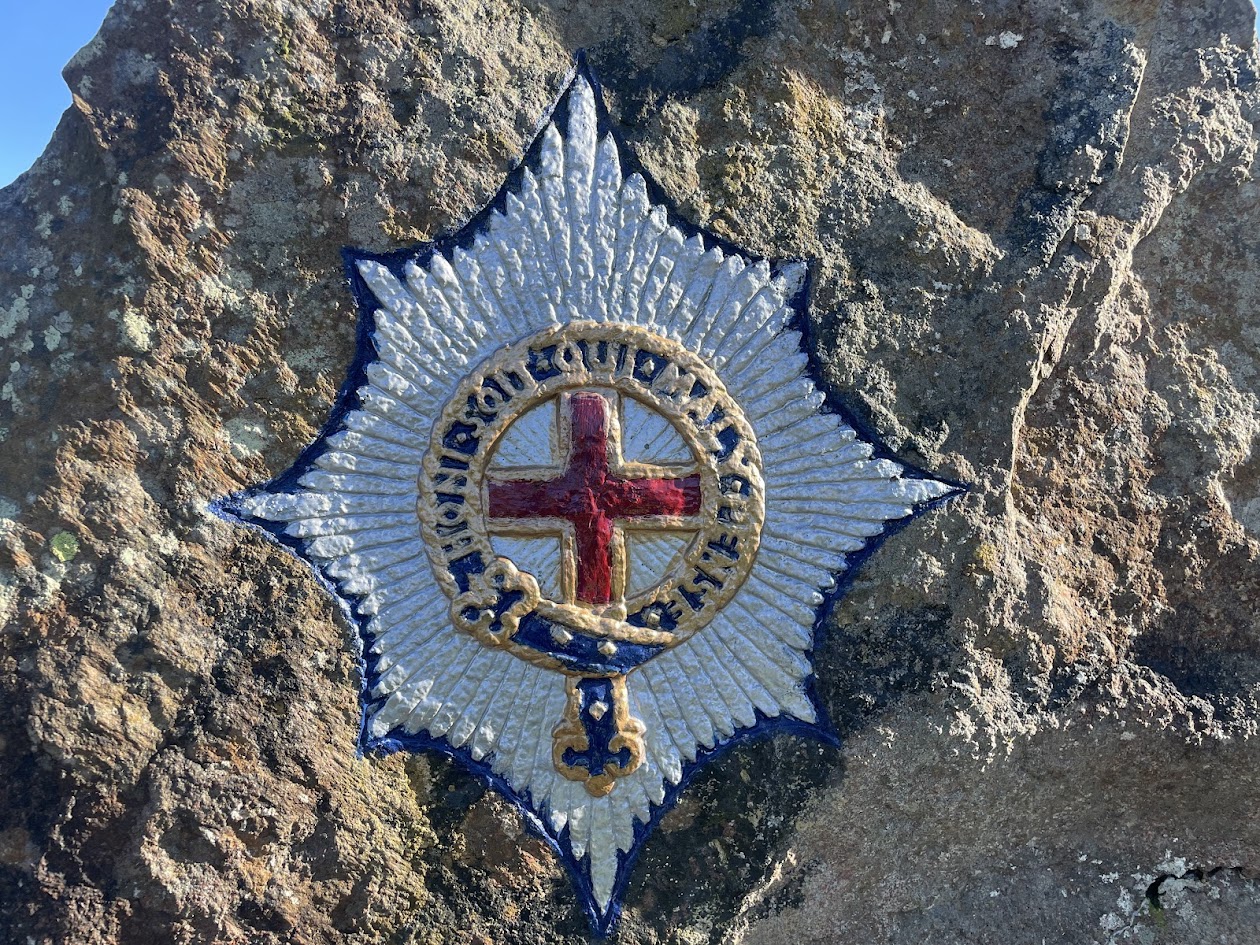
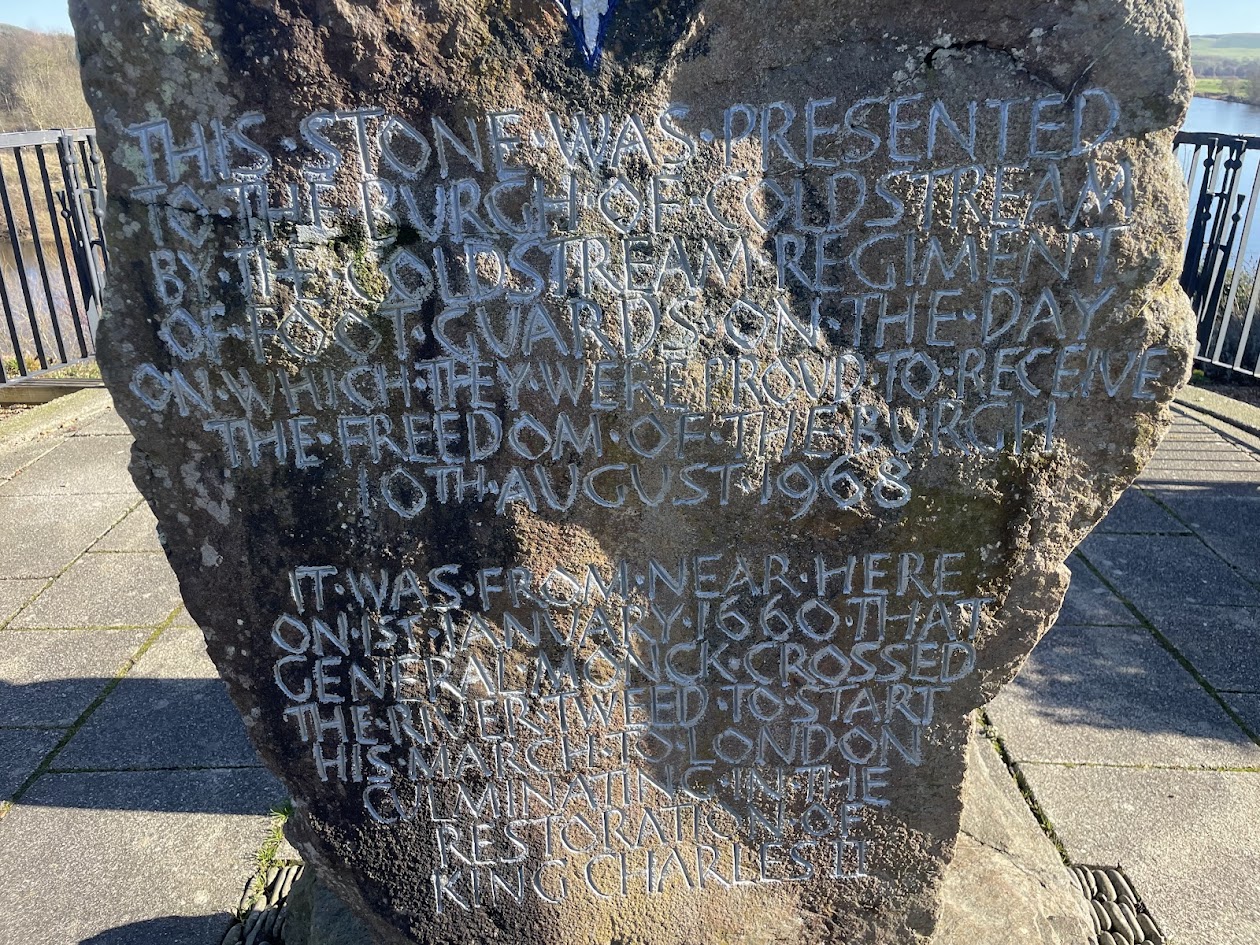
Also in the park is a memorial stone commemorating the tercentenary (1660-1960) of the Coldstream Guards, the oldest continuously serving regiment in the British Army. One of its principal roles is protection of the monarchy, and often takes part in state ceremonial occasions.
The engraving reads as follows:
"This stone was presented to the Burgh of Coldstream by the Coldstream Regiment of foot guards on the day on which they were proud to receive the freedom of the Burgh, 10th August 1968.
It was near here on the 1st January 1660 that General Monck crossed the River Tweed to start his march to London, culminating in the restoration of King Charles II"
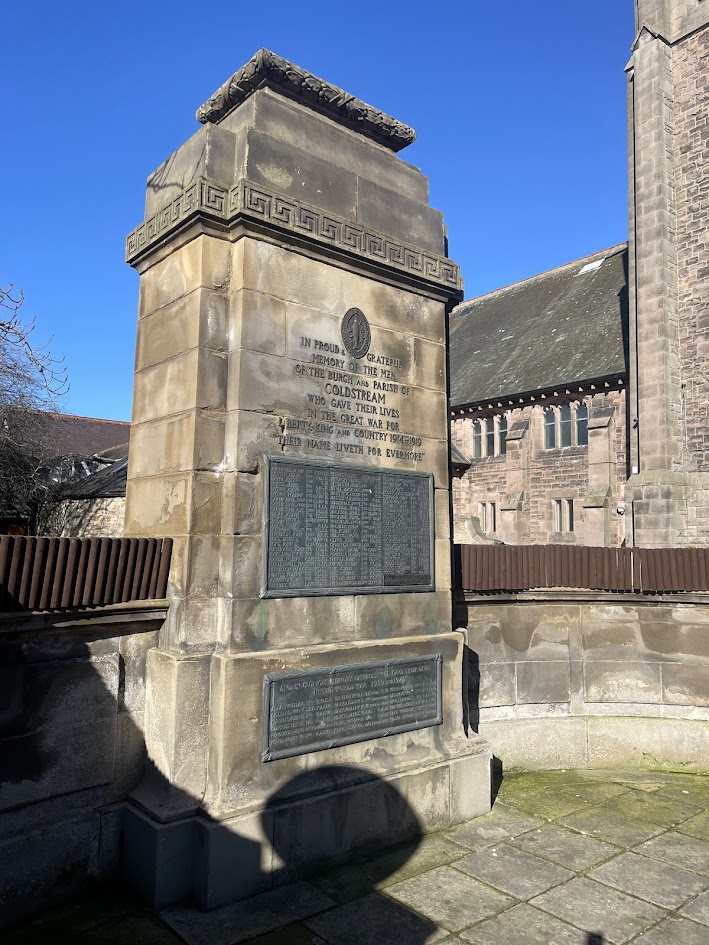
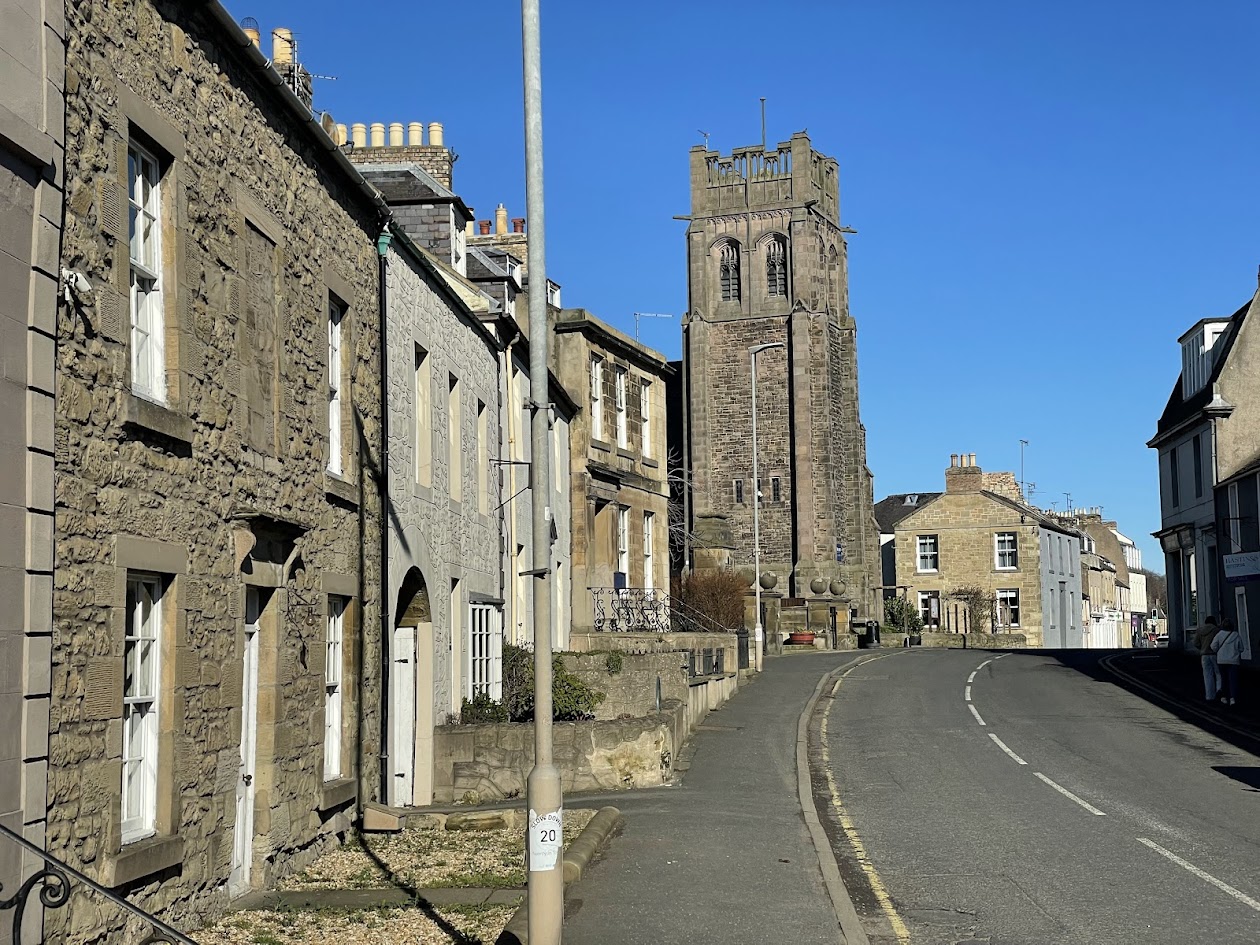
After soaking up the views and some of the history, I wandered through the town and found a Coop for essential human systems cooling and a sugar fix in the form of ice cream. A pack of three was only a little more expensive than a single from the convenience fridge. I can't say I wasn't tempted.
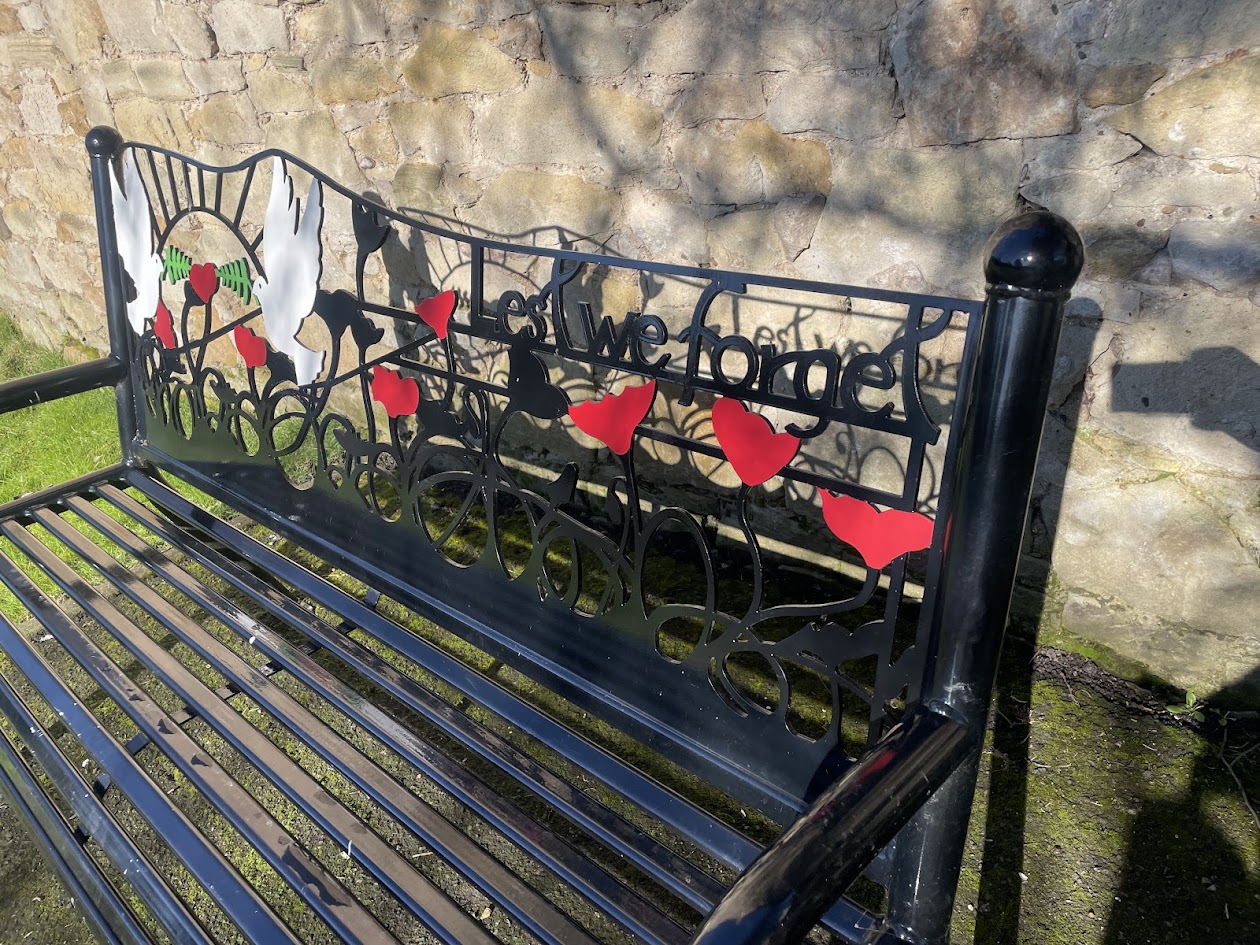
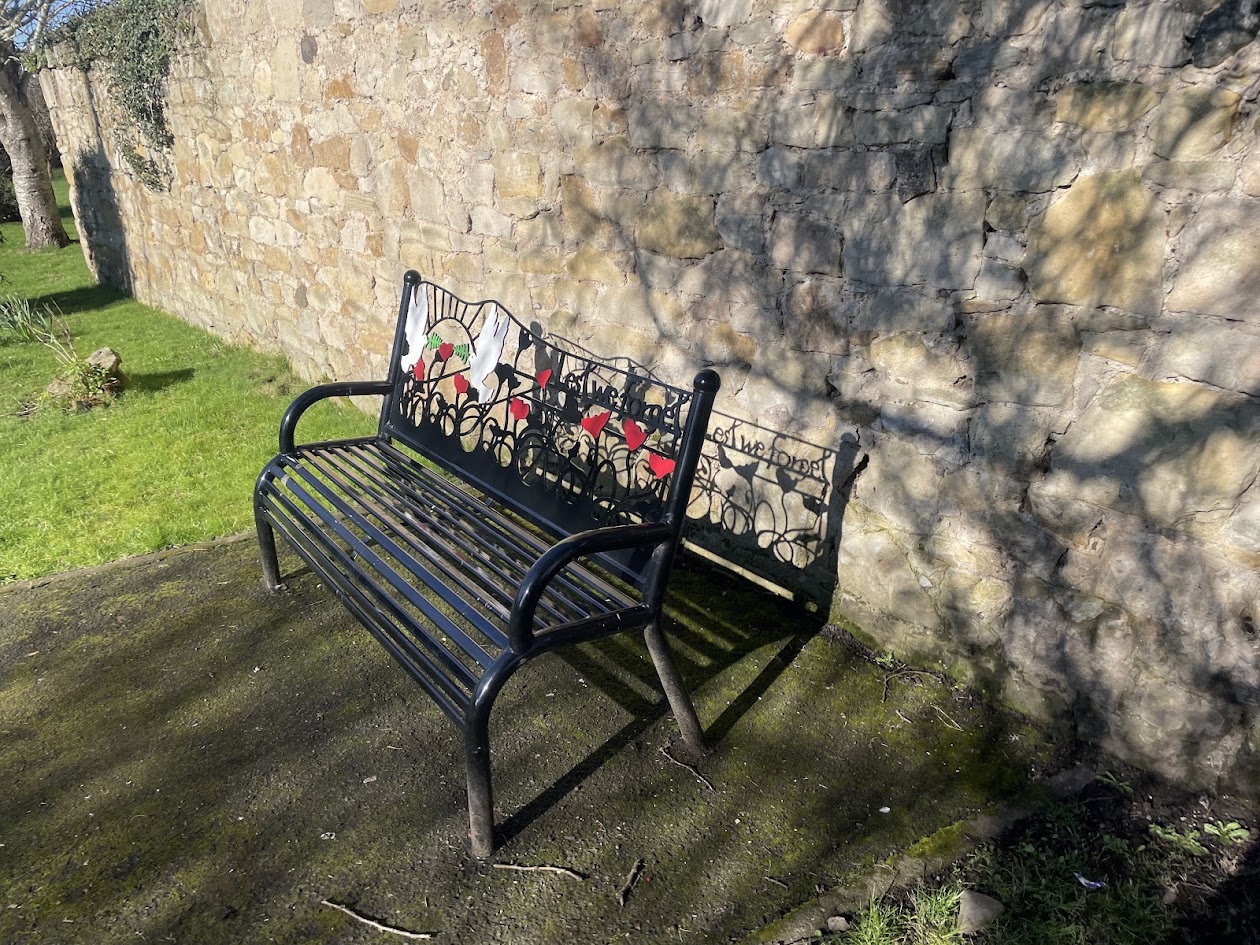
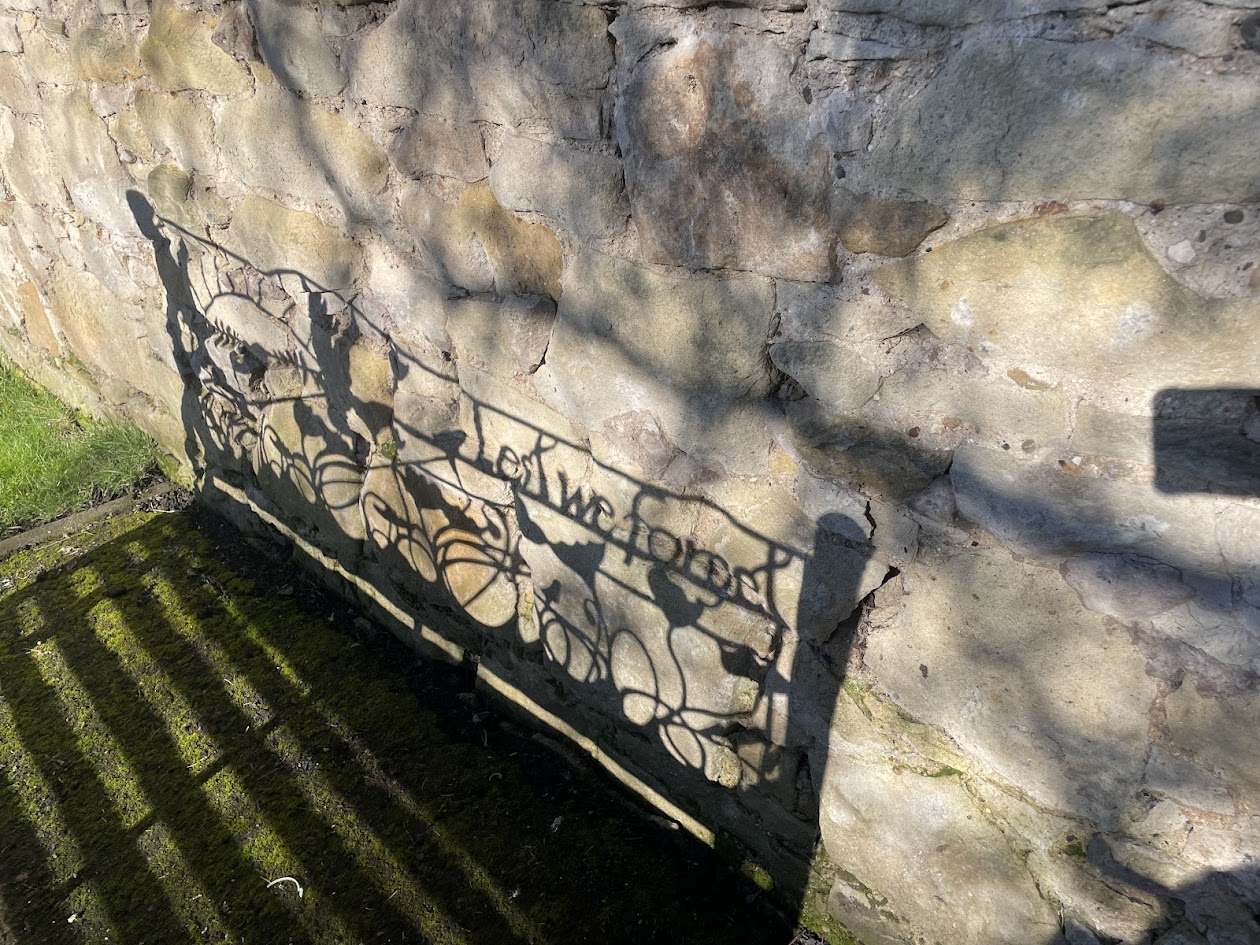
I found a wonderful memorial bench to enjoy the snack. Emblazoned with white doves, red poppies and the words "Lest We Forget", casting a clear shadow on the stone wall behind.
My visit to Coldstream was at a close. I mounted my trusty steel horse to ride for Kelso down a suitably small B road.
March 2026 - Eglingham - Roll The Bones
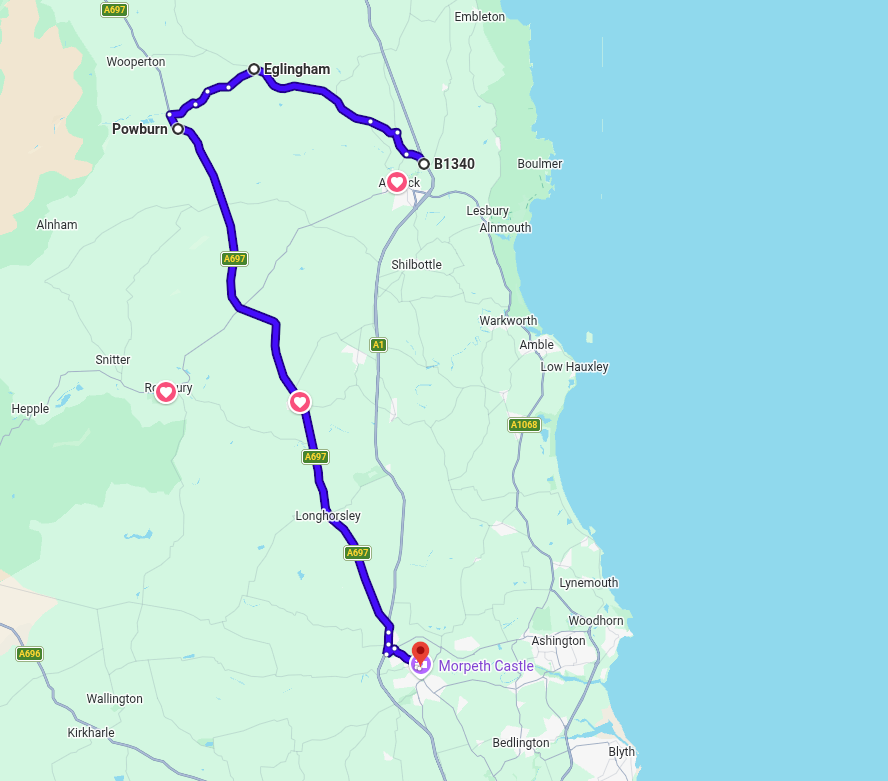
Taking the well travelled coastal road through to Alnwick, it was refreshing to get onto some roads I'd not ridden before - 7 miles of twisting and narrow tarmac leading to the small village of Eglingham. Nestled in the heart of the Northumberland countryside and just a few miles East of the Breamish Valley and the Cheviot hills.
I use a very non-scientific measure of how remote a road is, which I call the "Scat Index"; the greater the amount of scat on the road, the more in the middle of nowhere you generally are. It is fairly reliable and it was running a medium to high measure on this road, with care needed passing by adjoining farm gates where repeated tractor and trailer passage had left significant detritus. After the Winter there were also still plenty of gravel piles on the road which tend to form in lines waiting to catch out inattentive riders. It's stuff you just don't need to think about driving a car but on the bike you will never forget that feeling when your back wheel slides just one or two inches while navigating a corner. When there's a lot of cr*p around, you need to take extra care to protect yourself.
The village is fairly small and is well presented - primarily comprised of two rows of stone houses and cottages, also sporting a village hall, and the welcoming 4* Tankerville Arms for rest and replenishment. My interest however was drawn to the older St Maurice Church of England grounds and church building.
You may notice quite a few churches and cathedrals in my posts. There's something about them that draws me in. Part of it is architecture; buildings with curves and lines designed to inspire, often with beautiful stained glass casting colour on stone and wood. It's hard not to be inspired. It's also the history. Many of these buildings have stood for centuries quietly witnessing generations of lives passing through - baptisms, weddings, funerals - celebration and grief through the circle of life. Places where people marked the passing of time, shared news and connected. Then there's the creative and artistic elements - carvings, paintings, stained glass, mosaics, organs... It's amazing what you can find when you start looking. All this aligns with an interest in photography, art, history, culture.... I no longer carry around a heavy pack with digital SLR cameras and lenses. Camera phones and modern software do a more than adequate job provided the lighting is decent - although for macro work I still prefer a DSLR and a dedicated prime macro lens.
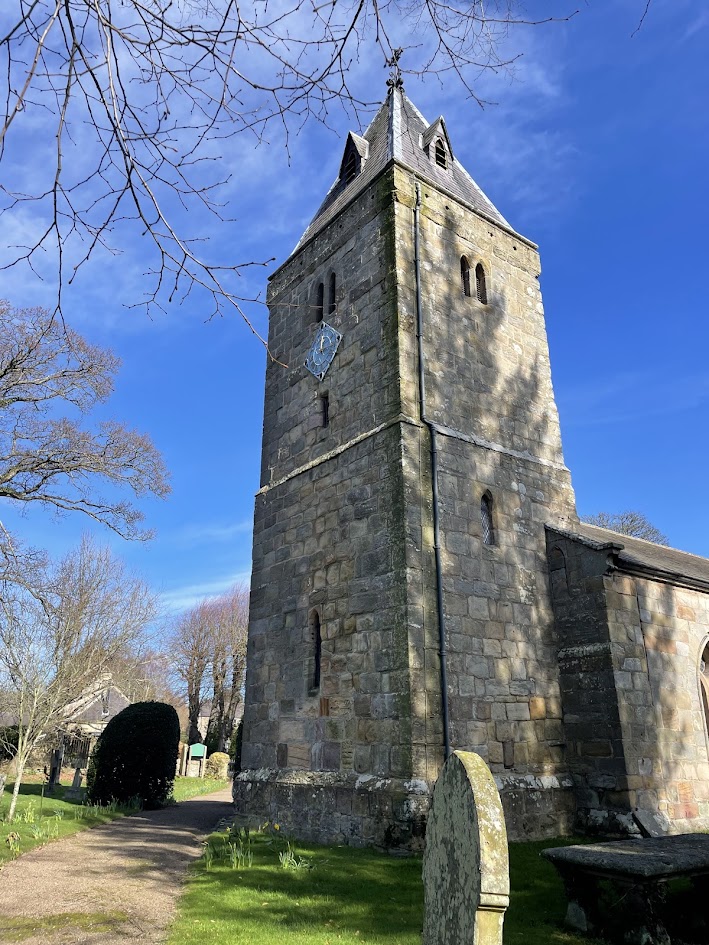
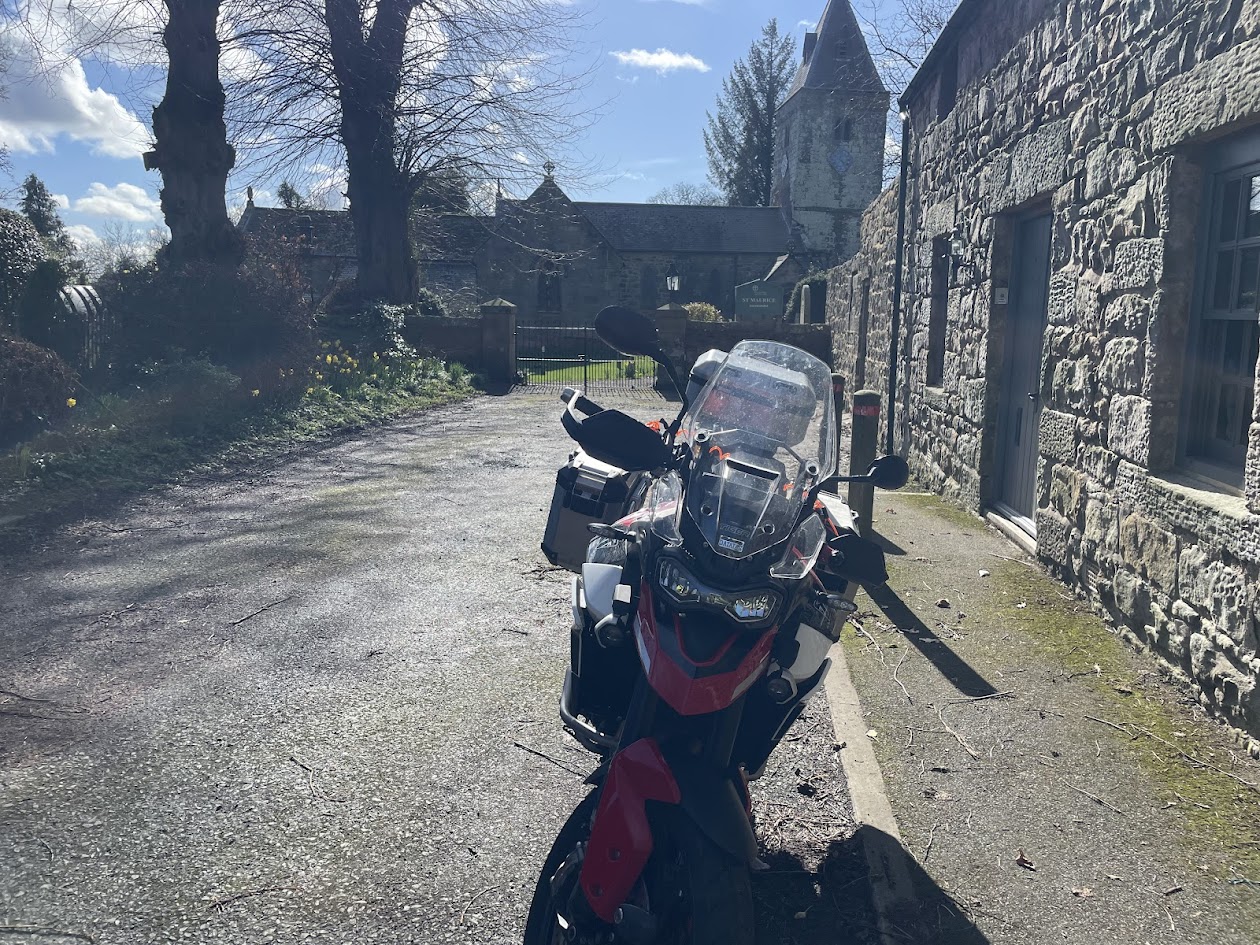
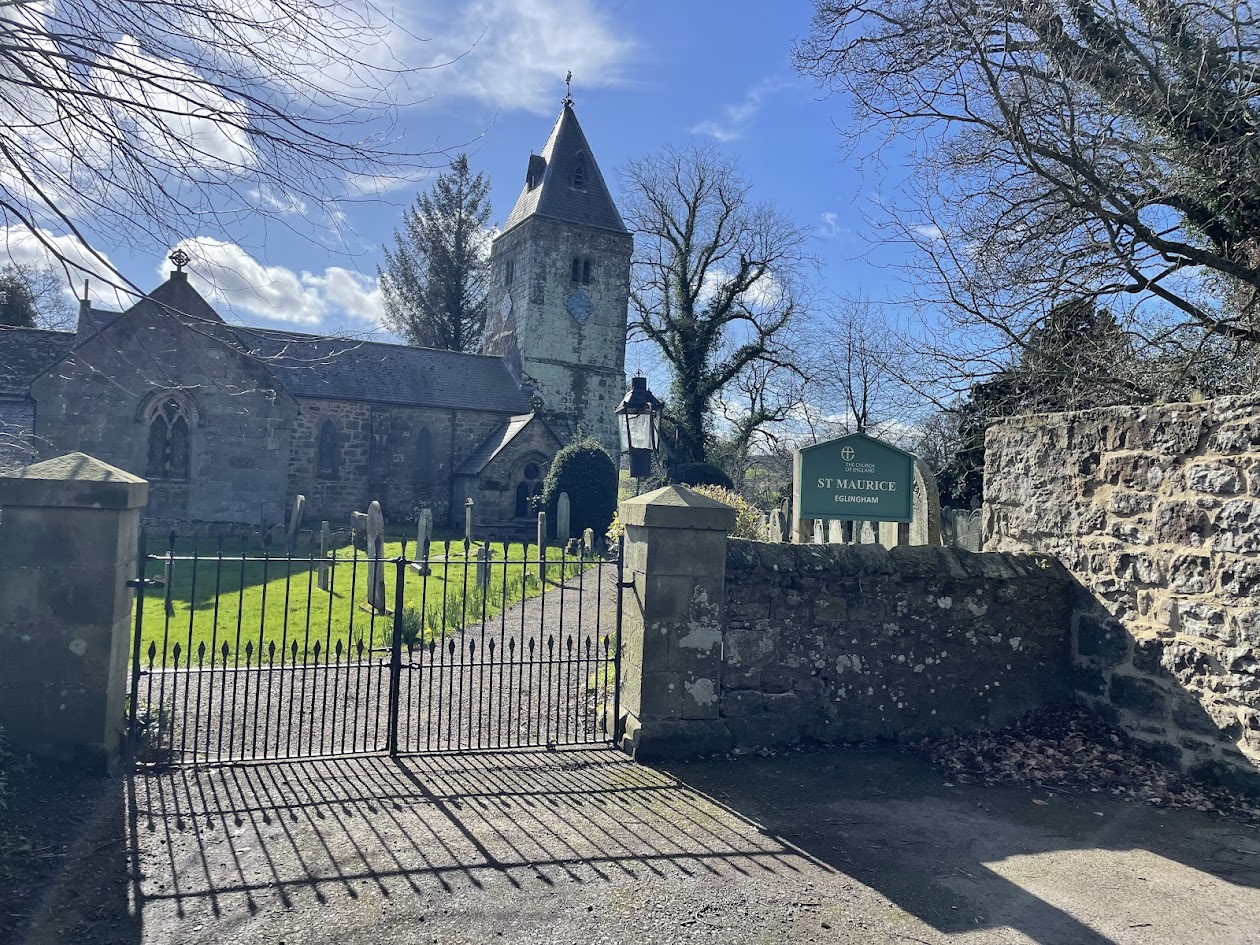
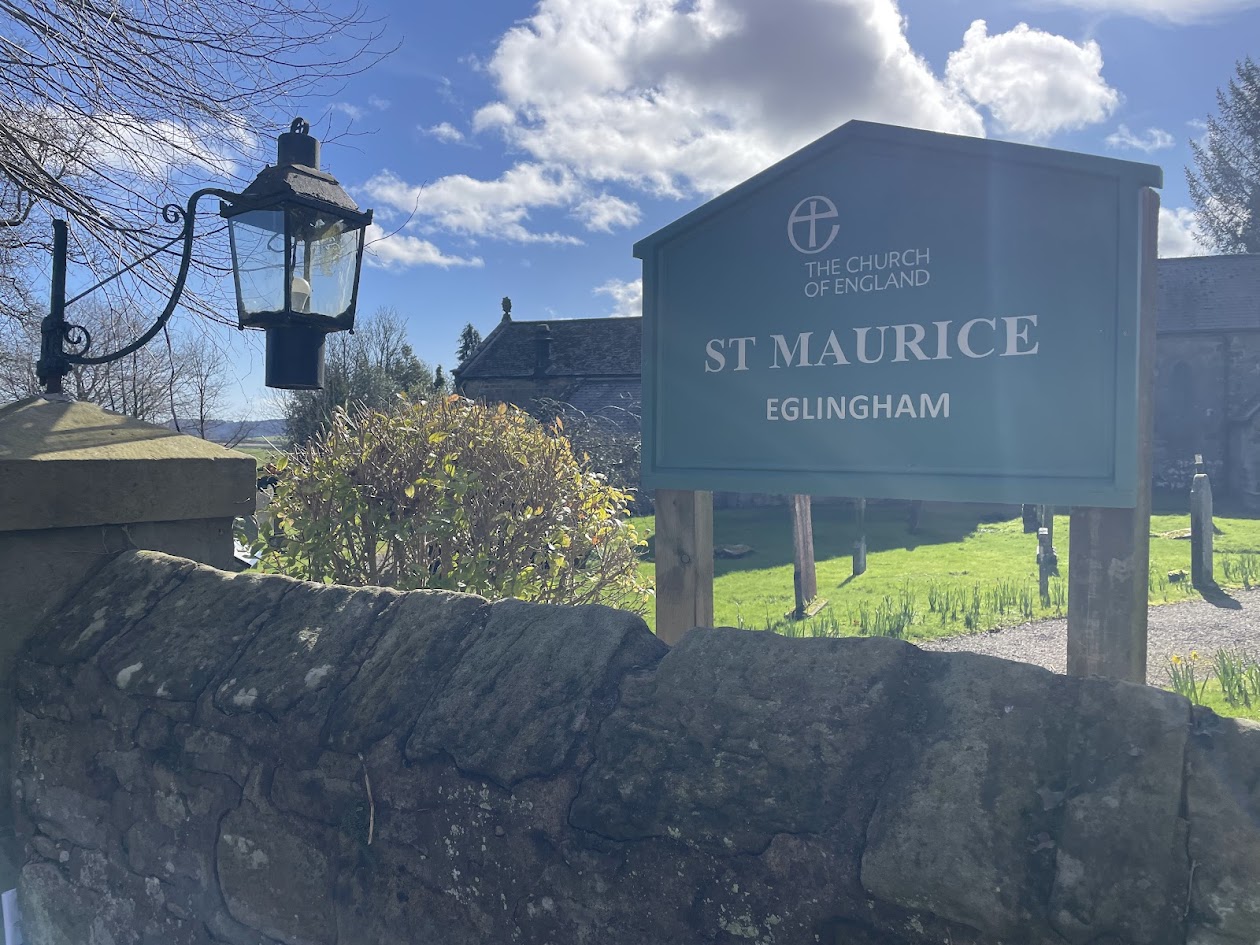
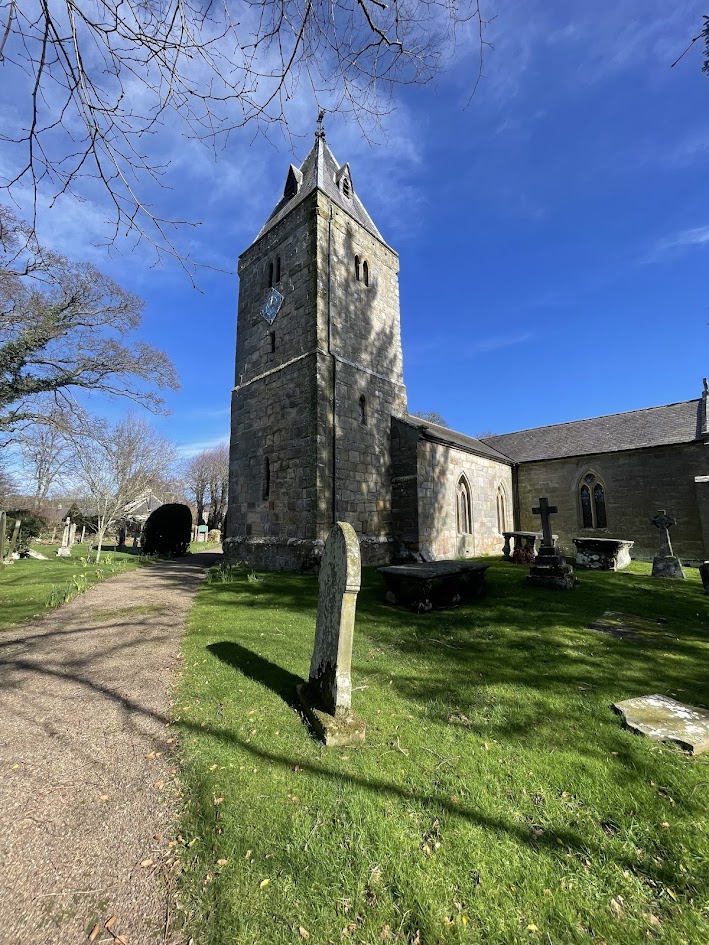
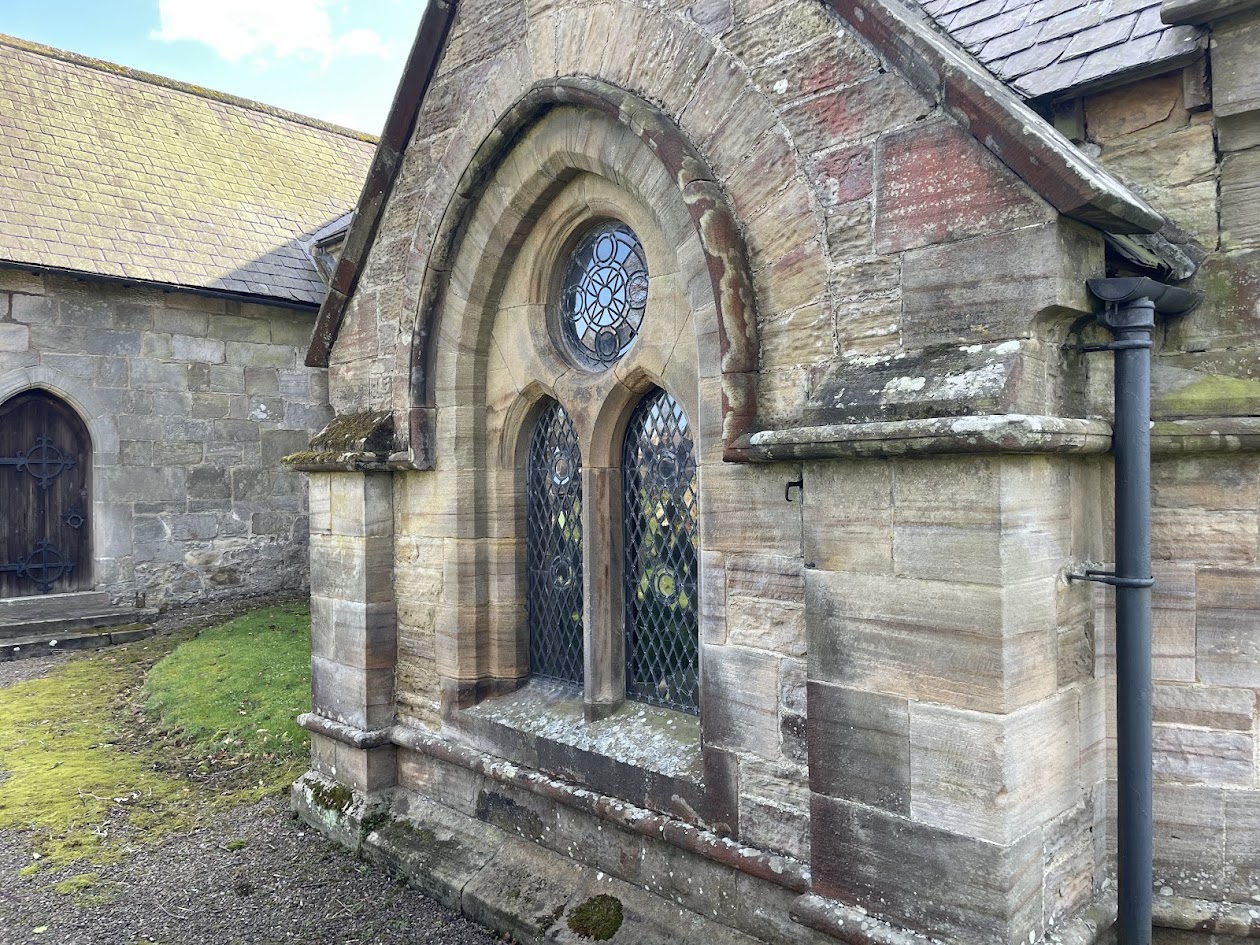
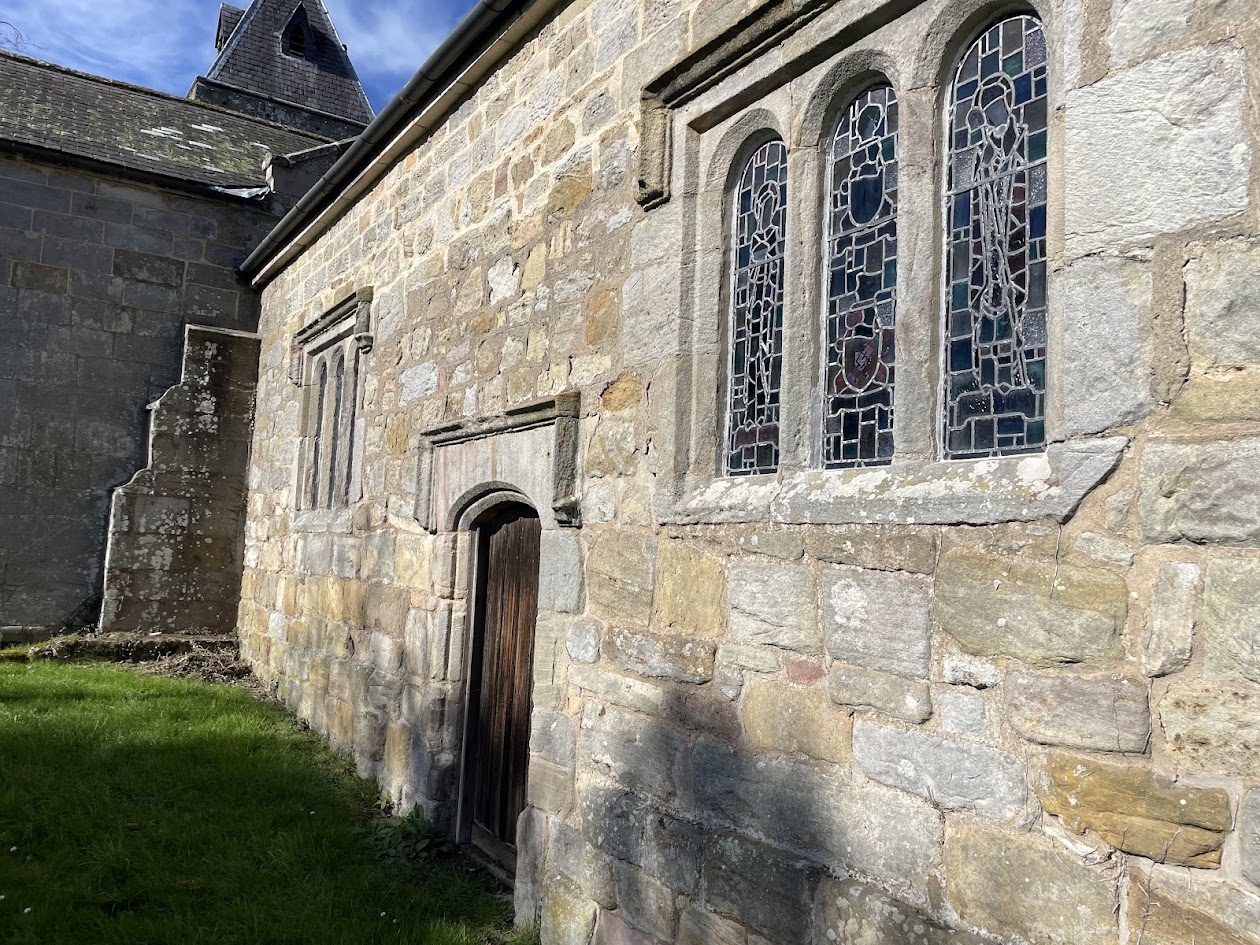
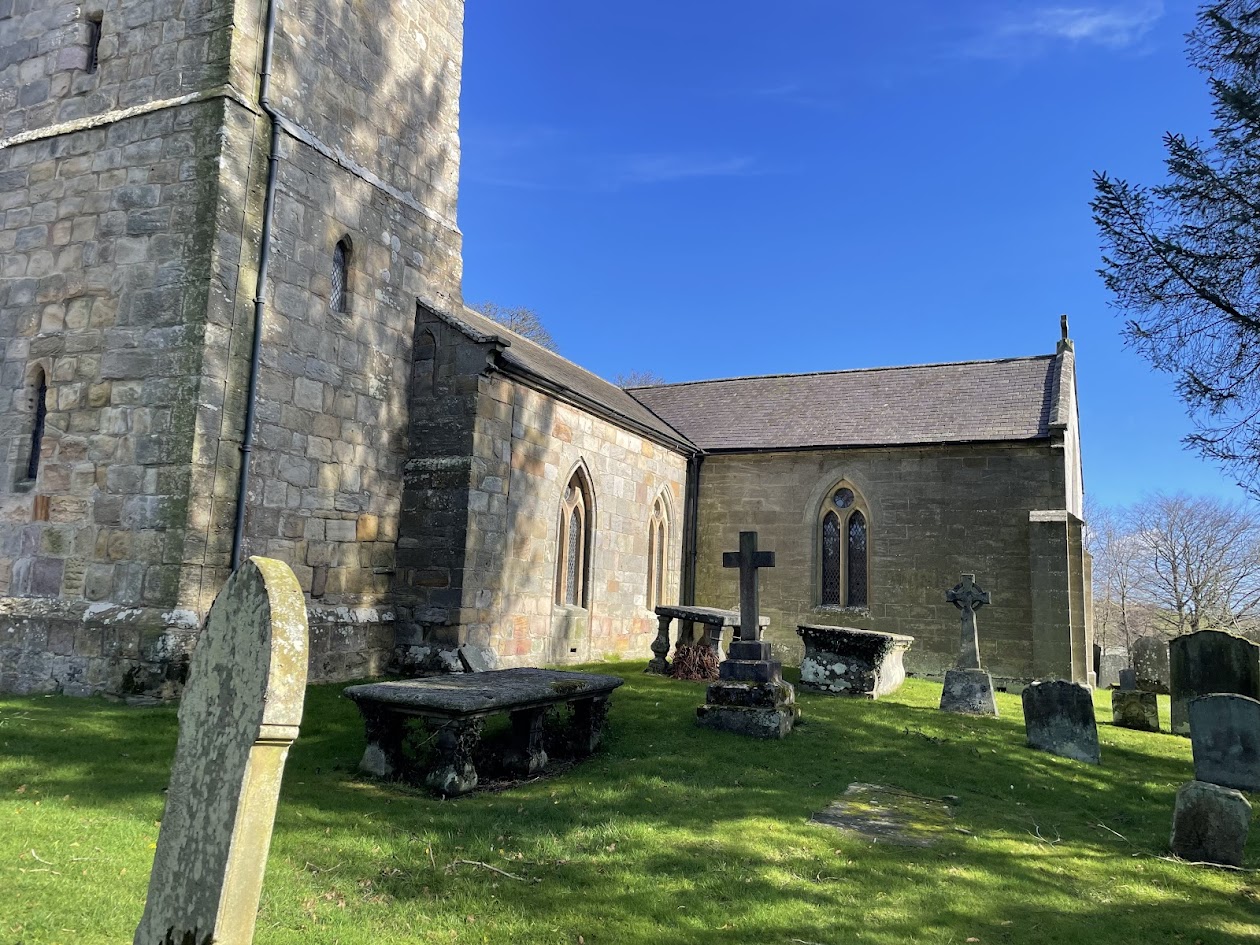
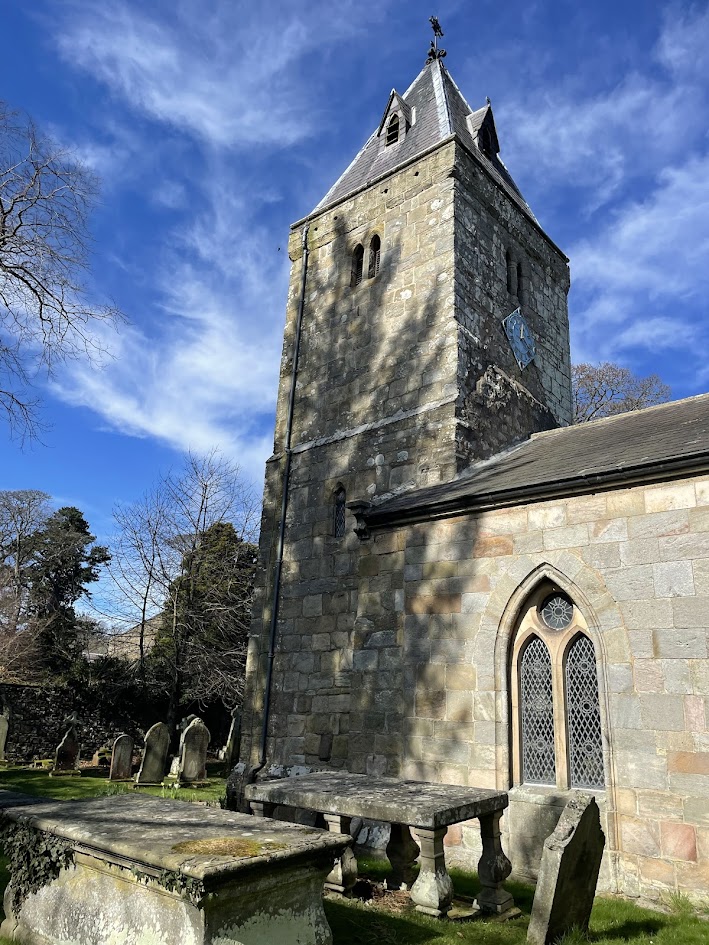
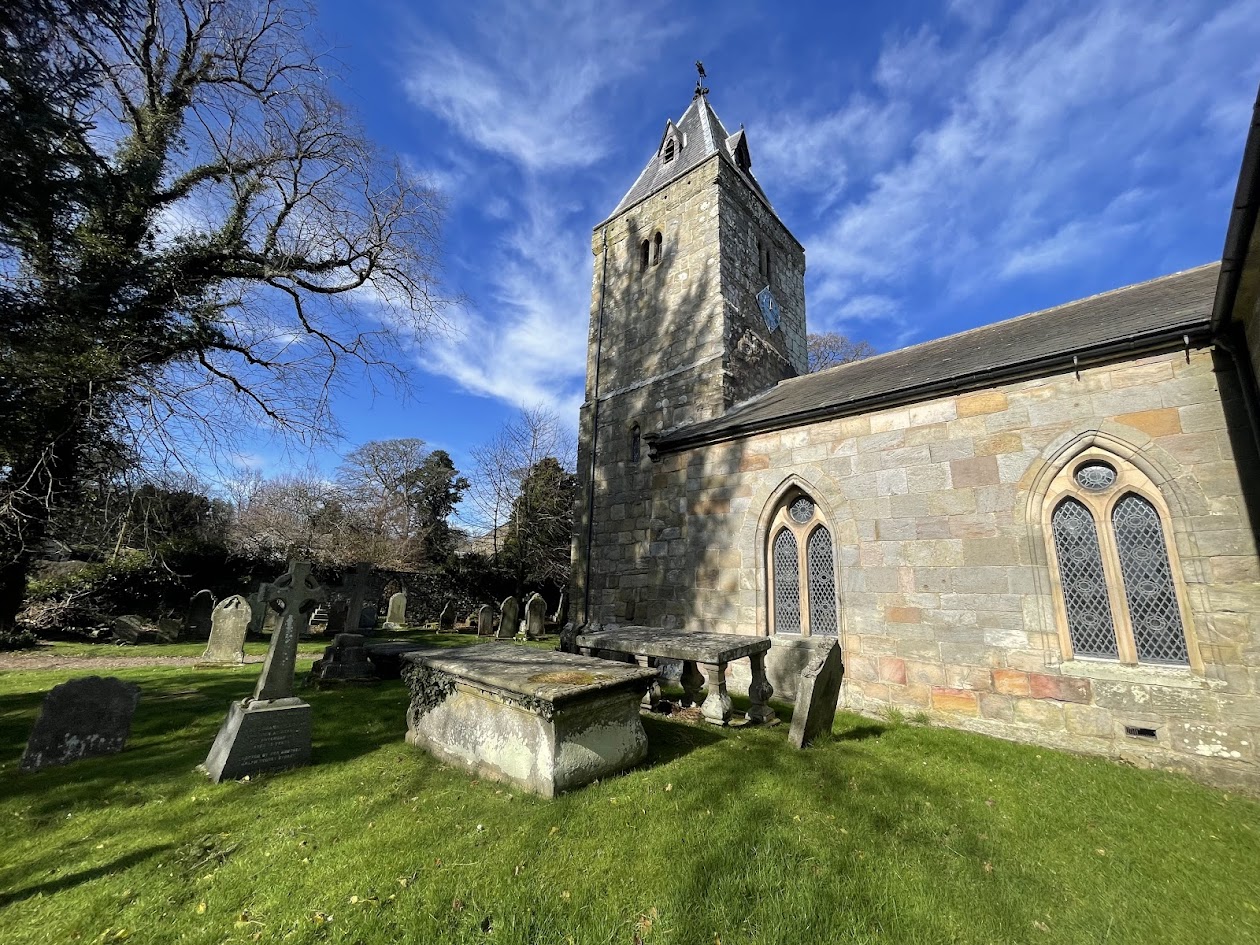
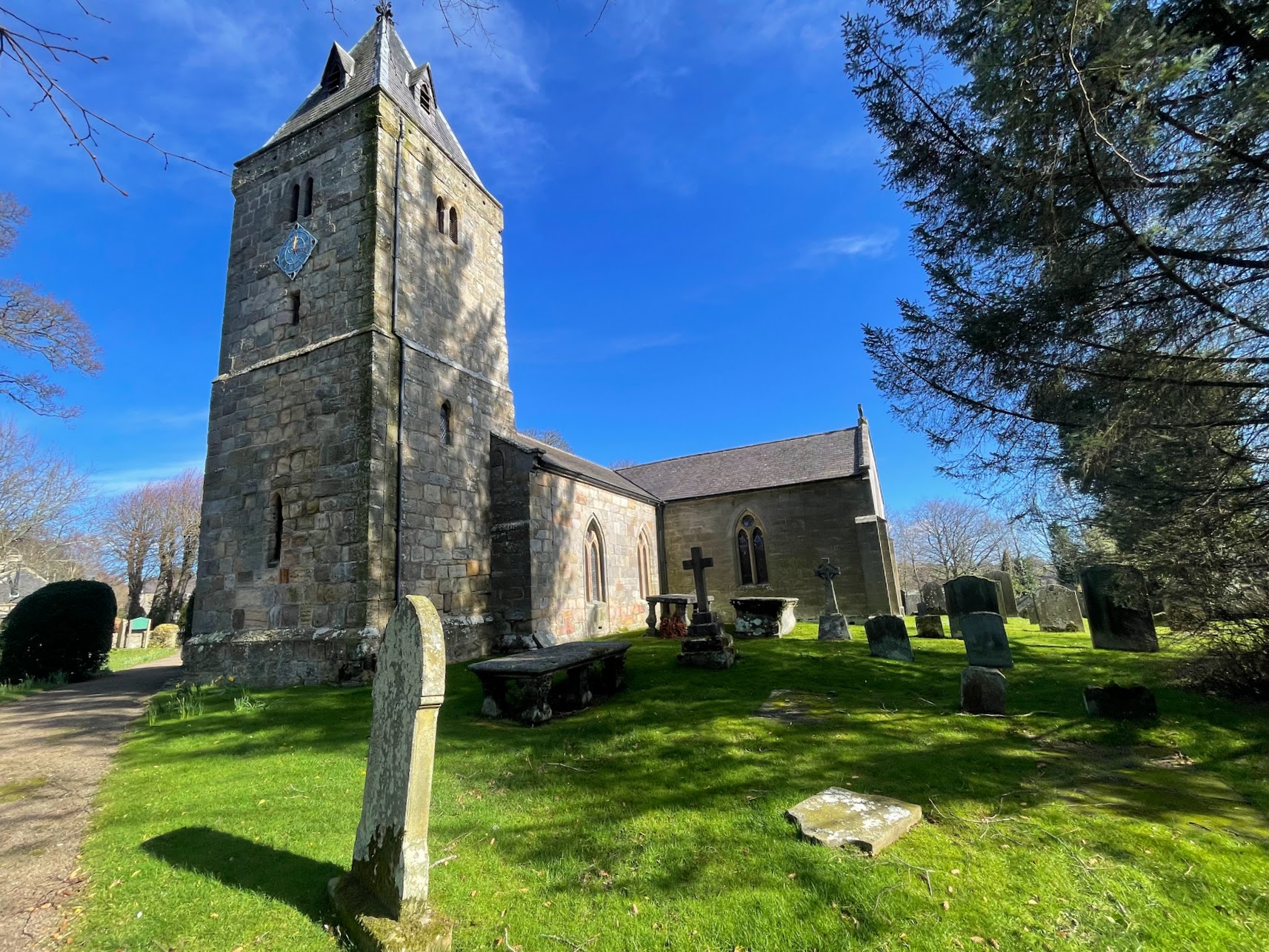
Once parked up and with the engine silenced and helmet off, I took a few moments in the sun and noticed just how pleasant and loud the birds were here - a symphony of Spring energy. The grounds and church are very picturesque, especially in the brilliant sunshine. As is fairly common, the buildings and windows have been replaced and augmented several times over the centuries. This church was virtually destroyed in 1640 at the hands of an army called the "Covenanters" who had signed covenants to uphold Presbyterian rule over Anglican. Another religious war.
There are many grave markers still present which trace 300 years of family history in the area, however Christian burials here date back more than a thousand years and the earliest records of a church here date back to around AD 738, founded by King Ceowulf. Records from this year show Eglingham church being granted to the monks of the nearby Lindisfarne Priory (another beautiful spot worth visiting - nature, walking and history - note: take care on the causeway crossing times for that).
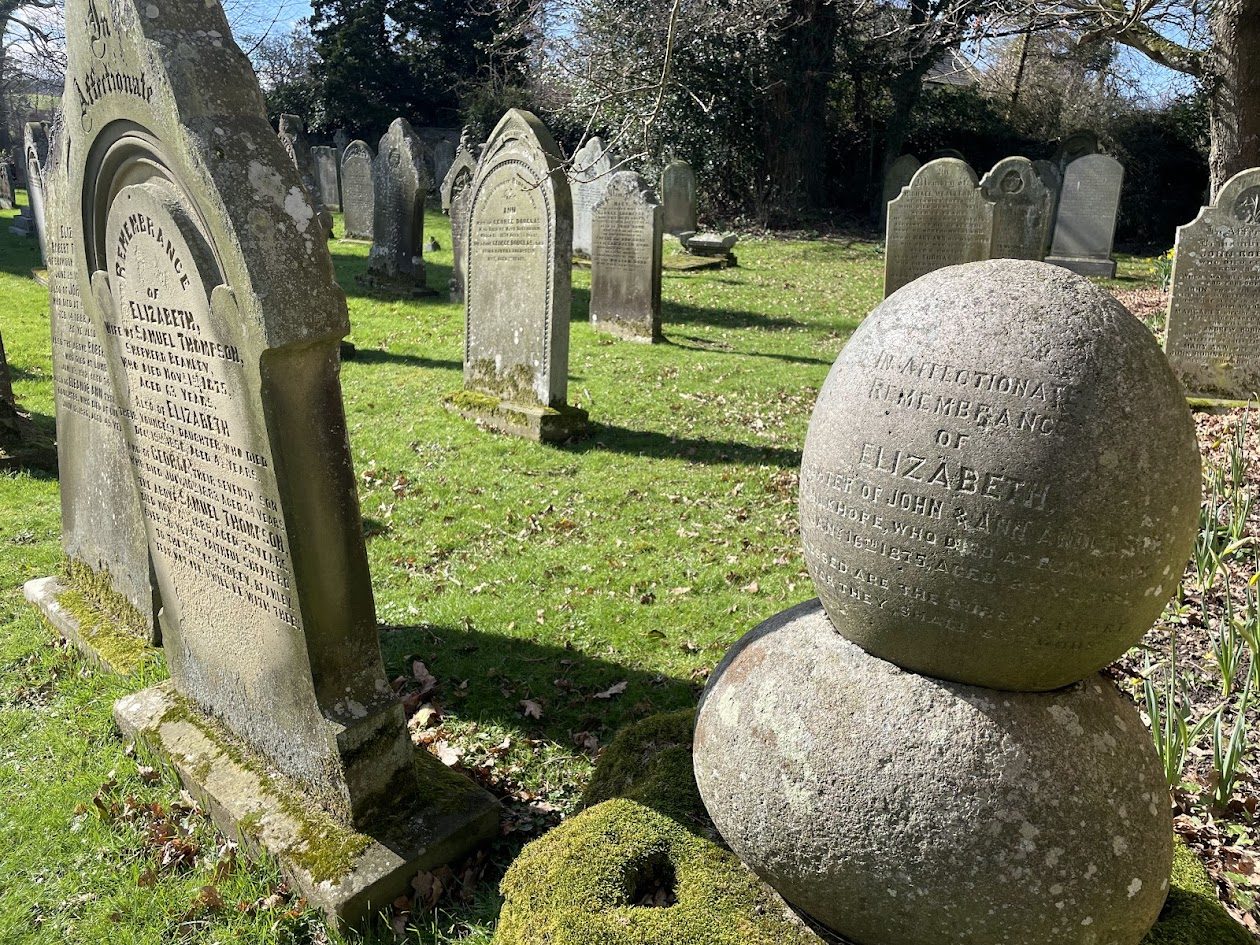
While all the head stones in the grounds carry their own story, one grave marker in particular stood out to me. Formed out of two large well rounded rocks, one on top of the other (pictured above), and dedicated to Elizabeth Anderson. A little research afterwards revealed that Elizabeth hailed from the Cheviot Hills and came to work in Eglingham as a young woman. She sadly died in 1875 of typhoid fever aged only 22 - ultimately caused by bacteria spread by contaminated food or water, and poor sanitation. Back in 1875 Typhoid Fever was poorly understood. Treatment generally involved attempting to alleviate symptoms combined with rest and it had a mortality rate as high as 30% of cases. Today we have accurate and rapid tests to confirm infection, effective antibiotics, and a mortality rate of < 1% of cases in a healthcare setting.
The two granite stones having been rounded by thousands, possibly tens of thousands, of years, sat in the nearby River Breamish to eventually be selected by the grieving family and used as the grave marker.
There’s something about rocks polished by millennia of running water; the river smoothing their surfaces, wearing away rough edges and imperfections until they seem almost deliberately shaped. It makes our short lives feel insignificant, and yet collectively and generationally we shape the landscape, the atmosphere and the wider environment - though perhaps in recent times this may be better characterised as damage rather than refinement.
I've read that Elizabeth's younger sister lived to be 88 and has a similar memorial at the Ingram churchyard near the river.
While chance or luck will always play a part in our daily lives, I'm reminded of just how much more life was a roll of the dice back then, and how advancing modern medicine has shifted that for us as populations.
Another above average scat index road from Eglingham to Powburn, which sits on the main A697 route back towards Morpeth. If you like coffee and cake, Powburn now hosts a "Running Fox" cafe, one of a local chain of coffee shops, with another further down the road in Longframlington. Well recommended - especially the "foxy crunch"!
While riding out of Powburn, now on the main road, at a steady 30 mph, two vehicles behind me tried to overtake at a similar time resulting in one smashing into the side of the other - although I didn't realise at the time. One then proceeded to speed past me at full pelt within the 30 mph zone cutting in closely in front of me, forcing me to brake sharply. I didn’t realize what had happened until I later reviewed the rear camera footage from my bike.
The car which passed me was definitely electric and it surprised me just how much acceleration it had. I would liken it to a powerful motorbike in terms of pure accelerating power. Food for thought when overtaking in a hurry for both electric vehicles and bikes. Motorbikes can make a lot of noise - advantageous when others being aware of your presence matters, like overtaking - unlike the electric motor's whispering whine. Every new technology brings advancement and advantages but also unintended consequences.
The remaining journey back home was uneventful. I passed the Linden Hall Health Spa triggering warm memories of a recent spa day there with my wife - a day of relaxation, a massage, and consuming a full cream tea spread.
Spring has definitely sprung. What are you waiting for? Go Roll The Bones!
"Well, you can stake that claim -
Good work is the key to good fortune
Winners take that praise
Losers seldom take that blame
If they don’t take that game
And sometimes the winner takes nothing
We draw our own designs
But fortune has to make that frame
We go out in the world and take our chances
Fate is just the weight of circumstances
That’s the way that lady luck dances
Roll the bones
Why are we here?
Because we’re here.
Roll the bones
Why does it happen?
Because it happens.
Roll the bones
Faith is cold as ice -
Why are little ones born only to suffer
For the want of immunity
Or a bowl of rice?
Well, who would hold a price
On the heads of the innocent children
If there’s some immortal power
To control the dice?
We come into the world and take our chances
Fate is just the weight of circumstances
That’s the way that lady luck dances
Roll the bones..
Jack - relax.
Get busy with the facts.
No zodiacs or almanacs,
No maniacs in polyester slacks.
Just the facts.
Gonna kick some gluteus max.
It’s a parallax - you dig?
You move around
The small gets big. It’s a rig
It’s action - reaction -
Random interaction.
So who’s afraid
Of a little abstraction?
Can’t get no satisfaction
From the facts?
You better run, homeboy -
A fact’s a fact
From Nome to Rome, boy.
What’s the deal? Spin the wheel.
If the dice are hot - take a shot.
Play your cards. Show us what you got -
What you’re holding.
If the cards are cold,
Don’t go folding.
Lady Luck is golden;
She favors the bold. That’s cold
Stop throwing stones -
The night has a thousand saxophones.
So get out there and rock,
And roll the bones.
Get busy!"
(Rush, Roll The Bones, 1991)
February 2026 - Glasgow - Impermanence
An early start. Grey skies shedding light but endless rain. The journey North was an easy passage, with little traffic along the M6/A74/M74 sections - as motorways go it has to be one of the more pleasant experiences across the UK; wide sweeping vistas of hills and green spaces. The open road offers a sense of freedom, with race track type qualities, demanding genuine restraint to keep speed within sensible bounds. As is usual the pace slows as traffic thickens beyond Hamilton. The deteriorating road surface tells a consistent story of overuse with pot holes stretching the limits of machine and man.
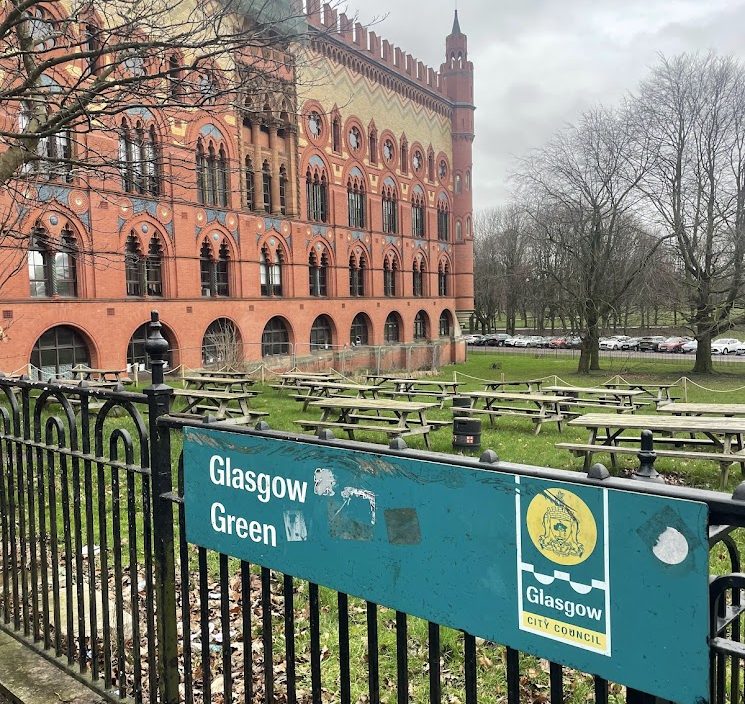
Glasgow Green, the oldest park in the city, is a decent sized space for a stroll by the river Clyde.
The park dates back to the 15th century when it was gifted to the people as grazing land by the Bishop of Glasgow. Beyond grazing, the space has had many and varied uses over the centuries - drying of salmon fishing nets, public wash houses, bleaching of linen, football and golf. The park underwent a full renewal and revitalisation after receiving a significant Heritage Lottery Award in 1996, and in 2011 received a prestigious green flag award - a benchmark national standard for quality parks and green spaces - as recognition for the quality of this wonderful public space. More recently, beyond everyday activities like walking, cycling, jogging, fishing etc, the green has been at the heart of many public events including the now annual TRNSMT music festival, various one off concerts, organised races, and exhibitions of all shapes and sizes. The Green is also dotted with its own collection of monuments each with their own little piece of history attached; well worth a proper explore.
One space, many different faces over the centuries and decades, and a story of continual emergence, re-invention and evolving purpose.
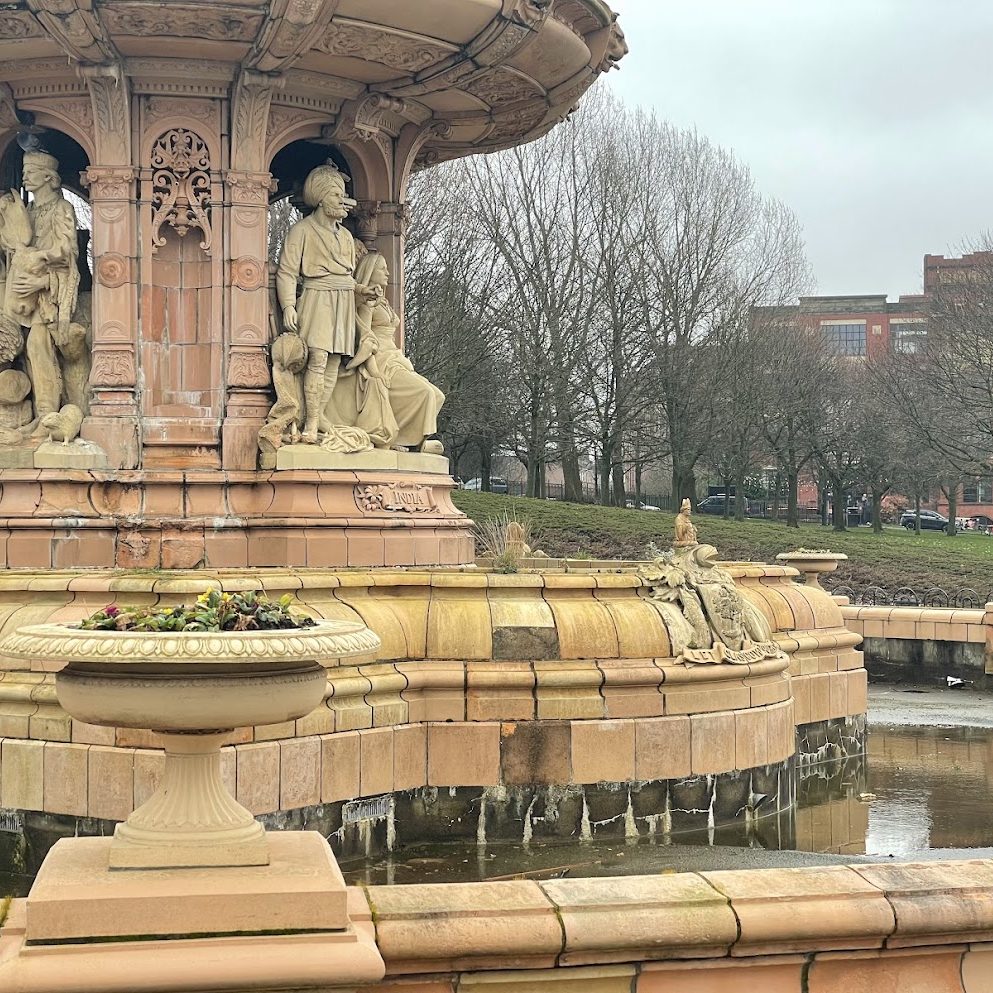
Pictured above: The Doulton Fountain, built to celebrate the Golden Jubilee of Queen Victoria in 1887.
Having seen the sights on previous occasions, and having stretched the legs, I entered the much anticipated lunch timezone, with the priority very much on refreshment. As Douglas Adams reminds us in A Hitchhikers Guide to the Galaxy, "Time is an illusion. Lunchtime doubly so."
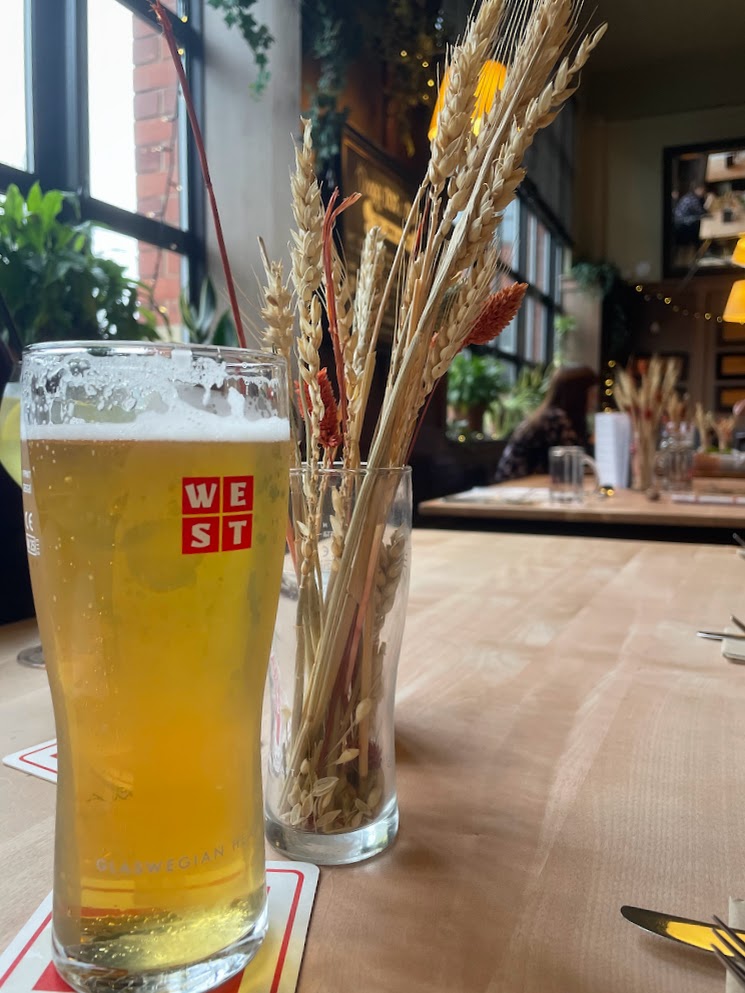
I had not visited the nearby West Brewery previously, but had sampled their low alcohol beer on travels through Ayrshire and found it very palatable. A short walk away, it was ideally placed.
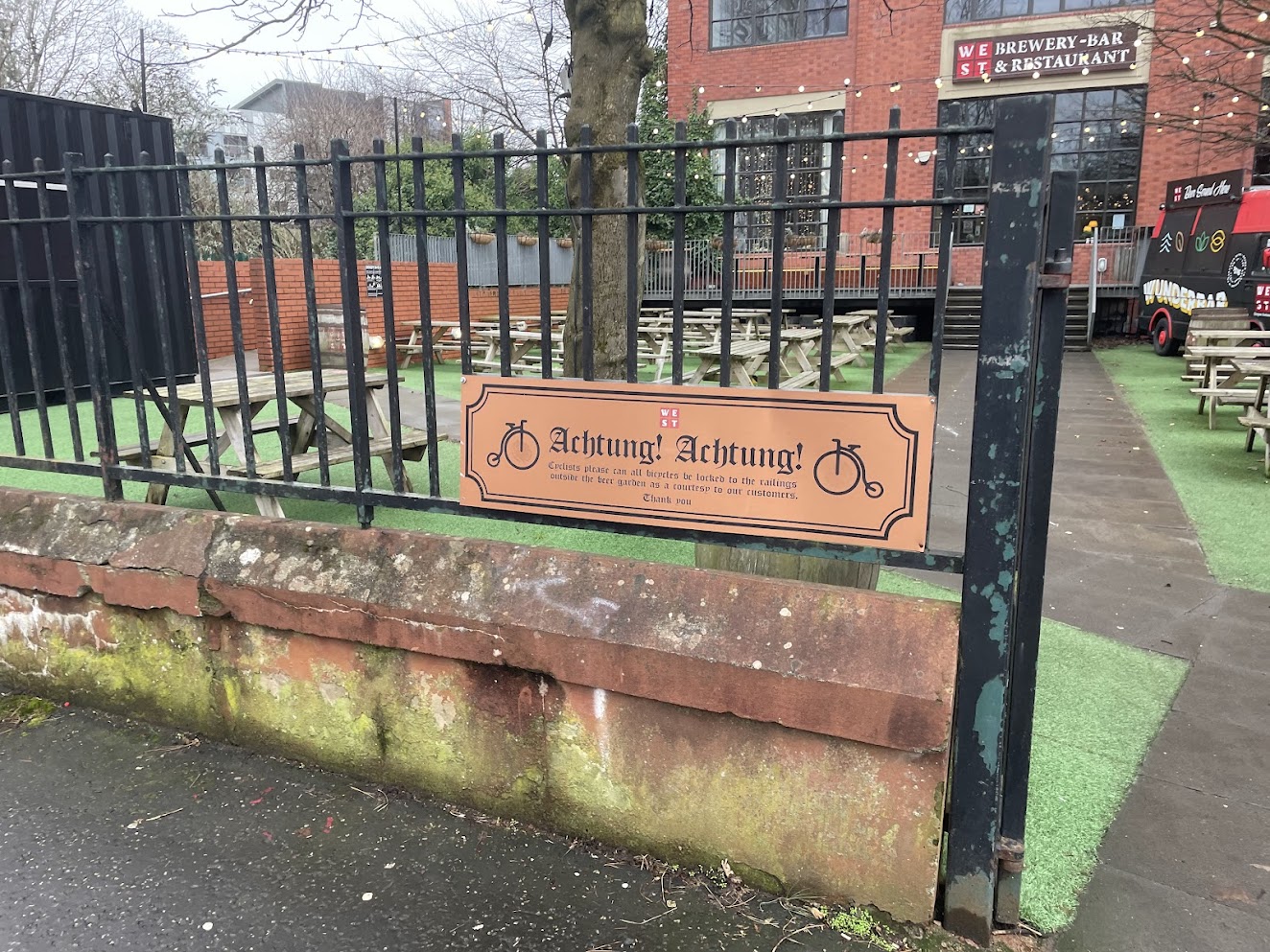
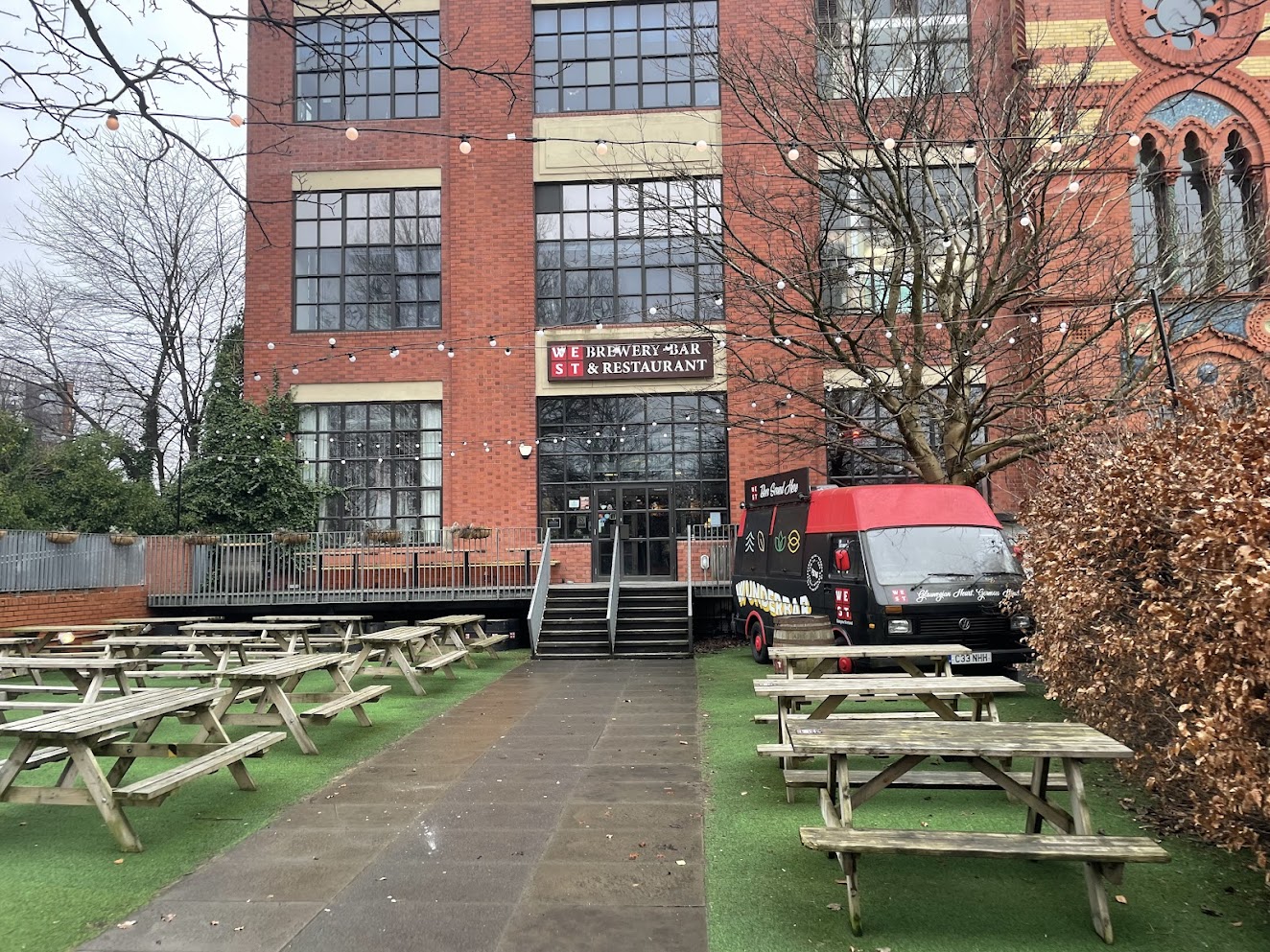
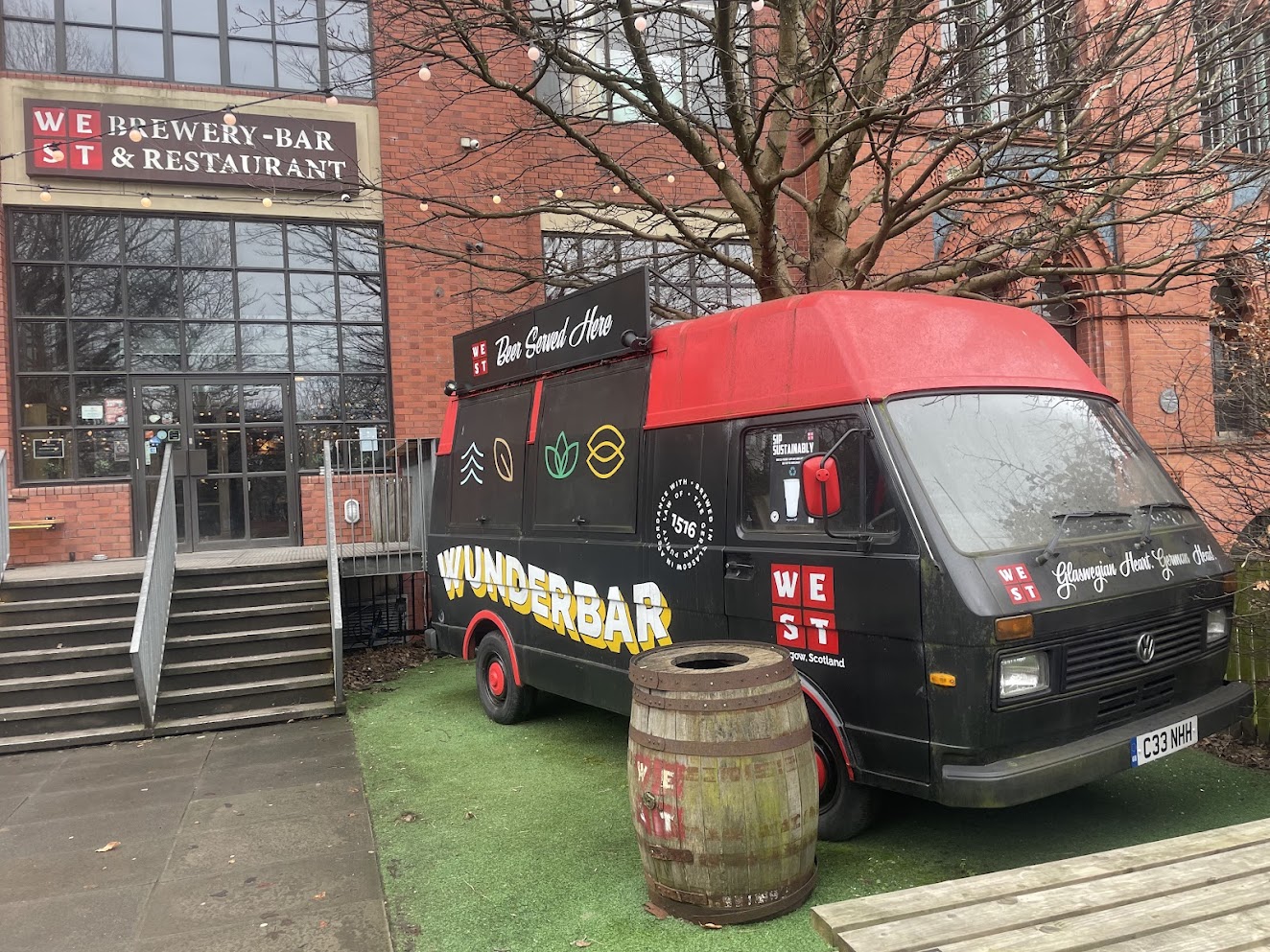
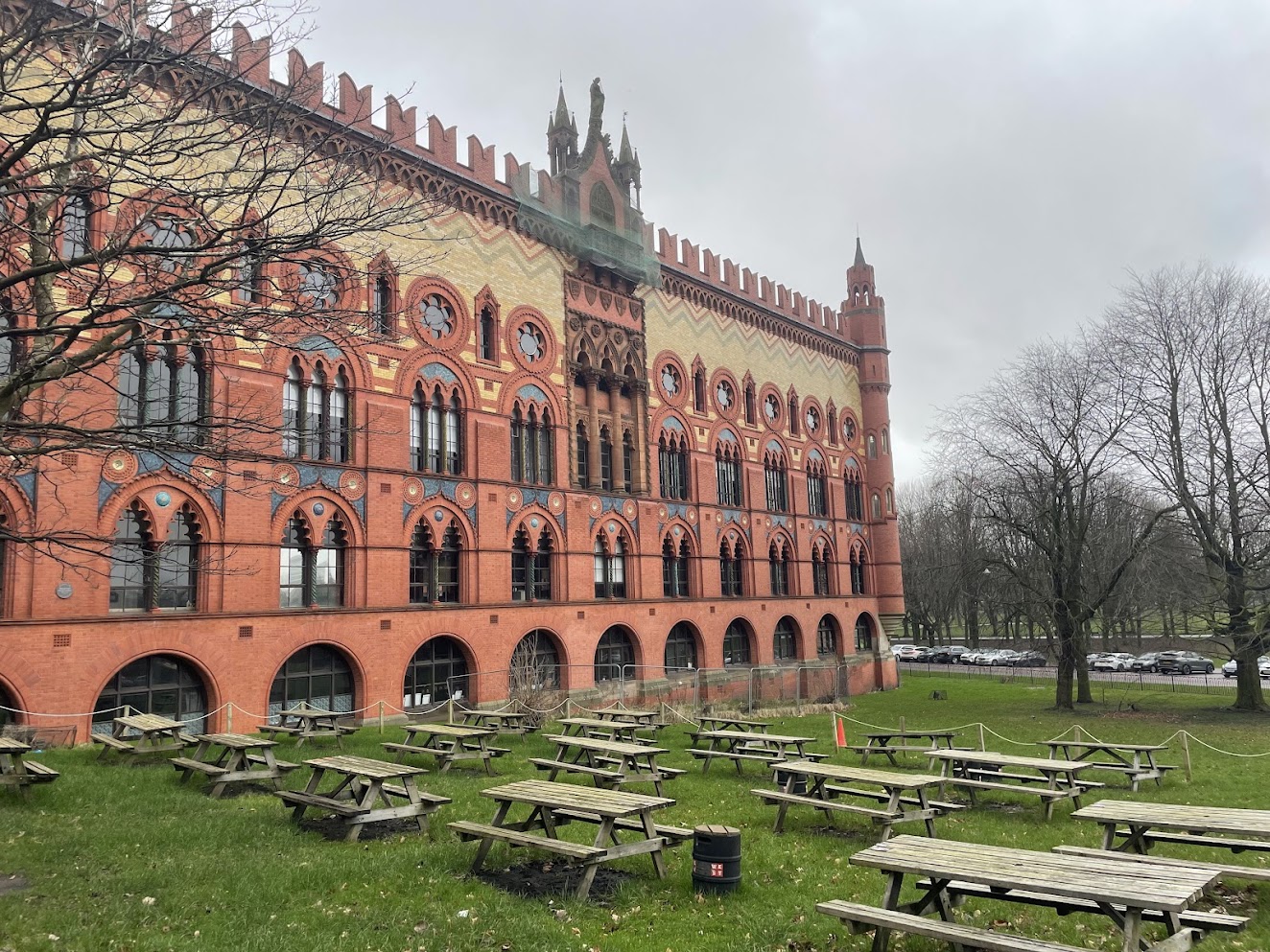
The Templeton Building, inspired by Venice’s Palazzo Ducale, was created by business James Templeton and Son, to host the weaving of Templeton's patented spool Axminister carpets. When original designs were rejected by the Glasgow Corporation, Templeton hired a top architect William Leiper to create a design modelled in the venetian-gothic style which could not possibly be rejected. During construction the main facade collapsed due to winds and insecure fixings, killing 29 women in weaving sheds below. After completion in 1892, and some years of business as usual, a fire broke out in 1900 resulting in further deaths, commemorated by a statue on top of the main facade (seen in the last photo above). Despite collapse and fire, the business continued to flourish, displaying strength and possibilities, evolving in ways that were always latent within it. During the 1980s, the business merged with another and the building was re-purposed as a business centre (1984). Re-generation starting in 2005 re-purposed the building again into mixed use - apartments, office space and the West brewery, bar and restaurant. One facade, multiple purposes over time.
Founded in 2006 the West brewery specialises in German style lagers and wheat beers adhering to Reinheitsgebot (pronounced rine-heights-ge-boat), the German purity law.
Reinheitsgebot is one of the oldest food safety laws still in effect today. Enacted in Bavaria in 1516, it was designed to prevent brewers from using harmful additives. Originally only three ingredients were allowed - water, barley and hops - as the role of yeast was not properly understood at this time. Today the law allows for four ingredients - water, malt (barley), hops and yeast - and, importantly, creating trust and clarity for the consumer. With heavily processed foods, packed with preservatives, flavourings, and colourings - so many hidden ingredients - it’s sometimes hard to know what you’re really eating. Simple, whole ingredients, seem a positive thing. Four ingredients, infinite possibilities.
The business went into administration in 2008 but was brought back to life by the original founder and has gone on to win many awards. In 2016 the business expanded further with a new £5 million brewery resulting in a 10x increase in capacity.
The food I had from the primarily german/austrian themed menu was both decent quality and sated the appetite, washed down with a half percent draught lager - very nice.
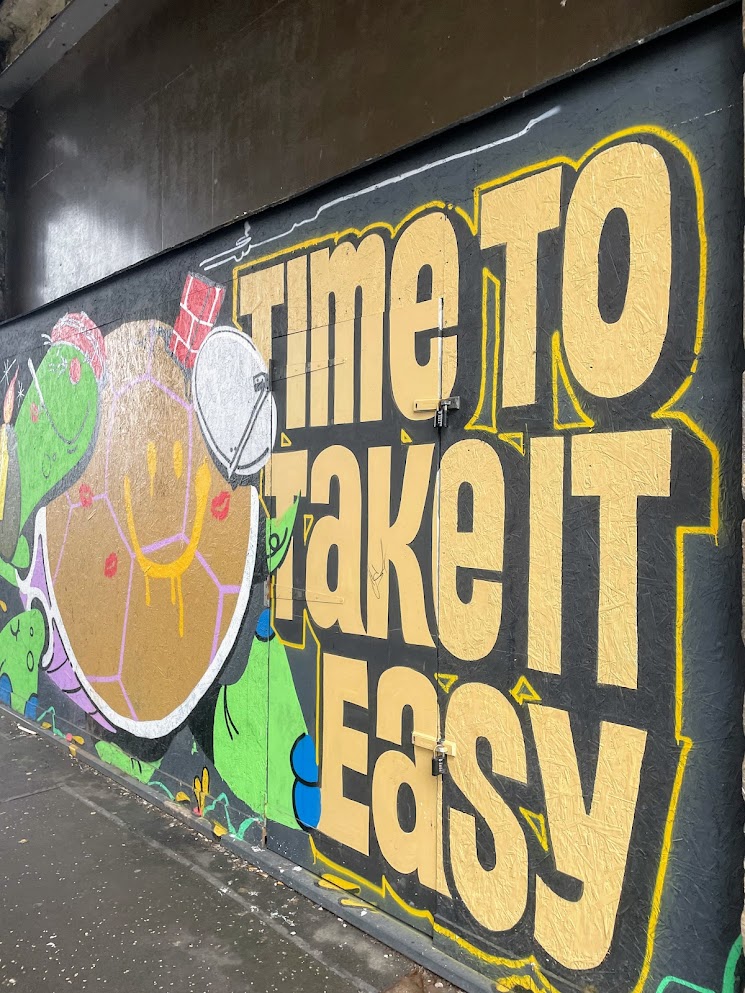
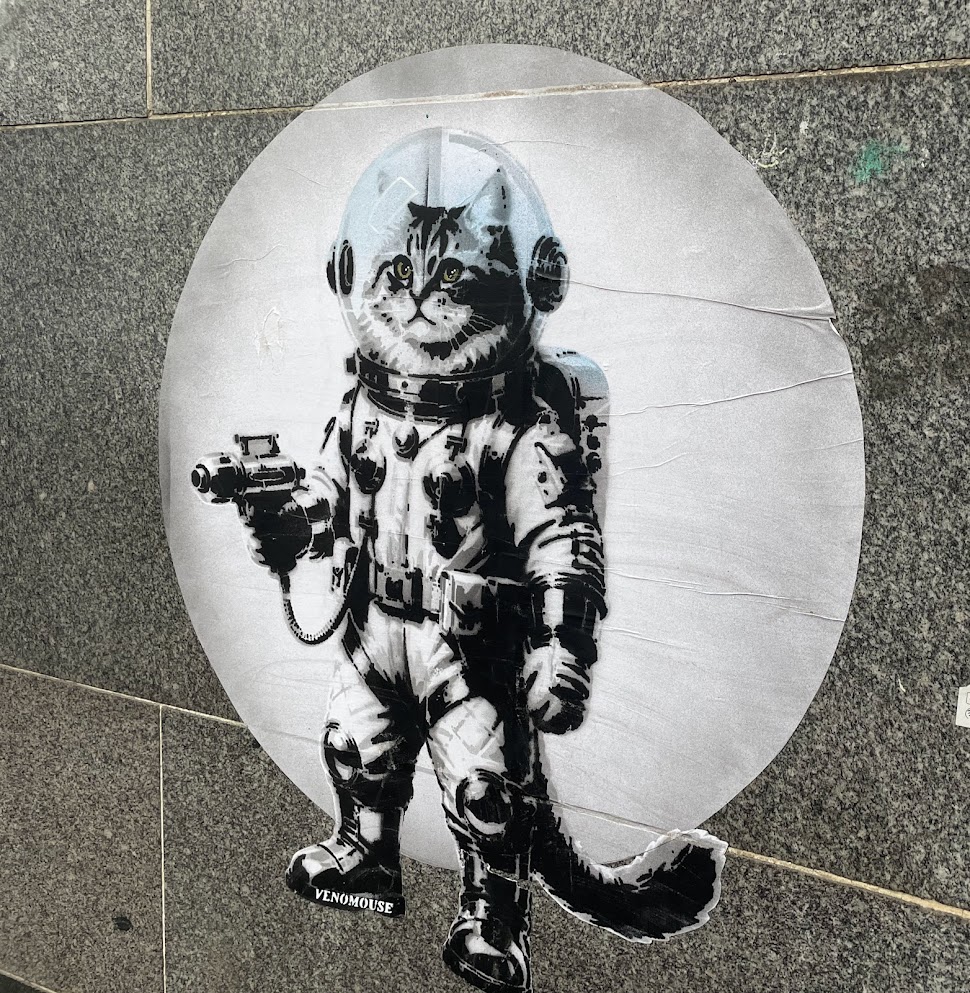
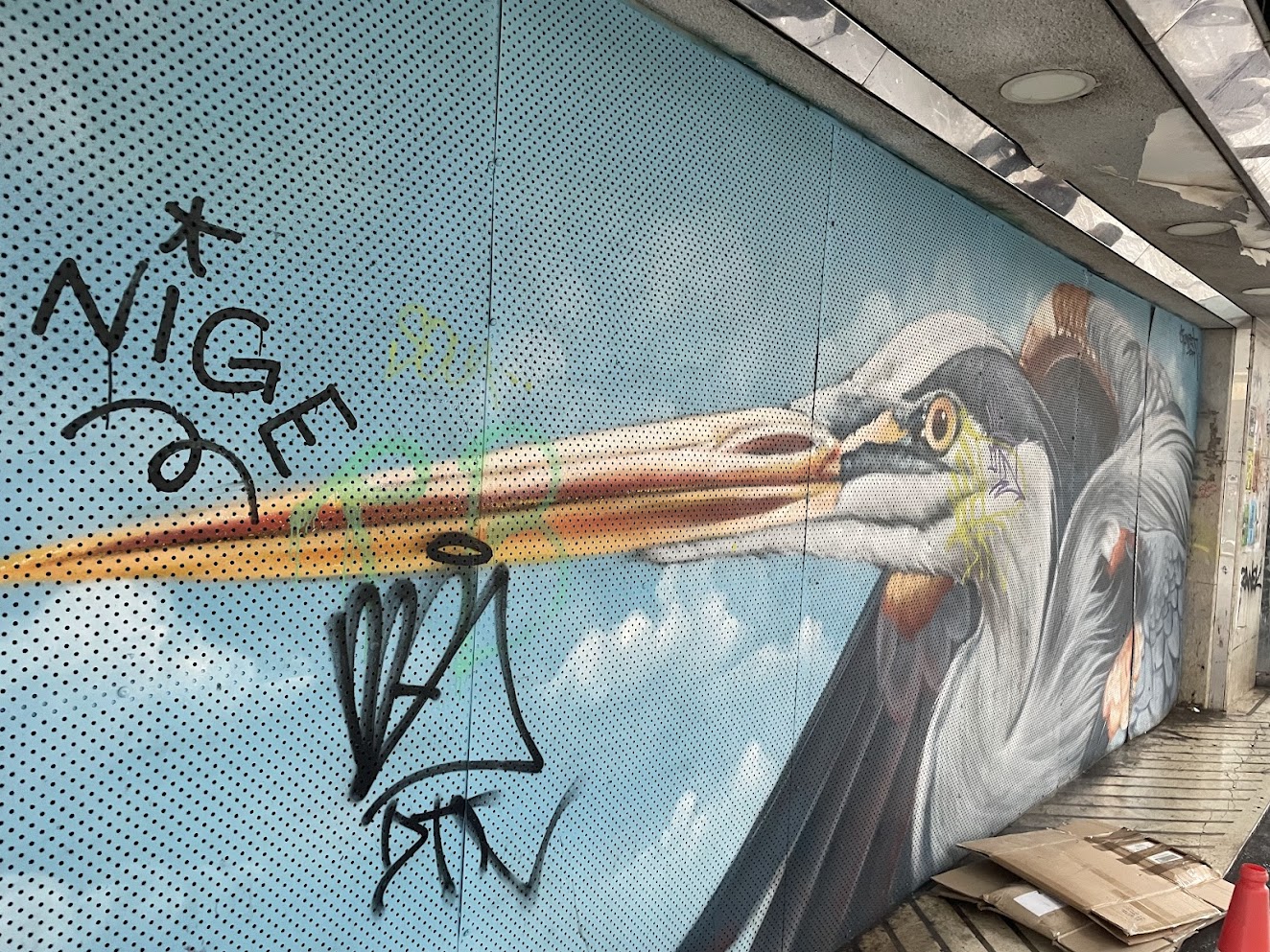
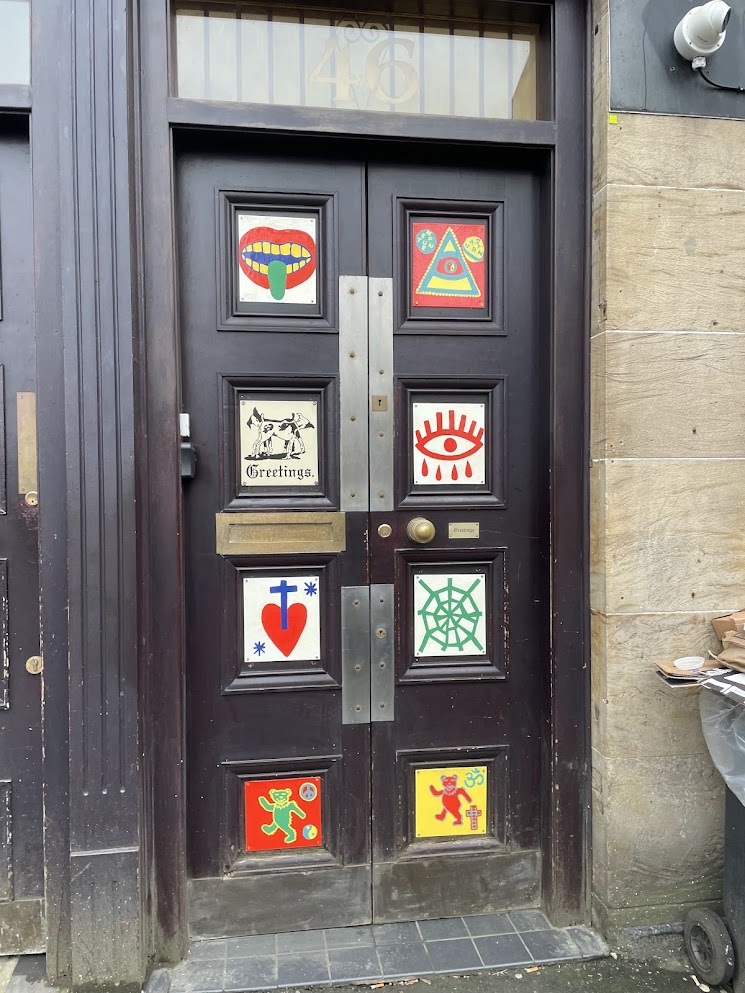
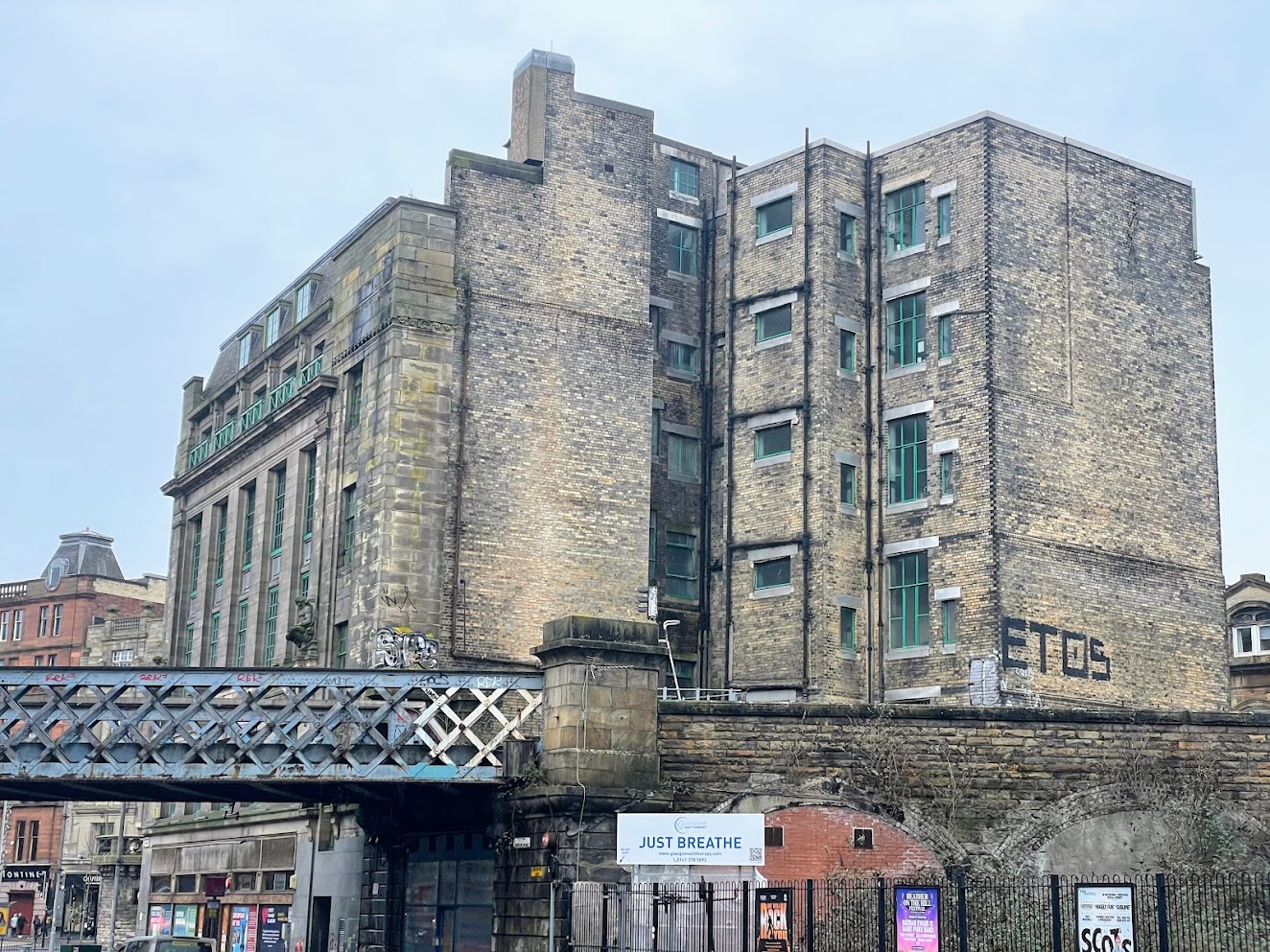
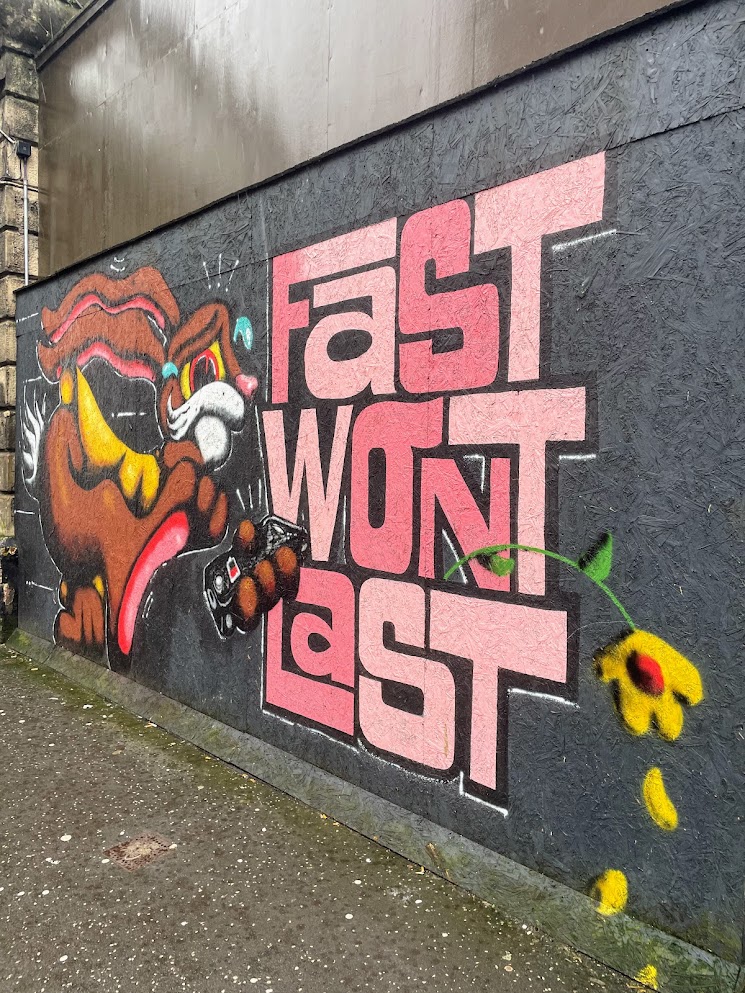
A post lunch walk about in the city revealed plenty of interesting colour and light to be captured - albeit as phone camera grabs.
The billboard sized graffiti declaring “time to take it easy” and “fast won’t last” serve as a bold, in your face, reminder that life is best savoured in stages, not rushed as if in a competition or a race.
Time - the ultimate jest and the ultimate abundance.
Just as buildings evolve through decades of use, and businesses reveal strengths and possibilities, people too reveal their character through time, often in unexpected ways. Moments of pause, reflection, and patience allow what is latent to emerge.